Showing posts with label gender polarization. Show all posts

Monday, March 25, 2013

CMUQ event


The Student Majlis of CMUQ had an event that was on Thursday, the 21st of March. A DBQ event (Dodgeball and Barbeque event). For people who don’t know what’s dodgeball game like me; dodgeball is a game in which players on two teams try to hit players in the other team and they must avoid being hit themselves. This event happened in the green spine outside CMUQ building. Many students participated in this event, and the teams had different genders.

Masculine tasks
The male students made all the preparations for the event. It needed the carrying out of heavy equipment such as the BBQ fireplace. According to sociology, all societies categorized people based upon sex and gender. This seems ‘natural’, but it is a social construction. The male students did all the arrangement, setting up the cones in lines for the dodgeball game and prepared all the food and things needed for the BBQ.

A non gender-polarization event
Many male students were saying that this game is for boys only, and girls are not capable of playing it. This game needs masculine actions such as the throwing balls to the other side and hit the other team. However, many female students cross the gender-polarization concept. They think they have the ability to do masculine activities. And so, many female students participated in this game. There was a team called ‘women in black’ that had all female participants, and were strongly excited to compete with other teams.

According to sociology, there trends to be a higher degree of conformity to prescribed gender roles. Those who do not obey the ‘rules’ of gender face social punishment. However, in many societies, it is easier for people to accept the idea that females are the one who cross the gender-polarization concept than male. Many societies are not accepting the new image of the male version, the sensitive and soft man. But remasculinization process is always takes over all boys in their earlier lives. They grow up having the traditional masculinity idea; boys love to be featured strong, competent and powerful males.
 
Although cooking is known as females’ responsibility, but the male students toke the charge of the BBQ. The boys enjoy doing the BBQ in the trips or the events, because usually they do not cook in houses, so they feel free to do the cooking when they are with their friends. And maybe the reason the chose BBQ is the that it is the easiest way to cook food.


Thursday, April 19, 2012

Sociological analysis through pottery


By having a full chapter about Gender and a long discussion about this topic during this week, I decided to talk about Greek Potteries. Because they show within a moment; the huge difference between males and females in that ancient civilization.
            Based on many survived artworks we can see the clear difference between the two genders. The following Greek Potteries show women activities, how they dress and look like.

            A woman sitting on a chair looking at her self through a mirror. That shows the importance of appearance to Greek women.


This Image shows 2 women carrying pieces of clothes and a large bowl in the middle between them.  This scene is about laundry.


This scene is divided into 2 friezes; the first one is for a group of women weaving. And the small one above shows women in a wedding ceremony.

We can see a strong connection between all the images of the women. Almost all of them are about Domestic and indoors activities.  In general, the house and children was the responsibility of the women.
            On the other hand, her are some images of men on Greek potteries. 

             In this Image, we have two men, perhaps athletes, fighting or sparring each other. While someone is just observing what is happening.


An Image of a man carrying a bow for hunting with his hound. As we can see, it is an outdoor scene. 

A scene of a group of warriors marching toward a battlefield. 


The scene on this pottery shows a young man, on the right, listening to an old man, on the left, playing music. Maybe the scene is about a musical lesson. So, we can say that men had more access to education than women.
Greek potteries are a key factor to look at Greek people’s social life. Just from few examples; we can see the big and clear difference between the two genders. Woman are for domestic activities and indoors obligations. Men are all about masculinity, power and outdoor activities. Also, they  have a better chance to get education than women.
From a sociological point of view, ascribed status, sex, determined a lot in the Greek’s life. Females are inferior to males. However, even though they are restricted their role is still very important. Despite how we look at their Gender Polarization right now, they found their own way to divide their social role. Each gender carries a role that supports the society and helps maintaining it.
  

Monday, April 16, 2012

Gender Stereotypes in Driving

There has been a worldwide stereotype against females as being bad drivers. From my experience and observations of male drivers throughout the years, I have noticed that most of the time when another driver does something wrong on the road, there is an immediate expectation that this driver is a female. They would say things like “that must be a woman,” or if they say the driver and recognized that she is a female they would say, “of course it’s a woman!” Some males would even make the claim that women should not drive because they are bad drivers.


This stereotype is further extended in the society here when it comes to the choice of the car bought by females and males. For example, I barely see females driving sports cars on the road here in Qatar. Most of these sports cars are driven by males, and the few females who drive sports cars are usually not Arab. This has almost led to gender polarization in the car market in Qatar, where males purchase most of the sports cars. There is an argument that justifies this phenomenon, which says that sports cars need mastery and high skill in driving that females do not have. This is not the only argument the society has created to keep females away form driving sports car. The other reason has to do with cultural acceptance. For many families here in Qatar, it is not acceptable for females to drive sports cars because they claim it grabs attention and can bring disgrace to the family. Some families don’t even allow females to drive at all for that reason.


All these reasons that society creates are made for the purpose of maintaining a patriarchal society. They shape the rules and the norms of the society to keep males in power, and even in driving males want to be the dominant, more skilled, and powerful. This stereotype and prejudice about females driving has been even extended flying airplanes. There is also a stereotype against female pilots as being bad pilots. Some people even get freaked out when they know that the pilot is a female, thinking that it is not safe to fly when a female is given the responsibility of flying the airplane.

Tuesday, March 20, 2012

Gender Based Power In A Company

Thinking about our society and gender, gender polarization is evident in nearly every aspect of our lives! Power is also polarized by gender. From a very young age, we are socially constructed based on our sex and gender, which is also known as gender socialization.

Keeping this in mind, I decided to take a different twist to this matter and visit CENTCOM Projects to analyze the power within the employees based on their gender. CENTCOM Projects is a construction company based on steel, aluminum, joinery and interior fit outs. Therefore, majority of the staff in the labor section were men and barely had females in the office. This may be because women consider sex-appropriate positions such as the secretary and choose occupations that will not require them to relocate and work in unpleasant environments such as the factory.


From a sociological perspective, I examined the concepts of power-over, power-to and power-with while visiting the company’s office and factory in the industrial area. The notion of power-over was greatly evident as the foreman’s, manager and the director had the ability to get the workers do jobs when they didn’t want to. According to Weber, he defined power, as the ability of one actor to carry out his will against another. Clearly, this is was evident. While I was there, the foreman was achieving his goals by making one of the labor workers do his work. In this case of master/subject relation: the foreman is powered (master) and the worker is not (subject). At most times, this could possibly be a problem, as power is seen as an abusive force, unequal and the ability to force your physical strength and ideas over other employees in a workforce.


Luckily enough, I got to observe a power-to situation. One of the experienced workers came in and asked if he could either higher his position in the company or leave. From a sociological perspective, he recognized the control he has over his life, saw results of his actions and utilized his power. In other words, this could be described as self-control and self-efficacy.


In addition, the notion of power-with was not evident. However, it may be applied to labor workers if they come together as a group to challenge the system and ask for a change. In this case, if the workers struggle against the oppressive system, they would collectively work together to change it. This could happen if the workers need a rise in salary, new housing or even higher positions.


All in all, we could possibly say that the social construction of gender socialization goes back to social stratification and ethnic backgrounds.

Sunday, March 18, 2012

On the Cricket Field

Last Friday afternoon, I attended my first cricket match.
Now keep in mind, I grew up in the USA. No one that I knew had the remotest interest in the sport, much less the inclination to learn. The handful of Indians and Pakistanis I went to school with never brought up the sport, which is apparently the second most popular sport in the world, after football/soccer. Surprisingly, the USA does indeed have its own cricket association.
My first encounter with the game came last year, when I moved to Qatar. Two friends at school, one Indian and one Pakistani, were arguing over some match that was taking place that evening, and I had the remotest idea of what was going on. The Bleacher Report, by the way, describes India and Pakistan’s cricket rivalry as the “biggest on earth.”
In the spirit of sociological research, I decided to attend last Friday’s match (Georgetown v. Texas A&M) mostly out of curiosity and intrigue.
Held every Friday in the QF busses parking lot, teams of EC students get together and play until the sun begins to set (and the ball is no longer visible). In this game, university rivalry trumps national and ethnic divisions. Indians, Pakistanis, Bangladeshis, and one white guy gathered on the playing field to spend an afternoon, the entire afternoon. I had heard rumors, but I never realized just how long cricket matches last. Just like long Bollywood films, the shortest of cricket matches (called Twenty20) are 2.5 hours long. The traditional form of cricket takes place over the course of 5 days. In film, we justified long movies through indoor access to air conditioning, but cricket matches are held outdoors; the same logic doesn’t quite fit.
Given our latest discussion on the gender and power, I observed that cricket is definitely a gender-polarized game. It is like the South Asian version of American Football in the sense that everyone, males and females, watch and appreciate the sport, but only for the male teams. After a bit of research, I did find a few numbered female cricket teams but they are still nowhere near the popularity of male cricket. Aside from me, another female didn’t show up until about half an hour into the game.
I also noticed, that cricket, like most sports, involves a very ritualized pre-game build-up: the common practice of the team huddle to boost morale, the obligatory coin toss to decide team positions (in the field or batting). Only then, can the game begin.
Prior to Friday, my own constructed understanding of cricket was, “it’s kind of like baseball.” Well, yes and no. In the past, when someone tried to explain the game of cricket to me, the explanation flew over my head. When I sat down and watched the game, however, the running commentary of what was going on made so much more sense. For full rules, see here. I can’t explain the game to someone else… yet… but I get the gist. Two batters, a bowler, teams of 11 in the outfield, avoiding the wicket, shouting “four” or “six”, batters switching places and gaining runs… It clicks.
*Photos taken by Omer Mohammed and Florent D'Souza

Tuesday, February 14, 2012

Gender-neutral children?

Gender is a very controversial issue in today’s world. Many women find themselves more masculine than what’s acceptable in the society, and many men find themselves more feminine that what’s acceptable in the society as well. These rules that society forms creates many stereotypes about the two genders that may limit the chances they have in life. For example, the glass ceiling prevents many women from achieving high management position just because of their gender. Likewise, in some countries, men are forced to serve in the military for two or more years, which takes a lot of the time they can use for studying or working.

Despite these rules that society entails about gender and identity, many people choose to deviate. Some females and males dress and act in the way society thinks how the opposite gender should. So, because these people are breaking social norms, they get sanctioned, formally or informally. If these deviations happen in Saudi Arabia, for example, as a sanction, these deviators will be sent to the authorities. On the other hand, if these deviations happen in Lebanon, the deviators are likely to get sanctioned informally from people around them.

Moreover, a number of parents have been trying to raise gender-neutral children. They refuse to tell the gender of their baby. They dress them in both female and make clothes. Paint their room with gender-neutral colors, as well. One of these parents live in the United Kingdom, and they taught their kid, Sasha, to absorb both genders into his identity. They tried to keep their child’s sex as a secret, but once the kid entered school they had to announce that their kid is a boy.


Many people critique these parents who try to raise a gender-neutral children. They claim that its unfair that parents make these decisions for their children, because it may make them look as freaks in the eyes of their schoolmates and get them bullied at school. When they grow up they can choose to adopt some aspect of the other gender or change their gender if they want, as they say. But even if the parents choose to raise their child according to the gender rules assigned by the society, they are still making the decision without their kid’s approval. The only difference is that the chances are less that they will get bullied at school.


The question still remains whether it’s possible to raise a gender-neutral child in today’s highly gender-polarized world. If the person is gender-neutral, which restroom will he/she use, and which gender should they check in application or official records?

Sunday, January 29, 2012

Qatar Motor Show 2012


This weekend I attended the Annual Motor Show with one of my female friends. Although my friend was taking her brothers and their friends along, the two of us wanted to go see the ‘cool’ collection of cars too. Upon entering the Exhibition Center, which is where the cars were being displayed, my friend and I came to the sudden realization that we were the only two female companions amidst a sea of male bachelors, families and couples.


This observation shed light on the fact that the event is mainly catered for men. It’s not surprising, especially seeing how in our society we tend to associate cars with men rather than women. Even as toddlers, boys are socialized to play with toy cars. It’s a social construct that classifies males as masculine.


At the event a couple of things provided proof that the cars were directed at a male audience. There were women hired to model for the cars. Many of the men at the event asked the models if they could have their picture taken together. If the cars were aimed at women, surely there would have been male models promoting them.


Last year, one of my friends had modeled for Bugatti. She told me that prior to working the job, she was given information about the car itself. So if she was asked about the specifics of the car, she would be able to give the information. But the people who handled the selling of the cars were men, highlighting that women do the marketing while men manage the deal making.


Although the event was for men, it specifically targeted Qatari nationals. The reason for this is obvious: affordability. The majority of men at the Motor Show were expats, so the most they would do is pose for a picture in front of a Ferrari or Lamborghini. But Qatari men were actually buying the cars.


The overall experience was quite memorable. But being a knowledgeable and experienced sociologist I was more aware of the fact that the event was highly gendered. Apart from walking away with more knowledge on gender and society, my friend and I were asked if we wanted to test-drive a BMW, and happily, my friend agreed.

Monday, December 12, 2011

Education: At School and at Home


In one of our recent Sociology classes we learned about Education. The lesson was very valuable because we all learned that there is more than one method of educating someone. I personally did not actually take into account how everyone learns something everyday, and it is not necessarily at school. The act of learning in a systematic and planned way is known as formal education. When students pay to be taught in an institution facilitated to accommodate instruction of various subjects it is known as schooling. But the method in which people learn everyday is called informal education. Informal education happens spontaneously and is not planned.

Informal education is extremely important in our day-to-day lives. Ever since we were children, we have been both formally and informally educated, and of course gone through schooling. Learning how to walk and talk, and learning the language our family speaks are some of the first examples in our lives of being informally educated.


Whether it was watching mom cooking or playing basketball with dad, we were being educated in some aspect of life. I know that when I watch my mom cooking a traditional dish, I have to try cooking it after. Today, through watching my mom making a variety of dishes for parties and for the family, I know how to cook dishes like curries, pasta, and rice. This is also a slightly gender polarized job, and it socializes young women into taking up the role of becoming a wife and mother. I learned how to cook from my mom and how to play sports from my dad. This shows that there is a relationship between gender and informal education, particularly in learning about family responsibilities and chores as a child.


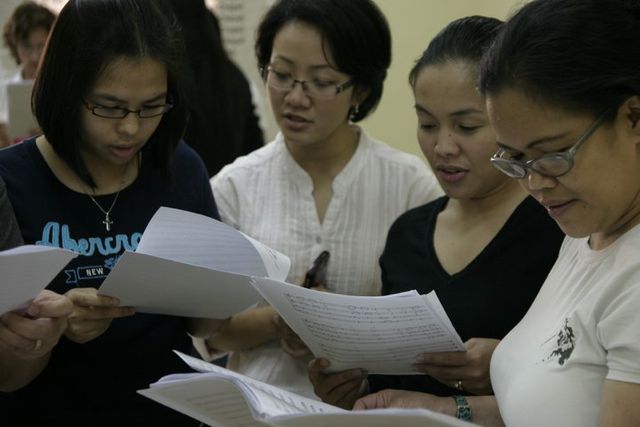
Another example of informal education is when you get involved in groups or organizations. I joined a choir at Church, and did not expect to learn about different voices and pitches or even how to read music scores. These things happened spontaneously and were not planned in being taught to the members of the choir. Joining any type of club or organization imparts informal education whether it is public speaking or learning how to be a team leader.


Formal education and schooling are also important because it teaches us the skills we need for specializing in a certain field, such as law or medicine. Formal education also involves paying for classes like guitar or piano, it does not always occur at a school. My brother and I took guitar lessons and it was a great experience to learn how to play a musical instrument. If we continue learning and become expert guitarists, we can then teach other people who want to learn how to play.


When our generation grows to become parents someday, we too will impart our knowledge of informal education to our children through teaching them how to walk and talk, teaching them morals, household responsibilities, and many other important aspects of life.