Showing posts with label playing sports. Show all posts

Sunday, March 18, 2012

On the Cricket Field

Last Friday afternoon, I attended my first cricket match.
Now keep in mind, I grew up in the USA. No one that I knew had the remotest interest in the sport, much less the inclination to learn. The handful of Indians and Pakistanis I went to school with never brought up the sport, which is apparently the second most popular sport in the world, after football/soccer. Surprisingly, the USA does indeed have its own cricket association.
My first encounter with the game came last year, when I moved to Qatar. Two friends at school, one Indian and one Pakistani, were arguing over some match that was taking place that evening, and I had the remotest idea of what was going on. The Bleacher Report, by the way, describes India and Pakistan’s cricket rivalry as the “biggest on earth.”
In the spirit of sociological research, I decided to attend last Friday’s match (Georgetown v. Texas A&M) mostly out of curiosity and intrigue.
Held every Friday in the QF busses parking lot, teams of EC students get together and play until the sun begins to set (and the ball is no longer visible). In this game, university rivalry trumps national and ethnic divisions. Indians, Pakistanis, Bangladeshis, and one white guy gathered on the playing field to spend an afternoon, the entire afternoon. I had heard rumors, but I never realized just how long cricket matches last. Just like long Bollywood films, the shortest of cricket matches (called Twenty20) are 2.5 hours long. The traditional form of cricket takes place over the course of 5 days. In film, we justified long movies through indoor access to air conditioning, but cricket matches are held outdoors; the same logic doesn’t quite fit.
Given our latest discussion on the gender and power, I observed that cricket is definitely a gender-polarized game. It is like the South Asian version of American Football in the sense that everyone, males and females, watch and appreciate the sport, but only for the male teams. After a bit of research, I did find a few numbered female cricket teams but they are still nowhere near the popularity of male cricket. Aside from me, another female didn’t show up until about half an hour into the game.
I also noticed, that cricket, like most sports, involves a very ritualized pre-game build-up: the common practice of the team huddle to boost morale, the obligatory coin toss to decide team positions (in the field or batting). Only then, can the game begin.
Prior to Friday, my own constructed understanding of cricket was, “it’s kind of like baseball.” Well, yes and no. In the past, when someone tried to explain the game of cricket to me, the explanation flew over my head. When I sat down and watched the game, however, the running commentary of what was going on made so much more sense. For full rules, see here. I can’t explain the game to someone else… yet… but I get the gist. Two batters, a bowler, teams of 11 in the outfield, avoiding the wicket, shouting “four” or “six”, batters switching places and gaining runs… It clicks.
*Photos taken by Omer Mohammed and Florent D'Souza

Monday, December 12, 2011

Education: At School and at Home


In one of our recent Sociology classes we learned about Education. The lesson was very valuable because we all learned that there is more than one method of educating someone. I personally did not actually take into account how everyone learns something everyday, and it is not necessarily at school. The act of learning in a systematic and planned way is known as formal education. When students pay to be taught in an institution facilitated to accommodate instruction of various subjects it is known as schooling. But the method in which people learn everyday is called informal education. Informal education happens spontaneously and is not planned.

Informal education is extremely important in our day-to-day lives. Ever since we were children, we have been both formally and informally educated, and of course gone through schooling. Learning how to walk and talk, and learning the language our family speaks are some of the first examples in our lives of being informally educated.


Whether it was watching mom cooking or playing basketball with dad, we were being educated in some aspect of life. I know that when I watch my mom cooking a traditional dish, I have to try cooking it after. Today, through watching my mom making a variety of dishes for parties and for the family, I know how to cook dishes like curries, pasta, and rice. This is also a slightly gender polarized job, and it socializes young women into taking up the role of becoming a wife and mother. I learned how to cook from my mom and how to play sports from my dad. This shows that there is a relationship between gender and informal education, particularly in learning about family responsibilities and chores as a child.


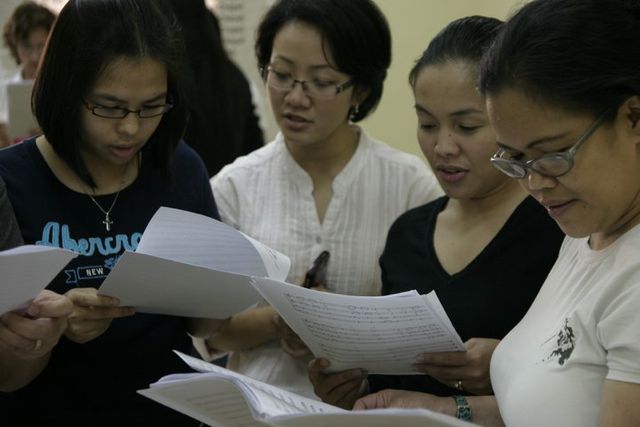
Another example of informal education is when you get involved in groups or organizations. I joined a choir at Church, and did not expect to learn about different voices and pitches or even how to read music scores. These things happened spontaneously and were not planned in being taught to the members of the choir. Joining any type of club or organization imparts informal education whether it is public speaking or learning how to be a team leader.


Formal education and schooling are also important because it teaches us the skills we need for specializing in a certain field, such as law or medicine. Formal education also involves paying for classes like guitar or piano, it does not always occur at a school. My brother and I took guitar lessons and it was a great experience to learn how to play a musical instrument. If we continue learning and become expert guitarists, we can then teach other people who want to learn how to play.


When our generation grows to become parents someday, we too will impart our knowledge of informal education to our children through teaching them how to walk and talk, teaching them morals, household responsibilities, and many other important aspects of life.