We, the consumers, are the victims of corporate conglomeration. Corporate conglomeration means when one company owns a number of smaller companies that are being controlled and operated independently, but are all managed by the main company. Therefore, corporate conglomeration has taken over every aspect of the world economy, from soda to food to hotels to gas. Our money is wasted on fuelling the businesses of corporate conglomeration. Media and film production companies ensure their success by using a variety of risk reduction strategies to make the most money from the biggest hits. David Grazian, the author of the book Mix it Up, argues "that decision making in the media industries is primary driven by the minimization of risk," (Grazian, 113). He highlights in his chapter six the strategies of risk reduction which include using as secondary market in way to generate profit from a cultural product beyond its domestic sale in its original format and using product placement as it happens to be a type of advertising but placed in a place we don't expect to see it. There are also other interesting risk reduction strategies, but this time I'm focusing on other risk reduction strategies that I found in Villaggio's cinema.
Since thousands of people go to watch movies weekly in Doha, the cinema has become a perfect location for some businesses to advertise about their products and services. For example, Dr. Hassan Al-Abdulla, a well-known dermatologist doctor in Qatar, has placed a poster of his clinic in Villaggio’s cinema right in the center of the main entrance. So, that as customers walk into the cinema before even getting they’re snacks, they could stop and read about the services that he offers at Dr. Hassan Al-Abdulla Dermatology & Venereology Anti Aging Laser Center.
There are also advertisements placed around the top of the wall. Cadillac, an American luxury type of car, has also placed an ad to advertise about their cars in Doha.
You can’t escape looking at all sorts of advertisements when you’re in a movie theater. I recently went to watch a movie in Villaggio’s cinema, and as I was watching the commercials before the movie started, a Pepsi ad played. It was my first time to see Nicki Minaj’s Pepsi commercial.
Nicki Minaj is an American rapper/singer. I must confess that I once heard her song Moment for Life, but when I heard her song again in the Pepsi ad, I liked her song more. Nicki Minaj’s song was played in a Pepsi ad; therefore it must be a form of using product placement. According to Professor Harkness, product placement is “a form of advertising where branded goods or services are placed in a context usually devoid of ads,” (class notes 02/18/2013). I found out from my online reading that Pepsi is doing a campaign called Live For Now “to amplify the company's longstanding ties with pop culture, said Brad Jakeman, who oversees the creative strategy for Pepsi's carbonated drinks around the world,”(Huffington Post). Pepsi decided to use a popular singer like Nicki Minaj to help flourish the brand’s name and gain it’s popularity back. Pepsi hopes to be number one on the beverages list, but Coca-Cola still is the top soda.
The advertisement in this case is promoting both the singer and the Pepsi company. Maybe the song Moment For Life will gain more popularity because of the Pepsi ad, and maybe a lot of people will feel like having Pepsi after watching this advertisement.
Companies use advertisementsto draw their audiences’ attention and get them interested to buy their
products.However, people usually
don’t like to watch the ads. People think of the ads as a break from movies,
they can get up, go to another place, or they can change the channel; people
hate watching ads. Therefore, companies figured another way to advertise their
products, which is in movies; this process is called product placement.
According to sociology, product placement is defined as a
form of advertising where branded goods or services are placed in context
usually devoid of ads. Audiences are
forced to look at the brands or the products in the movie. However, Audiences indirectly
feel it, or they may get have the desire to buy the product that they saw in
the film. Thus, companies now can reach their customers and have new ones
locally and globally. The Terminal is
a movie about Navorski (Tom Hanks), this movie sets inside the airport and many
major brands took place during the movie, in this scene, Navorski figured out
how to collects coins to get himself a Whopper meal. Navorski finally lifted
the inaccurately well-dressed burger to his mouth as the sound of the music is heroically
increasing. From this scene, Burger King restaurants wish you to get up, drive
to the nearest Burger King and get a Whopper meal.
The product placement in movies is prevalent because it
works. When a celebrity’s fans see him/her in a movie with a certain product,
they want to get it so that to become like them. For example, Will Smith’s
admirers may got the Ray-Ban glasses once they saw him in Men In Black with his Ray-Ban sunglass. Product placement with an
attractive character may make the product placement more successful. The more
the product pairs with a good-looking actress, the more people like the
product.
However, in Cars movie,
product placement weren’t directly paid to cars like Ferrari, Porsche etc. But
they helped in the technical field of the vehicles during the film's creations.
Porsche AG was the latest model for Porsche, and Prosche was the female version
in Cars who fall in love with Ferrari (McQueen); McQueen is the hero in this
film, and all kids’ dream is to get a Ferrari once they grow up. This film has
produced cultural products that lend
themselves to branding and merchandising opportunities, such as
McQueen toys in McDonald’s happy meals.
The Island movie –
a sci/fi-thriller movie - used many products in it, maybe to make the story
more realistic! But when you see the movie, you suddenly feel compelled to buy
all the luxurious stuff such as the yacht, the Cadillac car, Apple iMac, or any
product from Calvin Klein etc. all of the products in the movie get exposure
and promoted internationally.
The more you see a name, consciously or subconsciously, the
more likely you will buy that product compared with another brand, or a no-name
brand “TRUST ME”. When I saw The Devil
Wears Prada movie, I wanted to get Miranda (Meryl Streep)’s Prada bag, or
her amazing shoes, clothes and everything, every time I watch the movie, I get
the desire to do CRAZY SHOPPING.
Product replacement in movies can help the companies to
strengthen their names in the long run, because many movies from the secondary markethave the opportunity
to generate profit from a cultural
product beyond its domestic sale in
its original format. On other words, the products in the films can be seen in
DVD format, airplane displays, iTunes etc.; that’s why many companies are
trying to be part in scenes in movies.
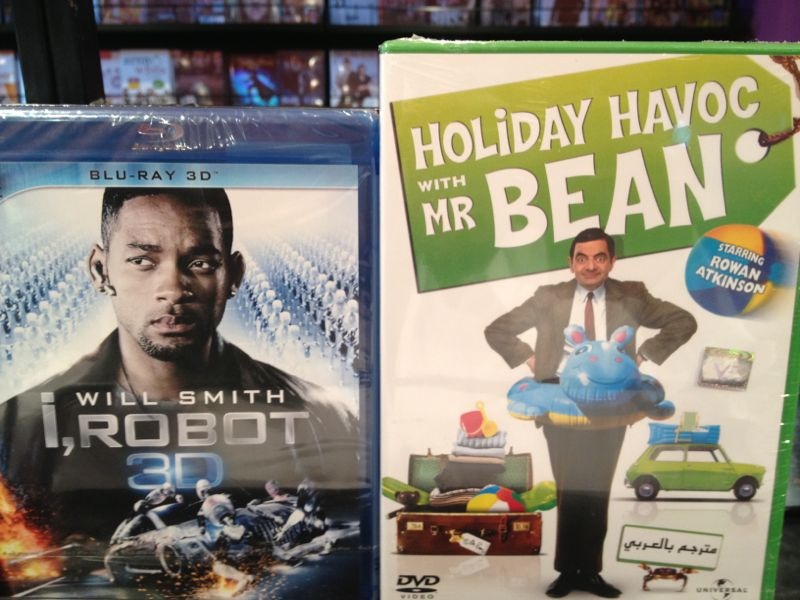
The Audi RSQ car plays a central role in I, Robot movie. Mr. Bean's car, a British Leyland Mini 1000 has its own character in all Mr. Bean's movies and episodes.
Considering the fact that we’re living in an era full of all sorts of sociological phenomena and “modern issues”, there’s clearly no doubt about the big role that music play in discussing and conducting such stories through their lyrics. While music is actually originated in Europe for the purpose of serving the people of highbrow culture, as well as being a handy tool for their producers (artists) and consumers (listeners) to express their suppressed love and affection, it has noticeably broadened to wider horizons.
Nowadays, music is played everywhere and in almost every sort of occasion. It’s not necessarily meant to be for special groups of people to enjoy it by attending elite or rock music concerts. Music now is played in weddings, birthday parties, restaurants, shops, and sometimes in public restrooms too! We even listen to music when we are turning on the radio while driving, as well as the background music in TV shows. But if we would consider the question of what role does music serve in the modern sociology of culture, the answers are pretty inspiring.
For instance, the best example would be presented by the King of Pop Michael Jackson with his major hit “Earth Song”, in which he expressed his sympathy toward the destruction that our planet is going through. Another valid example about socially conscious material in songs would be in the remade version of Michael Jackson’s song as well “We Are the World.” The remake version is a charity song that was sung by famous 21st century artists, in which the song was dedicated to the people of Haiti who suffered the horrible catastrophe. And finally the song “Just Stand Up” by famous pop and R&B artists, a charity song too to stand up against cancer disease. The collaborations of famous artists in these songs have certainly kept the messages they delivered persistent and more considerable due to the fact that they’re famous and their fans are always following their achievements (efficiency of secondary markets and product placements).
Furthermore, let’s not forget about inspirational songs that have jobs of spirit-lifting and changing one’s negative perceptions about life. Some of these songs are “Firework” by Katy Perry, “We Are Who We Are” by Ke$ha, “Raise Your Glass” by P!nk, “Born This Way” by Lady Gaga, and “Fly” by Hilary Duff. Most of these songs discuss a variety of the relevant sociological and psychological issues that people encounter at least once in their lifetimes, such as breaking down, feeling worthless, hating life, being stereotyped or looked down at, and the feeling of not being a productive member in a society. Some of these songs also talk about people who feel shy or ashamed to admit their sexuality, and these songs are the ones by Ke$ha and Lady Gaga.
It is clearly obvious how music is becoming an essential tool in film production and in determining how appealing a movie would be for its audience in the last couple of decades. However, this doesn't mean that movies that play music in them are definitely successful, nor the movies that you barely hear music playing in them are extreme failures.
Lots of songs became famous simply because they were played in big movies. And again, not all songs in movies achieved such success, in which the ones that would achieve it were mainly theme songs of movies, or the song’s artist is someone who’s already famous in the music industry. For instance, all of us know how “My Heart Will Go On” by Celine Dion became a huge romance hit once it was played in the movie Titanic. Till this day we listen to this song playing in retail spaces, especially the numerous instrumental versions of it in fancy restaurants.
[Above: the theatrical poster of the movie "Titanic"]
Apart from how movies can bring songs or artists to fame, the opposite process is not different. A song or an artist can bring a particular movie or a TV show into fame as well. Most of these motion pictures feature famous singers or famous bands having short scenes in movies in which they just appear in to sing. And if course, when fans know that their favorite artist/artists are featuring in a particular movie, they definitely watch the movie to anticipate the part in which their idol/ idols going to perform in. A lot of examples I can give to elaborate this practice. The movie “New York Minute”—starring Mary-Kate and Ashley Olsen—featured the famous pop punk band Simple Plan performing an amazing song that didn’t feature in any of their albums till this day. The song is called “Vacation” and people can have it only if they would buy the soundtrack of the motion picture.
[Above: the Olsen twins and Simple Plan]
Another movie was “Hannah Montana: The Movie.” Although it was meant to be for kids, a lot of adults watched it along with their children because it features a young talented country singer that people are obsessed with: Taylor Swift. She is that singer who brought life to country music again and made it popular among young people too. She was featured in the movie singing a hit that isn't in any of her albums till this day as well. The song is called “Crazier.”
Below is a video I made that shows how second-marketing plays a big role in the popularity of some movies:
What does this tell us? It tells us that media companies often refer to secondary markets (in this case, being music and famous artists) to minimize the risks of grabbing audience toward their productions. To conclude, popular cultures often rely on one another to achieve success and obtain the validity and vitality of their productions.
Well, for the older generations it’s déjà vu. The teenagers and young adults today never watched 90210, V and Hawaii Five-O. Of course, I am talking about the original versions of these television shows which aired in the late 20th Century. It seems to audiences that Hollywood has lost it- or has it? After all, the media corporations are in the money making business, and what better way to make money than to retell old and highly successful classics? With the exception of Melrose Place which miserably failed due to the bad acting and Bionic Woman which only lasted a season. However, in Bionic Woman’s defense, the writers' strike was going on at the time and caused the series to go on a short hiatus.
As well as rehashing old classics, Hollywood is bringing in successful UK based television shows such as The Office, American Idol (known as Pop Idol in the UK), Skins and many more. As previously stated, Hollywood has not lost “it”. Media firms need to minimize risk. To make money, they have to go with what they know and adhere to the rules of the game. There are multiple ways to minimize risk, like using well known actors and following genre conventions.
As you probably guessed already, another method which is becoming somewhat of a trend is the remaking of old hits and the adoption of successful television shows from abroad. Basically, remaking pop culture hits- popular culture here is defined as culture that is well liked and which is demonstrated through measurable commercial success.
In the case of bringing back the old classics, the target audience is not only the young generation such as the teenagers and young adults, but also the older ones. This is because they have already watched the original versions of the shows and are curious to know how the new ones are. Some of the new versions even feature story lines from the old version to make the audiences of the original versions keep watching.
Appealing to international audiences is another thing that the media companies want to do- this is part of the secondary market. When bringing in television shows from abroad, appealing to the international audience is not as hard anymore because the audiences abroad, from which the television show is originally based in, would simply watch the show out of sheer curiosity.
With the recreation of television shows, many elements have stayed the same- like the type of car the main character uses in Hawaii Five-O. However, things such as cell phones and laptops an other products, which perhaps were not used back then are being integrated into the shows to promote products (product placement) and this is producing a materialistic culture in the United States and it is promoting consumerism.
The recreation of television shows is sociologically intriguing because the cultures twenty, thirty or forty years ago and those abroad are significantly different to those currently in the United States. It would be interesting to study the different audiences and see how one television show affects different kinds of audiences and cultures.
 There are also advertisements placed around the top of the wall. Cadillac, an American luxury type of car, has also placed an ad to advertise about their cars in Doha.
 You can’t escape looking at all sorts of advertisements when you’re in a movie theater. I recently went to watch a movie in Villaggio’s cinema, and as I was watching the commercials before the movie started, a Pepsi ad played. It was my first time to see Nicki Minaj’s Pepsi commercial.
Nicki Minaj is an American rapper/singer. I must confess that I once heard her song Moment for Life, but when I heard her song again in the Pepsi ad, I liked her song more. Nicki Minaj’s song was played in a Pepsi ad; therefore it must be a form of using product placement. According to Professor Harkness, product placement is “a form of advertising where branded goods or services are placed in a context usually devoid of ads,” (class notes 02/18/2013). I found out from my online reading that Pepsi is doing a campaign called Live For Now “to amplify the company's longstanding ties with pop culture, said Brad Jakeman, who oversees the creative strategy for Pepsi's carbonated drinks around the world,”(Huffington Post). Pepsi decided to use a popular singer like Nicki Minaj to help flourish the brand’s name and gain it’s popularity back. Pepsi hopes to be number one on the beverages list, but Coca-Cola still is the top soda.
The advertisement in this case is promoting both the singer and the Pepsi company. Maybe the song Moment For Life will gain more popularity because of the Pepsi ad, and maybe a lot of people will feel like having Pepsi after watching this advertisement.
You can’t escape looking at all sorts of advertisements when you’re in a movie theater. I recently went to watch a movie in Villaggio’s cinema, and as I was watching the commercials before the movie started, a Pepsi ad played. It was my first time to see Nicki Minaj’s Pepsi commercial.
Nicki Minaj is an American rapper/singer. I must confess that I once heard her song Moment for Life, but when I heard her song again in the Pepsi ad, I liked her song more. Nicki Minaj’s song was played in a Pepsi ad; therefore it must be a form of using product placement. According to Professor Harkness, product placement is “a form of advertising where branded goods or services are placed in a context usually devoid of ads,” (class notes 02/18/2013). I found out from my online reading that Pepsi is doing a campaign called Live For Now “to amplify the company's longstanding ties with pop culture, said Brad Jakeman, who oversees the creative strategy for Pepsi's carbonated drinks around the world,”(Huffington Post). Pepsi decided to use a popular singer like Nicki Minaj to help flourish the brand’s name and gain it’s popularity back. Pepsi hopes to be number one on the beverages list, but Coca-Cola still is the top soda.
The advertisement in this case is promoting both the singer and the Pepsi company. Maybe the song Moment For Life will gain more popularity because of the Pepsi ad, and maybe a lot of people will feel like having Pepsi after watching this advertisement.