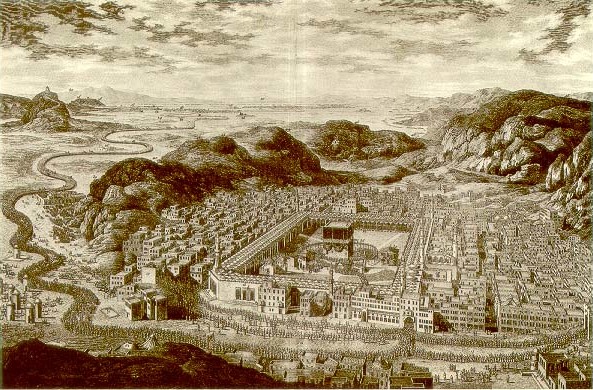
The article writes, "Construction plans to expand the Al-Haram mosque in the holy city of Mecca are underway. The project began in 2011 and and will outfit the mosque with air conditioning, electricity, and a new raised walkway around the Kaaba, or the stone structure that Muslims face during prayer. To make way for the new renovations, parts of the existing space, which include Ottoman-era construction, are being bulldozed over."
Tuesday, March 12, 2013
The Cost of Modernism
The article writes, "Construction plans to expand the Al-Haram mosque in the holy city of Mecca are underway. The project began in 2011 and and will outfit the mosque with air conditioning, electricity, and a new raised walkway around the Kaaba, or the stone structure that Muslims face during prayer. To make way for the new renovations, parts of the existing space, which include Ottoman-era construction, are being bulldozed over."
Thursday, March 7, 2013
TV Series - Shaping the evolution of behaviors?
Recently I was re-watching a TV show I used to love a few years back. 8 simple rules is an American comedy that went on from 2002 - 2005. While watching this show I noticed the family’s situation, and the first thing I could think of was the breadwinner system, and how this show defied it. The breadwinner system basically states that since the dawn of time, the man has always been that one that earns money to feed the family, while the woman stays at home and takes care of the kids and the housework.

For those of you who don’t know this show, it’s about a family of five, the parents, two girls, and a boy. The parents are trying to control their two teenage girls, while juggling work at the same time. But, opposite to the belief of the breadwinner system, this TV show does it differently. The mother is a workingwoman that sometimes has morning and night shifts in the same day. The father has a job too; but he works from home as a sports writer for a newspaper, and he’s the one who’s responsible for taking care of the kids, and sometimes cooking and cleaning. However, when the mother comes back from work, she is still expected to make dinner and clean.

A decade ago TV series like this one were viewed mostly in the west. When people watch TV shows that challenge and change social norms, eventually over time based on the cultivation theory, these new ways of living portrayed on television, become the social norm. This is one of the many reasons for this change.
Similarly, when we started watching these shows in the Middle East, the same thing began to happen. We started challenging these social norms, changing them, and calling it “modernization”. Due to the fact that not a lot of people in the Middle East speak English, only the ones that do have received this ideology from TV series. That is the reason why this new way of life hasn’t spread as much as it has in the west. However, I do believe that in the near future this change will spread drastically in the Middle East just like it has in the west.
Monday, January 28, 2013
"Modern Abaya"
In the media, Muslim Arab women are often portrayed as very conservative, veiled, and regularly, if they’re from the Gulf, wearing Abaya’s. However, what are also portrayed in the media are ideas of urbanization and modernization. In the recent years, due to the globalization and modernization theories, traditions and cultures in the Middle East are being thrown out the window. For the purposes of being “modern” and transitioning into urbanization, cultures and traditions that we once followed for essential reasons are being forgotten or drastically changed. The Abaya that was once supposed to serve the purpose of covering a woman up and concealing the shape of her body is now turned into a fashion statement. That may be due to the fact that the women here feel alienated from themselves. Marx’s theory of alienation helps us understand that. It basically states that due to the social structure and social class stratification enforced on us by society, we eventually begin to feel detached from our work, from our life activities, from ourselves, and from the people around us. We can use this theory and apply it to the situation here. Because the women are forced to wear the Abaya and look like every other woman around them, they’re beginning to feel invisible. They can’t express their personalities through fashion; they can’t stand out. This makes them feel alienated from themselves and from society, and I believe that this may be one of the reasons for the invention of the “modern Abaya”.
A variety of designers have turned the Abaya into beautifully designed dresses. I cannot deny that the art and thought put into designing those items of clothing is spectacular, but they’re not Abaya’s. Many new designers have come up with “modern Abaya” collections, a few Arab’s and a few westerners. The students of VCU in Qatar have come up with a project called the “Abaya Project” where they all contribute their beautiful designs of modern Abaya’s.
Here are some examples to demonstrate my explanations of today's modern Abaya.
The following video highlights a Modern Abaya Exhibition held in Katara’s Art Center here in Doha, displaying their beautiful designs.
I do agree that these new designs are very inventive, and can allow a woman to highlight her beauty whilst still being conservative. It allows them to express themselves and present their personalities through fashion. But going back to our original values, cultures and traditions, this is defying the purpose of the Abaya and hence defying our cultures and traditions.
Thursday, November 15, 2012
The (Blind?) Glorification Behind Modernization
My parents and I have always had an interesting relationship to say the least. Don’t get me wrong, I love and cherish them greatly. However, when it comes to seeing eye-to-eye on certain matters, a clashing does occur. I have never wondered or gave the topic a second thought until Phil Cohen’s ‘Subcultural Conflict and Working-class Community’ was assigned as a reading for class last week.
In order to explore some tensions behind parent and youth cultures I decided to visit my mother’s old house. Forty years ago, my mother lived, with her family, in Musheireb - as did many of the locals in Qatar. It was where a strong community once lived. Regardless of the poor state the inhabitants of the area had a strong bond. I’ve noticed that many of my father’s friends, including my dad, are able to speak Persian and Indian. This is because most children that lived in that close community played outside and bonded on a day-to-day level.
While exploring the area of Musheireb with my mother I can sense the personal attachment she has for the area, even though she hasn’t lived there for twenty-five years.
Around twenty-five years ago the locals began to move out of the area. “Gradual depopulation” was evident at the time. The government bought some of the houses to concentrate on “building new estates.” An example of this would be the expansion and reconstruction of Souq Wagif.
Modernization has its advantages of course; redevelopment brought more opportunities and bettered the “material conditions” of many. However, a clash between parent culture and youth culture is somewhat present. Traditions of the past seem to no longer or rarely exist. When my parents speak of their childhood there is less emphasis on material consumption and more on how strong their community was. The different lifestyles that their children have and the one they had years ago differ to a great extent. It is only natural that parents worry about the BBM lifestyle and the vast changes that seem to swirl around them. The ideology of spectacular consumption and the traditional ideology of production seem to clash. There is a great emphasis on consuming products, especially with some of the youth culture. Also, there seems to be less interest in producing as opposed to consuming. Some of the youth culture in Qatar seem to have “weaken links” in relations to “historical and parent culture.” However, some events taking place in Qatar seem to try to reconnect youth to traditions of the past. For example, on Tuesday November 13th, I attended a Dhow event that took place in Katara. It showcased the traditions of the past and had mini stalls that show how pearl diving was and fishing was conducted. The event could be trying to reconnect and educate youth about past times and also give the parent culture a trip down memory lane.
It leaves me to wonder how things will be in twenty-five years. The thought is almost haunting.
Saturday, March 17, 2012
Show me what you wear I'll tell you who you are
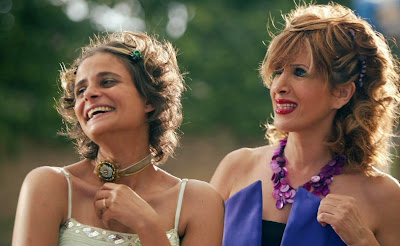
The film features the daily lives of five different Lebanese women. Layal, Nesrine and Rima work together in a beauty saloon. Jamal, a woman in her forties is a regular customer of the saloon. Throughout the movie, we see her trying to make herself look younger and convincing herself and everyone around her that she could still be a part of the advertisements’ world. The fifth character is Rose, an aged woman who never got married because of her devotion to take care of her mentally disabled sister, Lili. Rose finally gets to find the love of her life and yet she chooses her sister over her happiness once again.

Throughout the film, we see the direct confrontation between tradition and modernization in different scenes. This is manifested in the opening scene where Layal was making (home-made) Sukar (sugar), a traditional means, which is used for waxing. Then, right after that scene, we see that the saloon has a lot of modern equipment.
The choice of music in the film also emphasizes the clash between tradition and modernization. We see Layal driving her car ¬– a symbol of modernization – while listening to traditional, old Lebanese songs. The wedding song Layal and Jamal were singing to Nesrine in the saloon as a way to celebrate her upcoming wedding. In addition, the music that was played during Nesrine’s wedding was consisting of Mawwals – songs that are typically played in traditional Lebanese weddings. The music in all these scenes bring out the role tradition and culture plays in these characters’ daily lives.
The interior design and the décor in the different houses displayed in the film also demonstrate the clash between tradition and modernization. These houses played an important role in giving the audiences specific ideas about the characters. The architecture of Bassam’s house, Nesrine’s husband, was very traditional with the penthouse and the well. On the other hand, Salah’s (Layal’s married boyfriend) house, we see the aquarium and the modern furniture. One can immediately notice that modernization is the emblem of a highbrow culture in Lebanon. How your house looks like or what car you drive are expressive of which class you belong to, the elite, educated class or the traditional middle-class.
Fashion is also a part of this picture of tradition versus modernization. We see the younger characters more associated with modern clothing. Rose and Lili represented the older generation with their old-fashioned skirts and dresses. On the other hand, we see Layal being the most fashionable among the five women. Fashion seem to signify someone’s status in this movie as well – the more modernized clothes; the higher social class. Upper class people are the ones who wear stylish and elegant clothes.
One can see how music, furniture, fashion are used in movies to indicate of the clash between culture and tradition on the one hand and between modernization and westernization on the other hand.
Monday, February 27, 2012
Modern (Not) Versus Traditional
In my own family, I notice that my parent’s roles are alike in some aspects but are different in others. For example, both of my parents are employed however, they have very different household responsibilities. My father is the one who provides us with a house but my mother turns it into a home. My father provides us with a quality education by enrolling us into the best schools but my mother comes home from work and helps us with our homework. Simply put, my father pays bills and my mother pays attention.
Growing up in a semi-traditional, semi-modern Arab family, I formed specific assumptions concerning what my role would be as a wife and mother and what my future husband’s roles would be as a husband and father. I know that as an Arab woman I am expected to know how to cook, clean and take care of the children at a minimum. Additionally, I am expected to work since more and more women of my generation are entering the workforce. I am expected to marry a man of the same social status as that of my own family or higher. My future husband is expected to have received an education equivalent to or higher than that of the one I did. He is also expected to be a workingman who can provide for his family by ensuring a house for them, good education for his children, and a comfortable lifestyle in general.
After taking a closer look into my own family, I realized how I am influenced by the modernization found in my generation yet still connected to my Arab roots. Societies are in fact shifting away from the old stereotype of the male being the breadwinner and the female being the home caretaker. However, they are not completely letting go of their traditional views.
Friday, December 2, 2011
Differences in cultural sexism
Rights of the genders are a debatable issue. In the earlier days, men and women were having different rights in the Gulf region, which resulted in the segregation of the sexes. In the 20th century, with modernization, Qatar witnessed a social mobility, which enabled both the genders to begin to have similar rights and were considered equal. Women in Qatar now have the same rights as men, in relation to work, vote, study, and drive. However, there are still some inequalities between male and female in the Arab world. In Qatari culture the men are responsible and are the ones who take control in hard situations. Also, men having more freedom: go out and stay up late without having to give excuses; while, women having less freedom, have to ask permission if they would do anything.
Clothing is another area that is more controversial for women than for men. Actually, the Qur’an (the Holy book of the Muslims) says the genders are equal and does not require women to cover their faces. Islam does not promote sexism (Parker, par.2). However, interpretations of Islam differ on the clothing of women, especially concerning the hijab. For example, when I went to Saudi Arabia four years ago, I went to some shopping mall, and I was shocked that everyone was looking at me. Finally, one woman came to me and said, “Cover your face!” I was wearing an Abaya and head covering (Shela) because in my Qatari culture it is optional if you wear face covering (Niqab) or not, but I was crossing their cultural boundaries by not wearing the Niqab, so I felt awkward and suspicious. As a result, I began to overgeneralize, and to assume that all of the Saudi society was like that. I became prejudiced. On the other hand, they considered me deviant because I was violating their cultural expectations.
Here’s one of my personal experiences of the deviation of the ethnicity among the various countries in the Gulf region itself. My relatives who live in Saudi Arabia were wearing the black cloves; head Abaya (a one-piece Abaya that covers the head), and Niqab. They are different, and their culture and gender expectations are different as well. There are huge differences between our freedom and theirs. Saudi girls are supposed to cover their hair and face in early age, where as in Qatar it is optional if you cover them or not. When my relatives came to visit me in Qatar, despite being knowledgeable that women here were allowed to drive, they were shocked because they didn’t realize that many women actually drive. Also, they were impressed by seeing my colored designed Abayas. In their point of view, it is against their culture to wear designed Abayas. One of them told me that it is not good to wear them, because they will be considered attractive to men, but mine was loose and it covered my body, and I didn’t see anything wrong with my Abaya. They also go to single-sex schools and gender-segregated work places. Their culture segregates the sexes, and women don’t have a chance or choice for driving because it is against their government law.
I think the change there will be really hard because people are entrenched in their culture, religious interpretations, and gender expectations. Women there bound themselves from the fear of the society and its pressures. Here are some of the instances where cultural sexism is witnessed. Although the influence of social mobility is embraced in some countries, with time, there are many windows that still need to be created and opened in the more conservative countries, especially in the Gulf.
Works Cited:
Parker, Kim. “Women, Islam, and hijab: Emory university. Fall 1996. Web 30 Nov. 2011.
Friday, October 28, 2011
Society’s Dissatisfaction with Aberrant Beauty!
According to the author, poet, and playwright, Rabindranath Tagore, “Beauty is truth's smile when she beholds her own face in a perfect mirror.” How do we define beauty? In my country perfect skin, wide eyes, tan color skin, and curvy body are defining the main ideal of Arabic beauty. Beauty obsession becomes a large issue that societies suffer from. There are strong pressures on people to be perfect because they want to present who they are in a fake way and accept being treated by the way they look. But yet there is a bright side of this beauty.
Make up, beauty salons, latest trends, jewelry, latest handbags, latest shoes and latest hair cuts are the main material culture, which is a favorite and hot topic these days. When I talk about these topics with my friends, we get excited and a lot of debates start. Qatari culture is really concerned about the appearance. Girls are wearing the latest model of abaya and boys are wearing the bright new Thoub. Male beauty in Qatari culture is taking on greater emphasis, although not as strongly as women’s beauty, but quite fair. Qatari man likes to wear new watches, new sunglasses, new cufflinks, and new soles. Also, they often go to the barber to shave their beard or get a hair cut.
People’s choices of custom and clothing are depending on society to present their cultural tradition and values. Qatar is a nation with high culture, in which there is luxury and splendor because of high income that came from the gas and modernity. With the rising economy Qatar’s modernization included the clothing for both men and women. The cultural values are still in the society. Furthermore, people kept on developing without forgetting their religion and tradition. For example, Qatari women still cover their bodies and they translate the old customs into a new design of body and hair covering. Wearing the abaya is not for religious matters because there are Muslim women who are covering their bodies without the abaya in other countries. However, Qatar society expects Qatari women to wear the abaya in order to be loyal to the country’s tradition.
What happens when thinking of beauty goes too far?
On weddings
At wedding parties Qatari women exaggerate their make up and wear the latest designed dress. Lack of confidence and fear of not getting accepted in the society led the women to spend a fortune on the wedding supplies, such as the latest wedding dress, famous make up artist and hair dresser, which causes a series of problems for men and increases the number of unmarried women because women demand a high dowry to arrange their imagined wedding and men can’t afford it.
“An estimated report presented by Abdul Aziz al-Ansari, the director of the Marriage Bureau located in Doha, stated that nearly 50% of the Qatari women are unmarried…. The biggest hurdle in arranging a partner is due to the high dowry demands by the bride's family” (Himadree, par.2, 4). Women obsess over beauty, exaggerate, and have a strong feeling to be perfect that has led them to never experience the beautiful touchable moments that they will get to when they marry. In role conflict women can take a role by their actions, being mature and balancing their beauty needs. Is it worth it to spend this amount of money? This depends on the goal that they want to achieve.
Religious point of view
In Islam wasting money is forbidden, yet some people do that, and guilt may cause an ongoing series of problems. The ideal society is built on the human relations and their organized interests. Also, it is characterized by its ideas, values and morals, law and systems, which establish boundaries and stop these problems from happening.
Work cited
Himadree, C. “ Spinsterhood Among Qatar Women On The Rise. “The Muslim Woman. 19 July 2006. Web. 23 Oct. 2011.
Wednesday, September 21, 2011
Abaya - A Fashion Statement

Butterfly, fold, and jumpsuit are three of the many names given to the designs of the modern Abaya. Originally, it was a cultural garment worn by women in the Middle East to cover up the shape of their body. In fact, women in the past did not have to wear it since most of them covered themselves up modestly. Today, in the Gulf countries in particular, the designs are constantly in change, depending on the trending world of fashion. Rather than having a loose black cloth, it now comes in various shapes and with multiple embroidery designs.
Since the clothing under will not show, girls tend to portray their fashion sense by the Abaya they are wearing. Not only is it a type of material culture that women use to cover up, but it also shapes the social relationships. I remember having a Syrian lady visiting us in Doha. She was shocked by how the Qatari girls wore the Abaya. It was a culture shock to her, as she was used to the plain loose black cloth, and not the multiple designs. However, since the material component is shaped in some way by the non-material culture, she has adapted to this trend as everyone else was following it, and is seen as a sign of modernization.
New designs are out everyday, ranging from very loose to very fit. Those designs come from other countries and act as a cultural diffusion. The neighboring countries influence us. Therefore, when there is an Abaya exhibition such as Heya or a fashion show, young designers from all over the Gulf countries would display their unique designs, and the Qatari girls would buy them. Here are a few abayas I bought from the Saudi section

The young girls here are attracted by each other’s unique Abaya designs. I was ordering popcorn before entering the movie at Villaggio, and I saw this girl wearing an Abaya that attracted my attention. So I went up to her and asked her where she got it tailored. She replied by saying that she had it made in one of the Abaya exhibitions held at Doha Exhibition Centre. I kindly asked her if I could take a picture of the Abaya in order to make the same. Here is how it looked like.
Not only is the influence regional, but is also Western in some way. For example, in one of the exhibitions, I saw a design that had studs on the shoulders, along with others that were “funky”. I kept thinking inside my head that I saw those designs on a dress a star was wearing, and now it is implemented on the Abaya. Lady Gaga acts as a major influence to all those girls that want their Abaya to be extra original. Also, recently young girls have their Abayas tailored in a way that it would look like a jumpsuit from the bottom, which is also influenced by the West. I have also seen girls that deliberately shortened their Abaya, and when I first saw it and asked them why, they would say that they wanted to show their heels off. I completely understand that it is a cultural norm, and those designs just keep getting updated by the day.