Showing posts with label Doha. Show all posts

Wednesday, June 5, 2013

Behind the Scenes

When we look at Qatar, there are so many narratives that are a part of the everyday life in the small emirate. One can describe the glamor and sheer flamboyance engulfing the small yet wealthy state. It is an attention-grabbing, hopeful story that would easily blend into the general scene of international cinema. However, a group of Northwestern University-Qatar students are making a short film about the other side of the coin.

This young bunch is channeling their creative energy in a completely different direction. It is talking about the dream for a better tomorrow which is what most of the expats enter Qatar with. Only this dream is shattered to pieces. Jaser Al-Agha, the director of the film under the production of Menna Kamel are telling us the story of a young man from Syria with that dream of a better tomorrow. The main character leaves Syria in hope to provide for his family by opening a garage in Qatar in order to make more money. It takes us through the touching story of separation from the homeland and his family and the disappointment in Qatar. His life is nothing like he imagined; his dream of a better tomorrow turned into a nightmare of the present. I will not unveil too many details of the story as I recommend you to see this great film named Mitl El Aarous or Good as New .

In my humble opinion, the crew is creating an outstanding authentic narrative which represents a more realistic picture of Qatar. It is authentic on various different levels; I will view the levels of authenticity through the definition of Richard Peterson. Firstly, this idea is a true-to-life reproduction; besides the top tier employees in the myriad of companies in Qatar there is a great number of expats who do not necessarily live on a high leg. They work hard for their money and encounter various difficulties that are unimaginable to us. Also, this is an original idea as I have not seen any films that portray the life of the common man in Qatar; documentaries, shows or any coverage of Qatar shows us the metropolitan skyscrapers and supercars as opposed to men in overhauls working from dawn to dusk. The story is also very current, it describes the hardship of the lower class worker today and puts it into perspective. The enthusiasm and zest that these young people have for this project is refreshing and makes me as an Education City student proud. Their intentions are pure and sincere as I see them working on this project without regard for time or energy.

It depends, however, who is watching this movie. The interpretive community or the people who interpret or define some aspect of culture will have differing views about the authenticity of this film. If it is screened to an exclusively Qatari audience, the reaction will be quite different than the one of a group of workers in the industrial area. Also, there may be different takes on the film depending on whether one has ever lived in Qatar or not. Non-Qatari residents may interpret it in one way and Qatari residents regardless of nationality will interpret it in another. In sum, authenticity is a socially constructed concept that defines something as real,true or pure; as an objective viewer I think this story fits the definition and it is something worth thinking about.

Friday, May 31, 2013

Ithnayn Karak Please!


When I return to my home country and people ask me what Doha is like, I just pause and non-nonchalantly say "It's simply multiculturalism on steroids!". I honestly do not think i am too far off when I say that. From my modest experience in my three year stay in Doha, I can say that culture develops in Doha in a way that it develops nowhere else. On a daily basis I interact with people from at least 4-5 different nationalities which is amazing by any standard! My social network or a group of people I am connected with in one way or another is extremely diverse. Interacting with these groups of people allows for our habits, hobbies, cultures or even tastes to converge into this beautiful melting pot of civilizations which makes Doha today. It's amazing to me how culture diffuses and adopts parts of other cultures to incorporate it into a unique blend.

I will tell the tale of introducing my father to ritual of Karak in Doha. Rituals enable groups to gather collectively and reinforce collective identity, or in this case, converge with a part of a different culture. We had a conversation last night while having tea about Karak and he told me he's heard of it but that he's never tried it. To provide some background, he is a diplomat living in Doha for three years now. His interaction is limited to other diplomats or businessmen; the venues he visits are mostly hotels, malls, restaurants, diplomatic receptions etc. He has visited Qatari majlises and interacted with Qataris, but the way they treat him his very flattering simply because of the nature of "His Excelencly's" tittle. So, I decided to be the one to show him one of the most "Doha" things to do in Doha.

It was almost dusk and we had finished our family dinner so I told him that instead of tea, tonight we should head to get some Karak. He complied with a dose of skepticism simply because of the age gap and i don't think he knew what to expect; I had previously told him I go there with my friends in the late night hours so I can understand his reaction. Whilst driving to Bandar which is a place that serves Karak near the Corniche, i witnessed culture diffuse in traffic where he took his Balkan temper and driving etiquette and applied it in Doha traffic. I tried explain my fascination to my father but the response was "What Balkan temper?" so i decided to switch the topic. We reached Bandar and he unfastened his seat-belt and tried to get out of the car. I told him to stay and honk the horn; he looked at me doubtfully and asked me why. I just told him to do it so he did. Seconds later, a man knocked on our window and asked us what we wanted. My father looked confused and in awe that a man would come and serve us simply by honking the horn. I quickly responded "Etneyen karak, please" which means "Two karak, please" in English; the man nodded and walked off. I spent some time explaining the process to my father who found it unacceptable and disrespectful to honk in front of a store. The epilogue of such an action in the Balkans would have been quite different, but culture is relative after all!


While we talked about this whole ordeal, the gentleman came back with our karak. I took the karak, payed the man and we drove away to find a spot to enjoy our oriental chai. We found a spot which faced upon the beautiful Doha skyline. I asked him what he thinks of it so far, he responded he likes the view of our Charshija which is the equivalent of the Souq in Skopje and that our traditional Turkish tea tastes better than the karak. We laughed about it and I told him that this could be a modern substitute of his former favorite place. He suggested that one day we play tavla or backgammon some day while drinking karak. That is one of the traditional games people in the Skopje Charshija play while enjoying a small glass of Turkish tea . We just made a plan to glocalize a domestic ritual with what we have in Doha. The process of glocalization is adapting a particular aspect of a culture to a certain locality or culture. We were going to participate in cultural diffusion! I was proud to say that next week inshallah, I will be participating in the process that makes Doha amazing!

.

I just sat back and reflected on the blend of culture that I participated in. Simply drinking the traditional karak while gazing upon the colossal skyscrapers that made Doha what it is, i thought of the magical blend of tradition and modernity and how globalization and glocalization occurred at the same time. I was going to participate into this process and bring our traditional game to our tea time; perhaps that will catch on and people will be going for karak and a game of backgammon or tavla soon. If you ever see that at Bandar, you know who started it! Selam Aleykum!


Sunday, May 26, 2013

Global Citizenship


I am often confronted with the puzzling question "where are you from?" Hmm.. this seems like it should be an easy one, shouldn't it? I was born and raised in Doha, Qatar, in 1991. My dad was born in New York, moved to Canada, finished his last year of high school in Egypt, and came to Qatar, where he remains to this day. My mother was born in Qatar, and both of my grandparents have mixed national backgrounds.


I went to a British kindergarten, an American primary and secondary school, and an American Jesuit university. I speak predominately Arabic with my mom and predominately English with my dad, and travel often, exposing myself to different cultures and languages. So whenever I'm confronted by the topic in a conversation, I usually announce, proudly and with a sheepish grin, "I guess I'm a global citizen then."


People often discount such a statement as too cheesy or cliche; however, rare is it when an individual realizes the implications of such a statement. I'm not saying I'm profound or anything, I'm just a byproduct of this global culture, of the phenomenon obsessively termed globalization by the masses. It connotes Western ideological domination over the East and Northern economic supremacy over the South. However, in his book Globalization: Social Theory and Global Culture, sociology professor Roland Robertson, described the process of globalization as "the compression of the world and the intensification of consciousness of the world as a whole," and sociologists Albrow and King define globalization as "all those processes by which the peoples of the world are incorporated into a single world society." Waters concedes that it is a "social process in which the constraints of geography on economic, political, social and cultural arrangements recede, in which people become increasingly aware that they are receding and in which people act accordingly." I see this everyday in Qatar; expatriate, or non-Arab/non-Muslim kids saying insh'Allah or getting karak,


or a Corvette with an American flag bumper sticker driven by a young Qatari male, or a non-married Arab couple walking and holding hands. More and more everyday cultural norms are readjusted and boundaries redrawn. The sheer proliferation of mixed-sex education in the Middle East shows the ideological rearrangement between what once might have been mores or even taboos (such as having Qatari men and women in the same classroom socializing outside of an appropriate cultural context). The fact that I sit in the atrium of Georgetown University School of Foreign Service in Qatar, where education based on the Western Jesuit experience is imported from the United States of America to Qatar, writing on a laptop that was manufactured in another part of the world, wearing clothes from designers that claim to be Italian but have factories in China and India. All our societies are connected on a microscopic level, and our ancient cultural heritage, although to be held with pride and regarded as majestic, has slowly changed and molded itself with the proliferation of mass media and travel, exposing a majority of people in all corners of the world to an ever-flowing milieu. For our last class, on Wednesday, we discussed functionalist theory, which views that different social environments maintain an orderly and consistent status quo, where people actively endeavor to maintain stability and order. David Grazian believes that popular culture is functional for society, acting as an agent that maintains stability the systematic nature of social worlds. Popular culture, accordingly, includes rituals and totems that are shared across the world through the appropriately titled "popular culture." Rituals are cultural acts of solidarity, social cohesion, and rebellion, according to Grazian, and that they enable groups to gather and enforce their collective identity. Through globalization and mass media, especially through popular mobilization media outlets such as Twitter and Facebook, we see people that would never otherwise have met build relationships and experiences vicariously. They become desensitized and their sense of understanding of the world they inhabit expands outside their immediate national sphere of influence, and a supra-culture that transcends national or regional boundaries is developed. Popular culture, as base and denigrating as it can get in some cases, unites people through ideas, songs, dance, blogs, personal pages, and other forms of expression, forming a massive culture paralleling the consumer culture, although more and more we are connected by ideas in lieu of commercial products.


Bibliography
Robertson, Roland. Globalization: Social Theory and Global Culture. London: Sage, 1992. Waters, Malcolm. Globalization. 2nd ed. London: Routledge, 2001. Albrow, Martin, and Elizabeth King. Globalization, Knowledge and Society: Readings From International Sociology. London: Sage Publications, 1990.

Tuesday, May 21, 2013

The Essence of Diversity

Last spring, I have been to Washington D.C where I visited my brother whose doing medicine residency in the states. It was a beautiful place filled with many buildings and awesome cuisine.

However, one of the things that had grabbed my attention is how the art and the theme of the place is different than from what I have seen in Doha. In Washington DC, the buildings have this Greek theme that emphasizes the earliest forms of Republicanism. Also the parks are green and filled with many historic-reflective statues such as Abraham Lincoln statue at the National Mall.

Whereas, in Doha, the architecture of the buildings is more headed towards the future. There are these tall buildings with smooth semi-cylindrical shafts that can be found in the west bay districts as well as these glossy zigzag shaped buildings. Also there are so many indoor malls here and there.

I believe that the contrast of such cultural objects that we see in Washington D.C and Doha is important because each symbolize the culture and heritage of the country and its people. If all cultural objects were uniform, there would be no point to traveling to faraway places because there would be no art diversity which makes things seem more vibrant and interesting. Likewise, my trip to Washington D.C would not have been as interesting if I have not been exposed to new and different aspects of infrastructure and building architecture. Of course, the variance of the themes in each region occur because of social forces such as the background of the country, religion, and economy. For instance, the city planners and architectures along with other individuals are basically influenced by such social forces, therefore, implementing different kinds of themes for their respective regions.


Monday, April 8, 2013

Fashion & feminism


Every chick flick movie is entitled to at least one montage sequence that shows the protagonist going through a “makeover” that usually consists of extensive shopping and beauty treatments. Everyone goes shopping, whether male of female but it’s known universally that women shop for fun, and sometimes, they consider shopping a stress reliever.


So what is it that makes women enjoy shopping? Is it the pleasure of buying clothes that will change how we look? Or is it the pleasure of just spending money? If you ask me, for a long time ago, shopping has turned from a process of attaining essential needs to a process that reinforces what Hilary Rander calls in her book, autonomous individualism. In her book Neo-Feminist Cinema, Rander attributes the autonomous individual to the woman who apprehends her pleasure for herself and whose health can be measured by the body’s capacity to experience itself as pleasurable. So shopping is now a way of proving one’s independence.


So, Do the female representations in media effect our own perception of power and being a feminist? Well, being surrounded, or suffocated, by the media that advocates for consumerism played a role in turning most women into neo-feminists. According to Rander, Neo-feminism means, “control over one’s body/face/self, accomplished through the right acquisitions can maximize one’s value at both work and home.” Although we might not be aware of it, we shop for the pleasure of having the power to choose what we want and how we look.


Although being a shopaholic in some way contradicts with one of many things that feminism stands for, that is liberating women from being sexualized in media, it seems that Neo-feminism has changed this view. Neo-feminism encourages consumerism and individualism, while on the other hand; feminism had always advocated for female solidarity and independence. So it is still possible to be a feminist and a shopaholic

Thursday, March 28, 2013

Girls in Industrial Area


While one's sex refers to the biological features that determines if they were male or female, gender, on the other hand, refers to "the meanings a the society gives to masculinity and femininity" (Sutherland & Feltey, p.132).

Worldwide, strength, boldness, aggressiveness, ...etc. are seen as masculine traits, while femininity is usually thought of as being emotional, submissive, sensitive, nurturing, ...etc. Despite the major achievements done by women in the Arab world, the society still prefers if they perform within their "feminine" context, as they are mainly seen as nurturing mothers and loving wives only. These gender stereotypes have been negotiated over the years, however, they have not completely vanished.
Nowadays, women can study, work, travel, and do a lot of other "active" things, however, there are still a lot of constrictions that they face everyday.

A few days ago, my friend and I had to go to the industrial area to pick up a phone booth from Qtel/Ooreedoo, a prop that we need for a film that we are making. Industrial area is an area with all the garages, factories, car service companies,... etc., and it's usually a male-dominated area as it is mostly filled with workers and laborers. When we first mentioned that we are going to our friends, they were very surprised that we are two girls going there alone without the company of a guy. Some of our male friends offered to accompany us, but we refused.


It was very interesting to see how our gender was an issue even though our sex was not. We went to the industrial area regardless of all the comments that we got such as: "Better safe than sorry".

We arrived to Qtel on time, and we were ready to pick up the phone booth and load it on to the truck. However, the Qtel representative and the truck driver did not let us, and called some of the workers to do it. We thought that they were being nice so we agreed and left.


However, when we left the industrial area and reached our location, it was only us and the truck driver. He tried to load the phone booth off the truck alone but it was too heavy and it almost broke. Again, we offered to help but he refused, and called a stranger off the street to help him instead.


This incident like many others was just a reminder for my friend and I of how our gender determines the way the society and other people see us.


Wednesday, March 27, 2013

Gender Socialization Conflicts in Doha


Food culture in Doha is one of the most important traditions that people uphold in Qatar. For example: if someone is visiting Doha for the first time, one of the things the citizens of Doha insist on offering the visitor is the food. Although the food recipes doesn’t necessarily originate in Doha, but people in Qatar perceive food as great social icebreakers.  
 Interestingly enough, when I observed the food culture in Doha I realized that the gender socialization notions and its applications in the Arab culture is conflicted. First, let me explain what I mean by the gender socialization. Gender socialization is the female and male genders’ learning process to the socially acceptable behaviors and attitudes to each gender’s role. 
In Doha’s culture, the culinary experience is one of the factors that gender is stratified by. Knowing how to cook in the Arab world is strongly affiliated with being a woman. Men are encouraged to know how to cook, however women are supposed and should know how to cook. They should also know how to serve the food for their fathers, husbands, and guests. From observation, I realized that this ideology conflicts with what’s taking place in the Arab restaurants of Doha. 

When I went to Bait El-sham, a Syrian restaurant,
 most of the waiters were males. I checked with the manager and he mentioned that the chef was a male too. Another Arabic restaurant that I went to is the Orient Pearl, which had very few female waitresses, much like Al Saha restaurant, Tajin, Damasca, and Morjan, which had mostly male waiters. Thus, the gender socialization that both genders were exposed to in their upbringing is conflicted with what’s applied in these Arabic restaurants. 
To further understand the conflict that’s taking place, I analyzed more Arab ideologies and gender socialization patterns that can be connected with this conflict. In Doha and the Arab world, there’s a huge distinction between the private, in the house, and public, outside of the house, sphere. The public sphere is more restrictive towards females. In Doha, part of the gender socialization that both genders are brought up with is that women can’t go out late, and can’t go out all the time, where as men are allowed to. 

 In trying to balance between the two deeply rooted beliefs that Arab men and women are brought up with, what became socially acceptable is that men should cook in these Arabic restaurants because it’s a male dominant society. Never mind the strong belief that cooking is associated with females, if the issue is one that has to do with gender, females are almost always contained in the private sphere of the home, something that we, females, are starting to break free from nowadays.


Sunday, March 10, 2013

Where are the girls?


Popular representations of gender roles in movies affect the way in which we think and behave. Although we tend to assume that the idea of a patriarchal society doesn’t apply anymore to several countries in the Middle East these days, it could be argued that it still does exist. One simple form of examining gender roles in most Middle Eastern countries is through observing the structure of the restaurants. According to Karla A. Erickson in the book Cinematic Sociology, “The restaurant becomes a site where workers and consumes navigate the boundaries between individuals working and living in a service society.” So, I decided to go to a restaurant in Doha called Afghani Brothers and clearly from the name, it’s not a restaurant you would find women in. I went to the restaurant with my friend who was a girl as well and the welcoming gesture was stares from everyone who was in the restaurant. All the workers in the restaurant were males as well. The waiter immediately told us to sit in the second floor and didn’t explain why or ask if we mind. 


The fact that my friend and I were the only girls in the restaurant made it extremely uncomfortable for us because although there was not indication that women are prohibited from entering, it was just unacceptable for women for eat there. Being in this restaurant made me wonder, why is it unacceptable for women to walk in? Could it be because the restaurant is not a highbrow restaurant? Or could it be because there isn’t any female waitresses or workers there?


On the contrary, restaurants that are more westernised have females either working there or as customers. One example is Jones the Grocer, although there was a number of male workers there, the majority of the workers in the restaurant were females and so were the customers. Although women do work in restaurants, those restaurants often tend to be westernized to some extent.

From the restaurant Mamic in Katara. Although there are females who work in restaurants here in Doha, those restaurants tend to be Westernised to some extent.


Through being in those two restaurants, it could be argued that the idea of the patriarchal society or the breadwinner system is not applied when it comes to a western environment. On the other hand, in restaurants such as Afghani Brothers or Turkey Central, there are no women working there and their main customers are males. Although there is no set rule that forbids women from going into these restaurants, the social norm works as a motivation to stop women from being customers in such restaurants. 

Sunday, March 3, 2013

Family Roles in Doha

 During my last Cinema & Society class, we had a conversation on family and family roles, and we had the chance to express our thoughts and opinions. For this blog, I will discuss that matter and go into detail as to how it applies to our culture in Doha and the Arabian Gulf in general.

Traditionally and since we can ever remember, men’s job was to provide financial support for the family, hence their name “breadwinners”. Women, on the other hand, were responsible for taking care of the house, the kids, and ensuring it all went well. This is how women earned the name “homemakers”. All this goes back to our existing views and ideas about gender and who we believe is supposed to do what. 


The way all this applies to Doha is that during the last century and for the most part, men and women both assumed their traditional family roles, with men being the “breadwinners” and women being the “homemakers”. However, contrary to popular belief, men and women have mostly been breadwinners and homemakers simply because we decided to arrange things in such a way, not because it is the right and only way to go.


 Nowadays in Doha and in the Gulf, the number of working women has increased. Sometimes, this is the case because the “bread” earned by the father isn’t enough to cover for all the expenses and financial needs of the family. At other times, this is because of another relatively recent phenomenon, which is that nowadays more and more women are taking more interest in completing an undergraduate study after completing high school. By going to work and earning their own money, they feel more powerful and worth more than if they just stayed at home and took care of the kids. Although I am a personal believer in that some things women do at home, such as taking care of their children, are of great importance, the reason they and most of society do not see it this way is because, as David Grazian said in his book Mix It Up, “non-economic activity is devalued in today’s modern capitalist society”. Perhaps another reason that would cause a woman to go to work in this part of the world is if her children have all grown up, and so she basically has nothing to do at home and decides to go work to spend her time doing something useful.   


Before ending this blog, I decided to conclude with a few useful tips for those of you who are already married or do plan to get married someday. First, Grazian mentions a study that observed that women’s stress levels go down when their husbands help them with the housework. Grazian also stated that another study concluded that women who work are happier than those who are homemakers, which might make you re-think letting your wife go to work. That’s all for today. 


Saturday, February 16, 2013

Lagoona Mall: Move up?!


Every time I see the Lagoona Mall slogan “Move Up”, I know they are talking about social class; the photo itself has a photo of a regular girl who is transformed into a model. The Land Mark Mall started out by targeting the upper classes to shop by creating this European environment in the building. Soon, when Villagio came with its Italian Design, it stole these customers because of the variety of shops, and the more expensive shops in a section called “The VIP section”. Lagoona’s number one attraction “Sugar and Spice” is a great example of Conspicuous consumption, where people in the upper class can show their social status through sitting in a coffee shop.


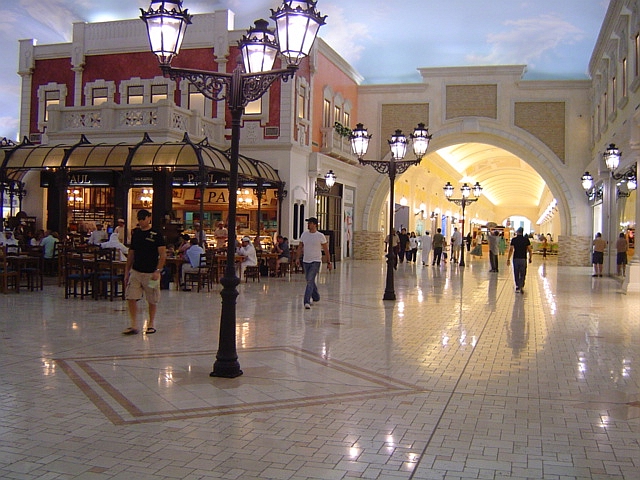
In Doha, malls are not only a destination to shop, but to eat, hangout, or even watch a movie. Malls owners want customers to spend as much time as possible to dry their money out of their pockets on products, and services. In fact, the rent varies on how much time people spend in a section of the mall. For example, the coffee shop next to the cinema has probably high rent rate because the place there is always crowded. Paul, in Villagio, has a good location everyone sees it as they are going to the cinema, or Carrefoure.

Malls actually speak about your personality in Qatar. You are most probably going to see the same faces every time you go to a mall. “City Centre” aims at the variety, they want as many as possible from all social classes. So does “Villagio”, but they also want more of the upper classes, as you can see by their VIP Section.

For the past couple of years, West Bay (excluding City Centre) has become a very common attraction to the upper classes because they want to drink a cup of coffee that costs 200 riyals ($53), or because they want to have a dinner for two that costs 1000 riyals ($260). I’m not exaggerating the prices, but try and go to the Pearl and have a meal there. Even though the meals are not worth it, but the upper classes love them because it shows that they are from a high social status in the society, and their highbrow activities.


Today in Qatar, the highbrow (upper social class) activities are mainly in West Bay, including Katara, the Pearl, Lagoona Mall, or at any hotel in West Bay. Sheeshas (Hookahs) are considered lowbrow culture in Qatar, but the managers were smart enough to open up a couple of expensive restaurants that offer Sheeshas to the elite, and the upper classes who want to enjoy a smoke in West Bay. Look at Sukar Pasha, a very expensive Sheesha lounge in Karara. Wouldn't you consider this as a conspicuous leisure activity?


Now, I can easily judge you about your social class, from the place you smoke in.