Showing posts with label education. Show all posts

Thursday, February 7, 2013

The Convoluted Concept of Reservation

What's the one thing that  pertains in every part of the world  for decades and centuries long and changes form with time? It would be hard to dispute that this dangerously prevalent "thing" is stratification. We are all too familiar with stratification based on factors such as economic capacity, class into which one is born etc., so much so that the statement " All men are created equal" never seemed more obsolete. Even if they were, the present state of the world would ensure that they aren't treated as equals. As a consequence, we constantly find ourselves in pursuit of a social mobility, moving up the ranks to the superior, more dominant class. What intrigues me is how this idea of an existing social inequality, eventually leads to a desire to move up the social ranks has impacted several important factors; in particular, education.


The Indian higher education system has always been known to be akin to a rigorous rat race, where only the best of the best survive the onslaught of the many examinations thrown at them. With a system like this, anyone would expect to churn out high-achieving candidates year after year. Yet, what it doesn't take into account is the disparity in access to basic education for students. A significant portion of India's student population even today; either reside in downtrodden areas that have been overlooked or are financially incapable of granting themselves a good education, either due to monetary limitations or caste-based discrimination. Thus,  they might not just be spending nights under lamps  preparing for their exams, they might also have to take up odd jobs to make their ends meet. How about the wealthy, affluent kids then? They get to go to the best schools, get tutored in addition to regular schooling; can afford to buy more books and also have resources such as the internet to enhance their chances of making it big. Totally unfair right?


Reservation is the solution that the government proposed  to quell this conflict between the privileged and the under-privileged students. In other words, it is that missing link in the system that would finally even the field.  The following table reflects the typical caste-based reservation profile for entry into institutions :


SC and SC Converts to Buddhism
13.0%
STs 7.0%
Vimukta Jati 3.0%
Nomadic Tribes (NTI) 2.5%
Nomadic Tribes (NT2) 3.5%
Nomadic Tribes (NT3) 2.0%
OBC(Other Backward Castes)19.0%
Total 50.0% 


What this table essentially represents is an opportunity for students from the repressed groups to resume their career aspirations by earning a college degree. So, while this move by the government alleviates the issues faced by these students, it reduces the chances of those that do not belong to those groups. A direct consequence of this stand taken by the government has been insane minimum requirements for students who aren't guarded by reservation. So a student not from one of the groups listed above would have to get a score of around 10-20% better than a student who was from those groups, to be admitted to the same university, for the same program! Is this not unfair to the students from the latter category?


The ideal question to ask is how one would deal with a double edged sword like the reservation policy being implemented at present, in Indian education. Amidst all of the debate regarding this issue it is quite obvious that the central aim of improving education has been ignored. If for once, as suggested in the controversial movie "Arakshan" which translates to reservation; authorities looked at ways to improve the standards of education for the less fortunate students, the issue of unequal resources could be dealt with and so would the issue of unfairness. Be it by establishing remedial coaching centers, or providing cheaper computers to these students, the Indian education system needs to be rethought and planned with the best interests' of both groups of students in mind.


Here is a video of a debate involving the cast of Arakshan that explains the reservation system in Indian education  in a nutshell :


Here are some articles describing different opinions' on the same :

http://blogs.wsj.com/indiarealtime/2011/08/16/economics-journal-dont-scrap-reservation-improve-education/

 http://www.chillibreeze.com/articles/India-reservation.asp

http://www.hindustantimes.com/News-Feed/ncrschool2012-rte-topstories/What-s-so-bad-about-reservations/Article1-922892.aspx


Tuesday, February 5, 2013

Nice White Ladies in NUQ

In Hollywood films, there is a high school film genre, in which films focus on a certain high school as there setting. Usually in these films, the class room is filled with troubled, underachievers, who are saved by one teacher or principal (Sutherland, Jean, and Feltey, P.71). One common theme is the "Outsider as the Teacher-Hero". This theme can be seen in films such as Dangerous Minds and Freedom writers. In these films, the classroom consists of ethnic minorities and the teacher is the "white savior" that saves the day and communicates with the students is a middle class white teacher who is new to teaching and does not belong to the community (Sutherland, Jean, and Feltey, P.71).


Even though Arabs and Qataris are not ethnic minorities in Qatar, however, some professors who come here think of themselves as saviors that came to educate these poor little Arabs who live in the middle of the desert. For some reason, these “nice white ladies” do not seem to differentiate between the fact that they came to Qatar for a paid job, and in return, they get so many privileges just for being ‘white’. However, this form of social inequality is not even the problem. The problem is that some ‘nice white ladies’ have crossed the thin line between being an educator and being orientalist. When the ‘nice white ladies’ could not get over their fascination with the Qatari and Arab culture and traditions. Their preconceived stereotypes of Arabs living in deserts and moving around with camels confuses most 'nice white ladies' that come to teach in the Arab world, especially in Qatar. When these 'nice white ladies' see the real lifestyle of Arabs it conflicts with all the preconceived notions they have been socialized to believe in through years and years of reproduced stereotypes through different agents of socialization, but especially movies. When these ideas conflict, the 'nice white ladies' fascination with Abayas and high heels and brands make them disregard the fact that the people who wear such stuff still have brains.
  
vs. 
 

It is important to note that the dynamics in Qatar are different than those found in the films. In the films, the nice white ladies are from a higher social class than the students, while in NUQ, a lot of the students are from a higher class than the professors who usually come from a middle class background. 
Usually, social class can be defined as a group of people who share a similar position in society based on wealth, education, and occupational prestige. However, in Qatar, what matters the most to social class is race. So even if the professors get a lot of privileges when the come to work here, however, they are still in a lower class than the Qataris. 
Unfortunately we have some nice white ladies (and men) in NUQ and Education City, that just because they are white teaching Arabs mainly and other nationalities made them think of themselves as saviors, and just because Qatar chose to bring American Universities made them believe that we –as Arabs- aspire for “Western modernity”, and that they should teach the "spoiled Arabs and Qataris" the value of education and liberty. 


References: 
Sutherland, Jean, and Kathryn Feltey. "Social Class." Cinematic sociology: social life in film. Thousand Oaks: Pine Forge Press, 2010. 75-79. Print.

Tuesday, October 2, 2012

Sports Subculture at NUQ


In my freshman year, I founded Northwestern University in Qatar’s first sports team, the Men’s Football team. Back then I didn’t know I was bringing a subculture into the NUQ community. I just thought of it as a club like all the other ones that existed. However, after September 30, 2012, after a sociology class about subcultures, I realized that I should be going down in the history books as one of the first students to introduce the subculture of sports in NUQ. The girl’s basketball team, however, will be recorded as the first successful NUQ sports team. It was much more challenging for me because NUQ had plenty of girls, but very few male students.


So how is the football team a subculture? A subculture is basically a group of people within a broader or larger culture. What differentiate them are their beliefs and values, which may or may not overlap with the beliefs and values of the popular culture. In this case, I would like to refer to NUQ as the popular culture and the football team as its subculture.


The major goal of NUQ is to provide excellent education and produce individuals who will become the pioneers of the media industry in this region. The major goal of the football team, however, is to promote physical education, sportsmanship and win competitions. We see some differences in the goals and beliefs of both, but there are also some overlaps. Honesty, discipline, punctuality are values that are required by the members of both organizations.


Through the football games organized in Education City, I also observed the emergence of fandom subculture. Several people come to support their teams during tournaments and important games. The sports subculture is closely tied to the fandom subculture. Members of the sport subculture are mostly athletes and other active members in the field of sports, whereas, the fandom subculture consists of individuals who admire or are passionate about a specific sport or any activity.

Monday, September 24, 2012

Glocalization in a Globalized City


In a country striving for international recognition, glocalization is probably the last thing one would expect to be happening there. The country I am talking about is Qatar–the little country everybody knows as “the country near Dubai.” The glocalization I am referring to is happening in a place known as Education City, which is the education central of the country. In Education City, there are around six American Universities–Northwestern University, Carnegie Mellon University, Georgetown School of Foreign Services, Texas A&M, Virginia Commonwealth University and Weill Cornell Medical College.
These American colleges came to Qatar as part of an attempt to globalize, resulting in them taking the form of pseudo-multi national corporations. It is interesting to see that the universities change their branding to include the word Qatar in the name. Wherever there is any sort of globalization, one can find resistance. Not the violent form, but the intellectual kind, especially from the society. The citizens of Qatar might prefer their children to study in Qatar University, which is the country’s first higher studies school which offers diplomas and Bachelors degrees.
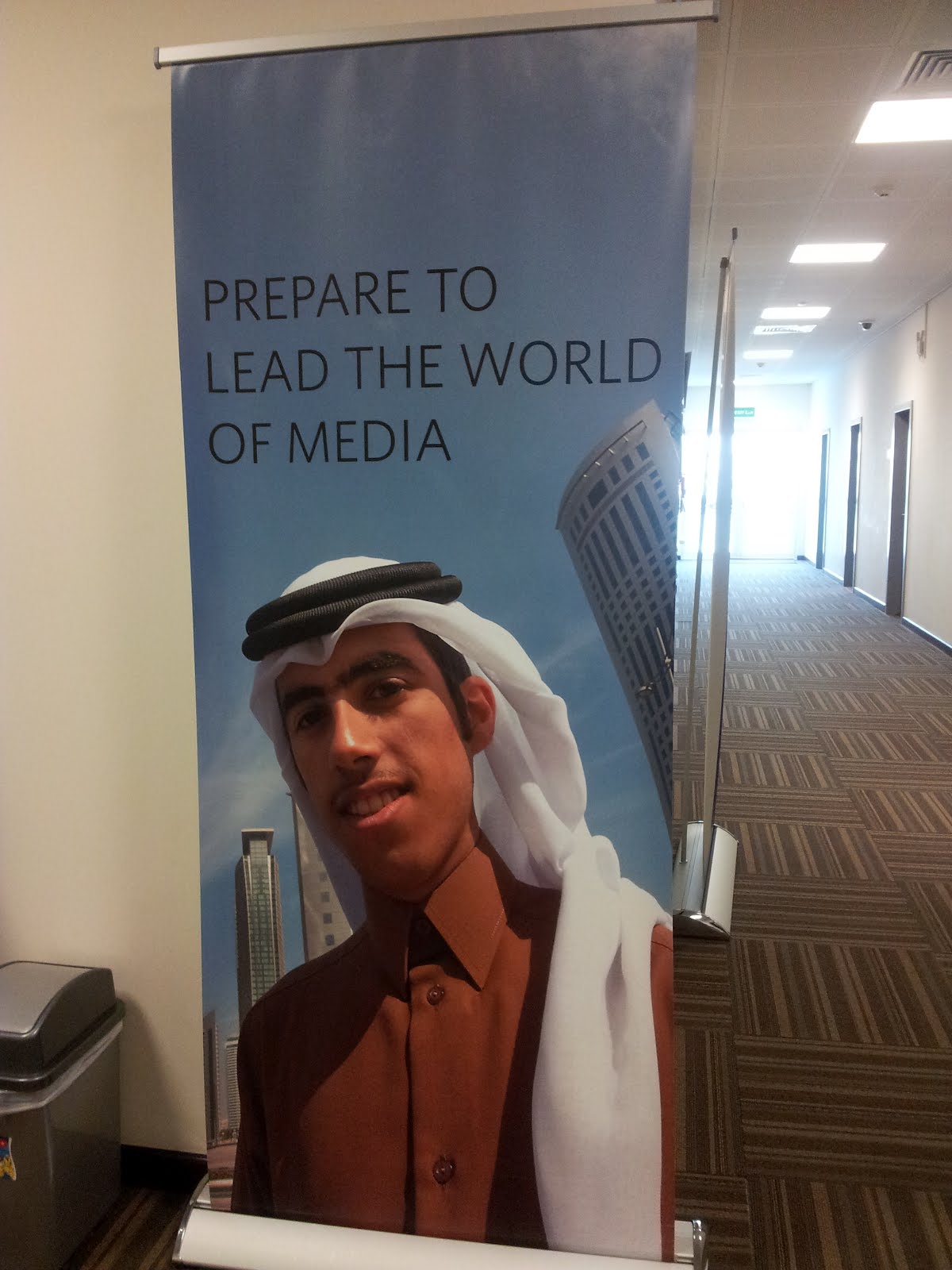
Glocalization is a way to counter this form of undesirable resistance from the people of the country. The universities in Education City especially Northwestern University try to portray a Qatari look by using Qatari and Arab students on posters that shall be placed in public areas. The consequence of this glocalization still brings about a radical change in the society, primarily because it is still an American University, imparting an American education. My personal opinion is that this resistance is slowly but definitely reducing. This is again because of the acceptance of globalization by the people.

Friday, March 30, 2012

Bureaucracy and Education


            Seeking knowledge is an important task in life, as education becomes the building block of any field in life, from planting to architecture and so on. Not knowing about sociological theories and how does it shapes our understanding of life could block us from seeing things that lies beneath the word ‘education’ or educational institutes.


            Educational institutes usually work with the same guidelines. They all have rules; they’ll ask you what to do and what to prevent yourself from doing. Therefore, students or faculties are not the ones who put the guidelines for their actions in the campus; the one who has the ‘control’ is the dean, the owner of the university or someone who is responsible for the education in the country. Therefore, educational institutes tend to be utilitarian organizations that are classified also as bureaucratic. Students go to school, universities or any other educational institute in order to seek knowledge or gain a degree; hence educational institutes are utilitarian. Educational institute put guidelines and goals for achieving a higher rank of education and students graduating with a high degree in order to compete with other institutes and raise their honor, therefore they’ve a goal or value to achieve by having a certain control on the students, so it’s bureaucratic.

            But is educational institutes being bureaucratic and utilitarian is beneficial or helpless? From the point of view of society, guidelines set by educational institutes can cause social conflicts, as some rules might seem fair to one and unfair to another. For example plagiarism, as some people might get affected if someone copied their work without them knowing and at the end, the plagiarist and the victim of plagiarism will be responsible. However, from the point of view of the functionalist, rules and guidelines are necessarily for helping people to achieve a certain point as they put certain tasks with certain deadlines so that employees or students won’t delay their work and would learn this much in this time. But that also bring us back to the fact of being controlled by these guidelines that are set by someone in a higher statues, therefore, we cant satisfy both sides, education always have a functional purpose and a conflict.

            Not only the large educational institutes such as universities have rules and guidelines, however, even school nowadays provides student with a small book full of guidelines and rules to be followed. When I used to be in primary school or even secondary school, in Qatar schools never had a full book that tells you what to do and what to prevent from doing, but when I got to high school at the year 2007, guidelines and rules were filing life. Not only my high school “Al-Bayan” had a book full of guidelines, but also online courses, social and educational centers…etc. all had policies. Having such policies, didn’t allow me or any other person seeking knowledge to do what we actually want to do, as we all had to do this and that at that certain deadlines and if we didn’t do things the same why, we fail. Therefore, it’s not a choice to follow what it is giving to us if we want the knowledge or the degree; it’s a must or else, game over. 


            In someway or another, we can’t do everything we want to do without following anyone’s rules. There is always someone who leads us around. Can be negative, but also positive, as if we break all the rules and we did whatever we wish, we lose organization in life as well as everyone will have his/her own revolution. 

Thursday, March 29, 2012

Is there more to ROTA than just the projects?


In sociology class we study a variety of topics by scanning through the chapters. I found the recent class to be the most interesting class from the previous classes. I say this because I learned something new and interesting that never captured my attention. We spoke about Organizations in terms of Formal and Informal organizations. The discussion looked at Voluntary organizations and Utilitarian organizations.  ROTA is an organization that best defines theses two kinds of organizations according to Sociology. 

“Towards Education for all…Today, Tomorrow, Forever” is there priority mission statement. I am currently a non-paid worker for ROTA (Reach Out to Asia) and this experience gives me a valid explanation of judging the type of Organization it is in our society. The organization has a hierarchy of employees where some are paid to run the organization, while most do voluntary projects to create awareness of the illiterate people who are less fortunate or hard working laborers to get proper education. My job in ROTA is to educate eighteen cleaning staff members of Education City twice a week. These workers are mostly recruited from Sri lank and possess low skills in communicating with their colleagues or people in charge of them in English. They fail to understand certain vocabulary that is very important in order for them to do allocated tasks.

Therefore, I am an individual who gives 2 hours of her time to help these workers learn a few English words, so that their bosses and employers have an easier time communicating with them. ROTA is also a utilitarian organization. A utilitarian organization indicates that the organization has a specific goal/ purpose and implies that some members get paid for running the few aspects of ROTA and is usually a matter of individual choice. I can strongly say this organization is not a Coercive organization. The aim of ROTA is to increase access to educationalfacilities in a crisis situation. The chairperson H.E Sheikha Mayassa bint Hamad Al-Thani and a few other Board members provide guidance and direction for the charity.

Since the organization is a utilitarian organization, this means they are Bureaucratic. A bureaucratic organization indicates that an organization has forms for everything, a lot of paper work, policies, procedures, and deadlines. This organization incorporates all of those attributes in order for an individual to be a non-paid employee, or part of a quick volunteer project. The organization strictly believes in their aim and ways to achieve that aim. The organization has to be bureaucratic because they are dealing with a large number of people of different knowledge skills and areas. They have to deal with the volunteers and the people who need the voluntary assistance. They have to try and get people to sponsor their notion and they work forward with that support and funding’s. Qtel and Vodafone are so far the most spoken about sponsors for the projects of ROTA.


ROTA is a non-profit organization, and thus there is a limit of trust and liability issues that have to be kept under control and supervised regularly. These benefits of having rules is a functional point of view, a positive way to see an outcome in every bureaucratic organization. There is an achievement, which is education that is given and received by a range of individuals.

Although, if there is too much bureaucracy pushed towards the organization, there tends to be negative issues with the organization called Social conflicts. The social conflict in ROTA is that there might be some Asian countries who do not get the privilege to receive the same sort of education everywhere. 

One reason to this is that they might not have enough students or people to do the voluntary work of teaching in those specific regions. Or, they might only get a visit of help once a year that has the possibility to hold an event of teaching. The picture of the Map above shows the different regions that ROTA has visited to help educate more illiterate individuals.

In Doha Qatar itself it becomes a social conflict because many Indian schools barely receive information about ROTA trips abroad or several local projects because the organization only picks people who have a certain amount of skills or study in Education City. Education City most of the time tries to get university or Qatar Academy students to participate in these projects, in order to build their Community and Service skills and approaches. The picture below is of a Carnegie Mellon University student teaching the cleaning staff of his University. As a teacher myself, I have noticed that there are no teachers from The College of the North Atlantic or Qatar University. The next picture identifies how serious ROTA takes their educational services because it shows the training sessions that occurred for all the upcoming teachers in Education City.

Visit this link to watch how Education city demonstrates enthusiasm for Reach out to Asia: http://www.youtube.com/user/reachouttoasiatv?ob=0&feature=results_main

“Make a Difference and take Action” says ROTA.

Monday, February 27, 2012

Modern (Not) Versus Traditional

Since this week’s reading was about family, I decided to observe the socialization found in my own family. In class we discussed how in most societies there is a stereotype of the father being the breadwinner and the mother being the one who stays home and takes care of home-related topics. In the U.S, this has become less common and moreover, many countries are moving farther away from this ideology. In my blog post, I will talk about how being brought up in an Arab home has affected the way I think when it comes to family related matters.
In my own family, I notice that my parent’s roles are alike in some aspects but are different in others. For example, both of my parents are employed however, they have very different household responsibilities. My father is the one who provides us with a house but my mother turns it into a home. My father provides us with a quality education by enrolling us into the best schools but my mother comes home from work and helps us with our homework. Simply put, my father pays bills and my mother pays attention.
Growing up in a semi-traditional, semi-modern Arab family, I formed specific assumptions concerning what my role would be as a wife and mother and what my future husband’s roles would be as a husband and father. I know that as an Arab woman I am expected to know how to cook, clean and take care of the children at a minimum. Additionally, I am expected to work since more and more women of my generation are entering the workforce. I am expected to marry a man of the same social status as that of my own family or higher. My future husband is expected to have received an education equivalent to or higher than that of the one I did. He is also expected to be a workingman who can provide for his family by ensuring a house for them, good education for his children, and a comfortable lifestyle in general.
     
After taking a closer look into my own family, I realized how I am influenced by the modernization found in my generation yet still connected to my Arab roots. Societies are in fact shifting away from the old stereotype of the male being the breadwinner and the female being the home caretaker. However, they are not completely letting go of their traditional views.

Thursday, February 16, 2012

Glass Ceiling barriers Can Be Broken!

When sociologists study gender, they focus on male-female differences in behavior and appearance that have been socially created. Sexism has brought many inequalities to women, especially within areas of education, work and politics. By sexism, I mean the belief that one sex- and by extension, one gender- is innately superior to another, justifying unequal treatment of the sexes. The concept of gender stratification becomes evident, as there tends to be unequal access to power, prestige, and property on the basis of sex/gender.


The notion of glass ceiling could be the reason for gender inequality. In this case, glass ceiling is an invisible barrier that keeps women from reaching the highest ranks of jobs or industries. This may be the case with some women, but not with all women, certainly not Mercedes Duerineckx. She is the founder and CEO of the International and well known, Art Wanson Gallery. She has created a luxurious platform for all art expressions, under the trademark of excellence, tradition and exclusivity.


Women tend to face gender discrimination within higher education, but Duerinckx didn’t. She got her Business Administration degree in Tourism.


Duerinckx’s education and Art Wanson Gallery is not her only accomplishment. She has been awarded businesswomen of the year 1992 in Morocco, Founder and CEO in real state industry 1985-1992, and the executive member of Spanish Chamber of Commerce in Tanger.


She said that growing up in a multicultural family has helped her become who she is today. Duerinckx was born in a Spanish family in Morocco and later on moved to Spain and France. In sociological terms, she was raised in a highbrow culture, with a diverse cultural background.

Monday, December 12, 2011

Education: At School and at Home


In one of our recent Sociology classes we learned about Education. The lesson was very valuable because we all learned that there is more than one method of educating someone. I personally did not actually take into account how everyone learns something everyday, and it is not necessarily at school. The act of learning in a systematic and planned way is known as formal education. When students pay to be taught in an institution facilitated to accommodate instruction of various subjects it is known as schooling. But the method in which people learn everyday is called informal education. Informal education happens spontaneously and is not planned.

Informal education is extremely important in our day-to-day lives. Ever since we were children, we have been both formally and informally educated, and of course gone through schooling. Learning how to walk and talk, and learning the language our family speaks are some of the first examples in our lives of being informally educated.


Whether it was watching mom cooking or playing basketball with dad, we were being educated in some aspect of life. I know that when I watch my mom cooking a traditional dish, I have to try cooking it after. Today, through watching my mom making a variety of dishes for parties and for the family, I know how to cook dishes like curries, pasta, and rice. This is also a slightly gender polarized job, and it socializes young women into taking up the role of becoming a wife and mother. I learned how to cook from my mom and how to play sports from my dad. This shows that there is a relationship between gender and informal education, particularly in learning about family responsibilities and chores as a child.


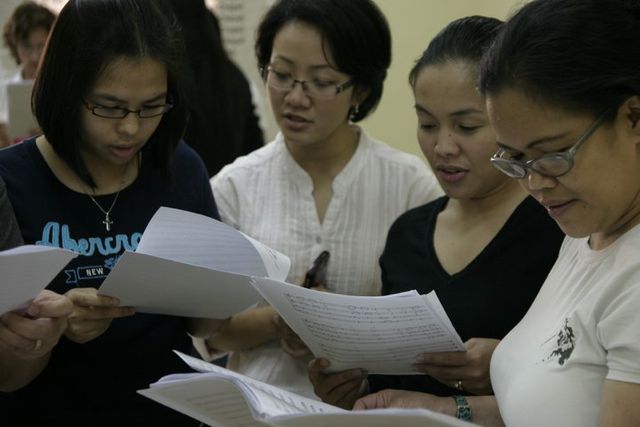
Another example of informal education is when you get involved in groups or organizations. I joined a choir at Church, and did not expect to learn about different voices and pitches or even how to read music scores. These things happened spontaneously and were not planned in being taught to the members of the choir. Joining any type of club or organization imparts informal education whether it is public speaking or learning how to be a team leader.


Formal education and schooling are also important because it teaches us the skills we need for specializing in a certain field, such as law or medicine. Formal education also involves paying for classes like guitar or piano, it does not always occur at a school. My brother and I took guitar lessons and it was a great experience to learn how to play a musical instrument. If we continue learning and become expert guitarists, we can then teach other people who want to learn how to play.


When our generation grows to become parents someday, we too will impart our knowledge of informal education to our children through teaching them how to walk and talk, teaching them morals, household responsibilities, and many other important aspects of life.

Saturday, December 10, 2011

You Think You Know Ghetto?

After walking out of my Sociology class on Thursday, I questioned myself about the standardized intelligence tests we take throughout school and university. Thinking about it, the education we receive is mostly based on our wealth, culture and ethnic background. It is extremely difficult to come across a standardized test without having the exam be culturally and ethnically unbiased. Standardized exams tend to be culturally biased since the ones who write them are usually white, middle-class, individuals. This is not necessarily done intentionally, but the people who are most eligible to attend university are middle and higher-class individuals in our society. As Sociology insists, we do not have control of which family or which social class we are born into, and the education we get is based on that. In other words, richer people tend to have greater chances of better education, whereas lower class individuals get inferior education. Representative of this case would be in America where it is stereotypically known that most whites and Asian people get the better education, while the African Americans and Latinos get less.


Tracking in schools play huge role in this situation. Tracking is when education systems sort students into distinct instructional groups according to similarities in their past academic performance, results on standardized tests, or even anticipated academic expectations. In most cases, students are grouped based on their test scores and past performances. Research suggests that this special curriculum exaggerates and widens the gap among students and continues the belief that intellectual ability varies according to social class and ethnic group. Thus, at most times, this influences the chances of a student’s dropping out of high school based on their racial and ethnic classification.

Halfway through class, our professor gave us a “You Think You Know Ghetto?” test. At first, I was surprised and wondered as to why he made us take the test. After completing it, it made me realize how if not all, but most tests I have taken are culturally biased! I realized that most standardized tests go to the extent of creating educational inequality and institutional racism, and reveal how most white students are privileged. The test gave me an opportunity to put myself in the same shoes as black students after taking a standardized test. The test “ You Think You Know Ghetto?” is a more contemporary version of the Adrian Dove’s famous “Chitling Test of Intelligence” first published in 1971. The test illustrates how cultural language differences affect objective measurements of intelligence in tests.

Some sociologists argue that African Americans demonstrate poorly in intelligence tests in comparison to white students. This gap is more evident in regards to African American language, attitudes, cultural backgrounds and even lifestyle. At most times, cultural content within intelligence tests leads to culturally biased results. As most of the people who design these tests are white and educated, their tests are culturally unfamiliar for dissimilar test takers. For instance, African American students do not use the same language, nor do they have the same cultural background. From this, we may also infer that dominant cultures set the parameters for minority cultures.


Thursday, December 8, 2011

Education, Culture and Society

Education is an important part of our lives and contributes to our socialization. When speaking of education, sociologists focus on the "formal and informal social interactions that train, discipline, or shape (or reshape) the mind and body in planned or unplanned ways" (Ferrante, 366). We all achieve some sort of education during our lifetime, whether it's spontaneous or intended. Much of our education begins at a very young age in schooling systems. Schools are designed to provide formal, systematic instructions that take place primarily in classrooms. Schools also include extracurricular activities and assignments to be completed outside of the classroom.


Although the aim of schools is to educate students, sometimes the type and method of education is different. Growing up, I went to multiple schools and in different countries. I was born in Saudi Arabia and attended school there until the age of five before I moved to Scotland and studied there. After almost two years of living in Scotland, I returned once again to my previous school in Saudi Arabia. During this period in my life, I realized how different the education systems were. The type of schools were completely different as well.


Saudi Arabia is an Islamic and Arab country, so the majority of the schools taught and encouraged Islamic behavior and Arab culture. Manarat Al-Riyadh, the school which I went to in Saudi Arabia, was an International School that taught both American and British curriculum. In addition, Arabic and Islamic studies were also enforced on students even if they were not Muslims. The cultural and religious studies started from as early as the first grade and continued until the 12th grade.


On the contrary, when I was in Hillhead Primary School in Scotland, the curriculum that was being taught was very different. Unlike my previous school, in Scotland, my school emphasized mostly on manners, behaviors and how to work and interact with people. There was less emphasis on studies and more emphasis on social interaction. Also, there were no classes offered about Scottish or Western culture and no theology classes. Contrasting to Saudi Arabia, the students in my class were of different religions and cultures. There were Muslims, Hindus, Christians, Buddhist, Arab, African, Caucasian and Asian.


We can see how schools are designed to serve society by functioning as places for education, discipline and socialization. The curriculum for schools differ on which background they're from, nevertheless they're purpose is to socialize people to allow them to function according to their society.