Showing posts with label bureaucracy. Show all posts

Friday, March 30, 2012

Bureaucracy and Education


            Seeking knowledge is an important task in life, as education becomes the building block of any field in life, from planting to architecture and so on. Not knowing about sociological theories and how does it shapes our understanding of life could block us from seeing things that lies beneath the word ‘education’ or educational institutes.


            Educational institutes usually work with the same guidelines. They all have rules; they’ll ask you what to do and what to prevent yourself from doing. Therefore, students or faculties are not the ones who put the guidelines for their actions in the campus; the one who has the ‘control’ is the dean, the owner of the university or someone who is responsible for the education in the country. Therefore, educational institutes tend to be utilitarian organizations that are classified also as bureaucratic. Students go to school, universities or any other educational institute in order to seek knowledge or gain a degree; hence educational institutes are utilitarian. Educational institute put guidelines and goals for achieving a higher rank of education and students graduating with a high degree in order to compete with other institutes and raise their honor, therefore they’ve a goal or value to achieve by having a certain control on the students, so it’s bureaucratic.

            But is educational institutes being bureaucratic and utilitarian is beneficial or helpless? From the point of view of society, guidelines set by educational institutes can cause social conflicts, as some rules might seem fair to one and unfair to another. For example plagiarism, as some people might get affected if someone copied their work without them knowing and at the end, the plagiarist and the victim of plagiarism will be responsible. However, from the point of view of the functionalist, rules and guidelines are necessarily for helping people to achieve a certain point as they put certain tasks with certain deadlines so that employees or students won’t delay their work and would learn this much in this time. But that also bring us back to the fact of being controlled by these guidelines that are set by someone in a higher statues, therefore, we cant satisfy both sides, education always have a functional purpose and a conflict.

            Not only the large educational institutes such as universities have rules and guidelines, however, even school nowadays provides student with a small book full of guidelines and rules to be followed. When I used to be in primary school or even secondary school, in Qatar schools never had a full book that tells you what to do and what to prevent from doing, but when I got to high school at the year 2007, guidelines and rules were filing life. Not only my high school “Al-Bayan” had a book full of guidelines, but also online courses, social and educational centers…etc. all had policies. Having such policies, didn’t allow me or any other person seeking knowledge to do what we actually want to do, as we all had to do this and that at that certain deadlines and if we didn’t do things the same why, we fail. Therefore, it’s not a choice to follow what it is giving to us if we want the knowledge or the degree; it’s a must or else, game over. 
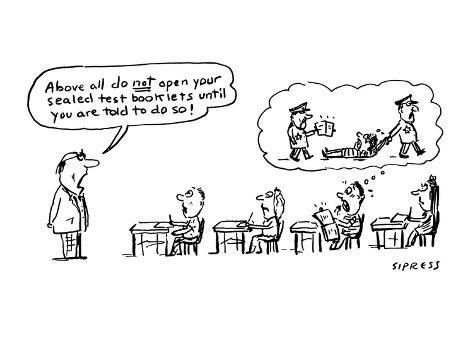

            In someway or another, we can’t do everything we want to do without following anyone’s rules. There is always someone who leads us around. Can be negative, but also positive, as if we break all the rules and we did whatever we wish, we lose organization in life as well as everyone will have his/her own revolution. 

Thursday, March 29, 2012

MOU-ed Over


"Football, the beautiful game, is in a world of it own and follows the mores that exist in a typical bureaucratic system."
The above quote is a lie.

Football...well, sure it is the beautiful game, but it also has high end politics that are powerful enough to bring up a nation in the eyes of the world, unite social groups, raise the players' social status to that of idols, and even bring down a community or country that takes the sport very seriously.

However, a football club is, in reality, a bureaucratic, for-profit company that sells tickets and merchandise to fans who come to watch the players who are marketed as celebrities. The clubs hold assets, with annual profits that can go as high £255.7 million as Arsenal Football Club in England reported last season. FC Barcelona of Spain, though, reported 420.2 million euros in the 2009-2010 season. They spend on the stadium, facilities, staff, players, their home and away kits, and managers. Every penny spent has to be calculated for carefully due the ridiculously high amount of risk involved.

Steve Macfarlane @ Arsenal FC (source: Flickr)


Interesting, isn't it?

So what happens when they don't spend right? Quite naturally, they report losses. In extreme cases like the Glasgow Rangers, it can even lead to bankruptcy. The footballing spirit of the community falls because hearts are broken. Ticket sales drop sharply, and players leave to save either their own careers or even to bring some much needed cash into the  club, as Kaká famously did for AC Milan back in summer of 2009. He moved to where losses and the global recession did not exist: FC Real Madrid, currently managed by the uber-popular José Mourinho.


Mourinho's case needs to be highlighted, with regard to bureaucracy. A football club is formally run by the President or Board of Directors, who make the decisions as to what manager to bring in, kits, and most of the other things I mentioned in the start of this post. Mourinho prefers to have a lot of dominance in any social grouping he is put in. It doesn't matter what the hierarchy declares he is. He likes to have things his way.

The characteristics of a bureaucracy are pretty clear cut. There is a set division of labour, authority is always hierarchal, positions are filled based on objective criteria only, every decision made is duly recorded and there are written rules.

In Real Madrid, the hierarchy and bureaucracy exist, but, at the same time, they don't really. President Florentino Pérez actually (and unnaturally for him) broke the mores of this type of stratified organization by actually giving Mourinho (a.k.a. The Special One) full rein. This way, Mou now makes larger decisions than what would normally be allowed. He also disregards Perez's warnings and defames others in press conferences if he, or his team, were attacked in anyway - that's him exercising some informal negative sanctions.

Well, yes, he does protect his players. Although, there is a sense of alienation where the President is involved. 'If you don't win, you are axed'. The players become tools for various marketing strategies for the sake of high profits in an organization where only few monopolize the power. Classic oligarchy.
Mourinho does not really seek to eliminate this, but he does not abandon the players either. He serves as a link between the two groups. In the end, the players end up weeping like girls when he decides to leave (Drogba custard, anyone?) .

This is just an example of how an organization actually works in reality.

To be very honest, wherever I look - for me, and for Mourinho - true bureaucracy is either extinct, rare, or completely non-existant. Oligarchy, however, does commonly exist in a lot of places, and certainly so at Real Madrid.

Brian Davidson of brazilfooty asks this:
"Is a little bureaucracy a good thing?"
That I don't really know. Perhaps you might have an answer for him~

Wednesday, November 9, 2011

Formal Organisation In An Event


Events require a lot of planning and time in organisation and execution. Teamwork being an important part of formal organisation, events also require input from people with diverse skills and capabilities.
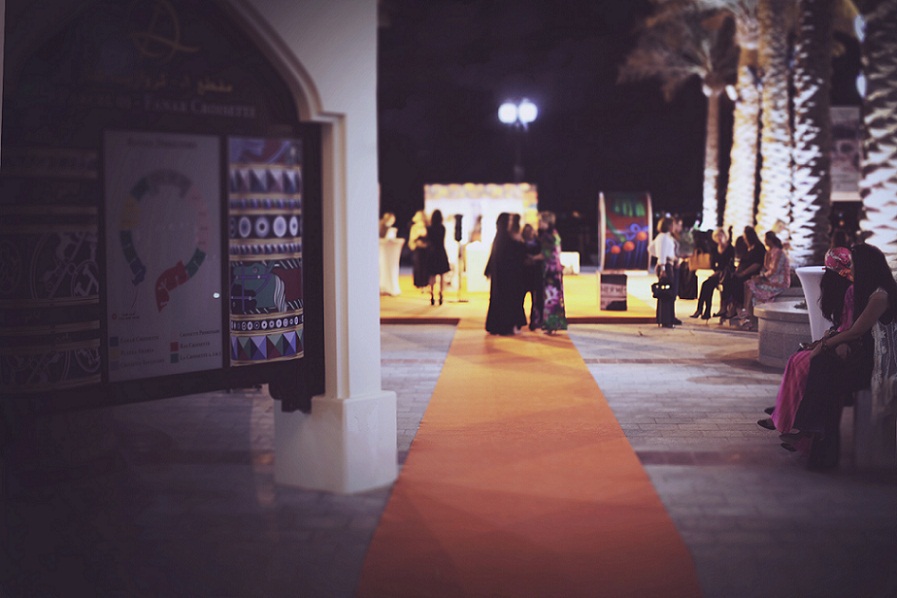
I recently helped in the organisation of a marketing event for Hermès and Haute Muse Magazine at The Pearl in which they were presenting new products. It was an event of high culture and attracted a clientele of discerning style and taste and who had high expectations of personalised service.
In the division of labour, each person was given a task in order to simplify the duties involved in the organization of the event and to ensure smooth coordination towards a successful outcome.
My task was to welcome guests into the event and send them off at the end with goodbye presents. The team had an informal approach of friendliness and engagement to set the tone of relaxation and welcome for the guests to feel special and to get them interested in the products that were being marketed. This approach was quite different from the false friendliness that is encountered in shops and similar environments the purpose of which is to get customers to buy, buy, buy.
Each person in the team was involved in the event for utilitarian purposes either to gain experience for future personal advancement or to network and gain contacts in that high profile environment. We all benefited in some way, if not monetarily.
Events such as these, while they look effortless, are organised in a precise and almost militaristic way.

Images courtesy of Haute Muse Magazine