Showing posts with label society. Show all posts

Tuesday, March 12, 2013

Women are being judged!


In our last sociology class we learned about the family and how the gender roles might affect the relationship of the family members. But what was interesting to know is that each member of the family does his/her role depending on what’s the society expects from them. However, since the role of women outside the house has changed, this has led to the secondary shift. In the book Cinematic Sociology written by Jean-Anne Sutherland, Kathryn Feltey they described the second shift to be a job for all working women where they get to do household after they are done with their working day.    


Breadwinner system dose not apply to families of 21st century
The breadwinner system is a system where men are the only providers of money for the family. But this system no longer describes families of the 21st century. Women today might earn more than men. And the main reason why women work today its because of the economic conditions. Parents with one income simply can’t support their family, thus women work to provide the second income for the family.


It is the expectations of the society
In the past few years we can see a significant changes in the role of women out side the house, but what about the roles of men inside the house! Surprisingly, though women are helping in earning money role of men inside the house did not change very much. Mostly because of society expectations, it’s perceived as women’s roles to take care of the house, thus men don’t help inside the house.


Women in Gulf
Though the role of women have changed in the gulf in the past few years, yet society especially older generations will perceive working woman care less about her family. In the gulf, people are still not convinced that woman can be a workingwoman and a mother! But since work gives a woman a feeling of security and she will be earning money to support her family, this makes her care more about her family. So women are being judged because it is expected from them to take care of the family not the men.   

Sunday, January 27, 2013

Why are women obsessed with becoming thin?


The power of media boosted with the help of technological developments and has been able to shape the society and public opinion. For the past few years, media has been successful in setting their standards of beauty that the public has to unwillingly conform to. The perfect image portrayed of women in magazines, through the use of image manipulation, contributes to the societal and mental image of a beautiful woman. The problem lies in the fact that such images are usually fabrications and set unrealistic expectations.
A stereotype of skinny bodies, flawless faces, pearly teeth, fair skin tones and many more is being reflected on society. What people perceive and compare to their own appearance is strongly related to what the media advocates. Unfortunately, many people will go to extremes in order to be considered ‘normal’ or simply fit in. The media has multiple means by which they are influencing what the society should imitate. Products that are promoted come with a subliminal message that we ought to buy them in order to fulfill our insecurities and feel better about ourselves. They are alienated by society which usually ignites all those problems.


The media has been using subliminal messages to prompt weight loss and advertise products that almost never work. Viewers will still purchase them just so they can meet the beauty standards, which the media has established. Countless people have died as a result of extreme dieting, starving themselves in order to shed the extra pounds. There also have been many incidents of models dying due to anorexia and bulimia, risking their lives just so they can meet the requirements of modeling agencies. This issue is not only associated with models, many girls feel like having an eating disorder is completely normal and required to be able to have the perfect size. Having an eating disorder is being portrayed as normal thanks to celebrities and the way the media interprets it. Likewise it is mirrored on society as we notice many girls becoming victims of bullying because of their appearance.


The obsession with losing weight has also taken its toll on men; they too tend to have low self-esteem and self-image. Whether it was diet pills or extreme diets and workouts, men also have a stereotype that media created.


Media’s influence over public opinion should be used to endorse healthy lifestyles as well as have no specifics when it comes to beauty. Many modeling agencies started up with no special requirements when it came to weight and height. Beauty shouldn’t be limited to a certain type and the society should embrace imperfections and boost positive self-esteem with the help of the media.
   

The question is, Who benefits from creating a certain image for women and beauty that seems to unrealistic?

Because we live in such a capitalist world, where thousands of new products are introduced to the market on a daily basis, advertisements and movies tend to force these things upon society. Movies ares supposed to reflect the society however, they are shaping what everyone should dress, eat, listen to, watch, look, and live like. Those ideologies are transmitted through media outlets in an indirect way, and to our brains they reside and dwell.

I would like to end this entry with a quote from one of the one and only and the eternal goddess, Marilyn Monroe. She also believed that imperfections are beauty.

Friday, April 13, 2012

Blinded by Classism

In life, there are people who are rich, people who are poor; some are well educated, while others are homeless with no educational skills. Having such variety in people’s life and skills created what is called in sociology as social stratification, in which people with higher skills and greater wealth are ranked in a higher places where as people who are less educated and less wealth are ranked at the bottom of the scale. Having social stratification created a map or a road for each individual’s life. Individuals are no longer the ones who choose what to work in, what to achieve or even where to live. However, that doesn’t mean that everyone is going with the flow of such classism.
Some people believe that no matter what your ranking scale is, you still have the chance to decide where to work and who to marry depending on your skills and personality. Such belief is usually depicted in Asian drama, especially Korean, as they tend to show that a lower class girl can marry a higher-class man and vise versa. Such story can be seen in the Korean drama “Secrete Garden”, where Gil Ra Im; a poor girl who is working as stuntwoman, preforming all the fighting and serious actions instead of others actresses, got to fall in love with Kim Joo Won, an arrogant CEO who has the image of perfectionist. 

Left: CEO Kim Joo Won - Right: Stuntwoman Gil Ra Im
(Korean Drama: Secrete Garden)

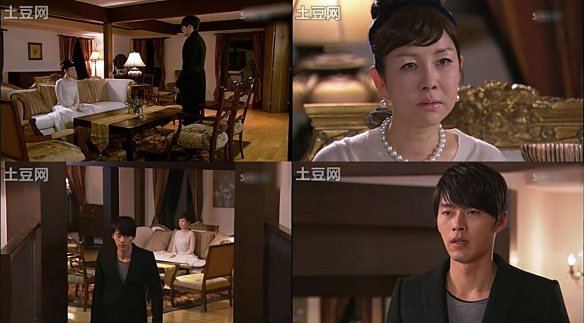
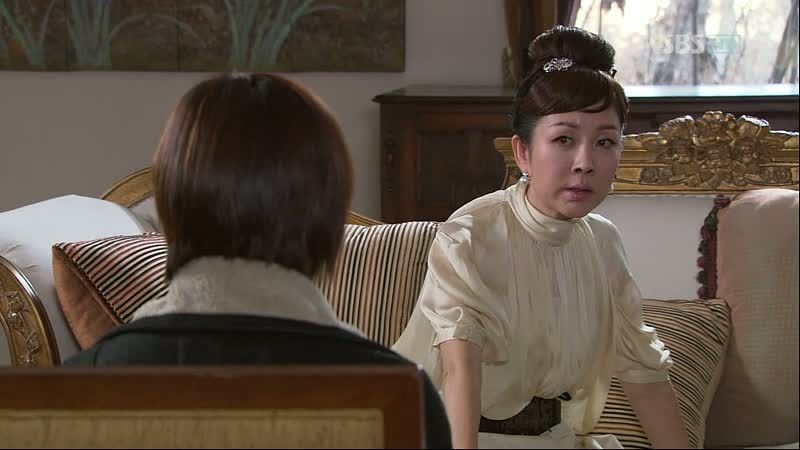
        That doesn’t mean that everything in their relationship went smooth, as the director showed the opposing side of the relationship, which was Kim Joo Won’s mother. Hence, we now can pull out where the consequences or opposing sides appears. Family comes first to follow classism, while society comes the second; however, they both depends on each others, as families are usually afraid of what other would think (Others = society), therefore, an individual struggle in order to overcome the power of society on his/her own life. 


Secret Garden - Kim Joo Won argument with his mother

Secret Garden - Kim's Mother trying to break them apart.

But, could such a story occur in real life? I think yes. People marrying someone with a less qualification in the ranking system, could overcome society issues, as the system is not constant and not permanent. Wealthy people can get bankrupted and become so poor, while poor people can gain skills and become rich. No one knows what life hides for us; therefore, people shouldn’t go with classism.

Money come and goes

That was for the marriage part, but what about the other fields in life, education is also a part of classism. People with higher wealth, are usually the one who get the higher education as they have the money. Money is the base of classism actually, as in society money gives power to the person, and it been like that since ages ago. For example, even during the French revolutions, wealthy people where the ones who were enjoying all the luxurious parts of life. Such power than created racism (slavery) and dominant powers.

Marie Antoinette Movie


Classism can be seen as a good thing in some people's eyes, however; they couldn't see the fact that classism causes different problems and issues between group of people or between individuals. They no longer see the individual him/herself, their personality, but they only see their social ranking, how much they've, how much knowledgeable they are. Not thinking of the facts that lead people with lower statues to have such a life is something that we usually do; we’re usually blind to think of such stuff. That’s why we have classism, because we can’t see what lies behind an image of a person. 

Gil Ra Im dressed up as rich lady - Secret Garden 


Gil Ra Im usual look - Secret Garden


House Wives embrace change in their norms


In society today House Wives have been incorporating a relatively long list of characteristics of deviance. Their social status was defined as time came closer to the 21st century. This could be an uprising crisis because not only are women leading the media world, but they might end up being the head of the house. The video below will clearly show how Women could be close to the Social Media and the end of Gender. It is a Ted Talk that brightened my perspective on what women are capable of doing in the future.


Now that we saw how media is almost taken over by women, there is a connection I made with women who were house wives in history and were forced into a lot of labor because those were the norms set by people, and how the house wives of today, who are also working members are driving the social media.
Before Looking at the change in the norms of modern House wives, the history of the norms identified for the house wives are also important. Housework in America during the nineteenth century  was a range of harsh physical labor. To prepare a mean was difficult because it was time and energy consuming, since cooking was performed on a wood or coal burning stove.There were no thermostats to regulate the stove's temperature, which made the women keep a close eye on the fire all day an change the fuel accordingly. She would have to know how to cook unprocessed food like cleaning and killing a live bird/ chicken, green coffee had to be roasted before pounding, and cleaning all the mess the coal and smoke created from the cooking and light was tedious. Only, well-to-do families could afford cleaners, and cooks by paying them a few dollars. 
Although, time has brought us to a new standstill, House wives do not bother collecting coal or wood for fire in order to cook, they have the availability to electric or gas stoves, which works with just a click of a switch. 


Based on some research done on the Feminists' history of housewives, I found out that "Dr Bourke analysed the attitudes of about 5,000 women from 1860 to 1930 when, for the first time in Britain, it became the norm for women to be housewives. Previously most women had worked in factories, shops and farms". This is astounding but there is a reason why women accepted this norm.The change in the occupation, which was to move into the house was imposed on them against their will. As the wages got higher and men could afford it, the wives and daughters were forced to leave their jobs so that the men could make the family depend on him economically. This change came at a time when job opportunities were growing for women and the wages for women were rising faster than men.
Many posters were passed around to make more women embrace the idea of being a house wife, rather than an employed worker, as you can see below.

 Even quotes identify that the male figure and female figure grew very different from each other. This could even define the sociological perspective of such a rapid change.
“Any change in the nature of male and female roles thus automatically affects the home, the economy, the school, and perhaps above all, the definition of who we are as human beings.”
……William Chafe, A History of Our Time (224)

Government and business leaders created campaigns that convinced women that they should give their men their jobs because the men need it more than them since the war is over.  "Television and radio ads told women that they would be much happier if they went back home and had children and gave men their jobs back" were words taken from Chafe's point of view. 

Nevertheless, media has played its role in making a brand new perspective on what norms housewives today should look upon and almost abide by. The media that I am reffering to is the daily English series called Desperate Housewives. 

 
Desperate Housewives is an American television comedy-drama mystery series created by Marc Cherry. In brief it basically depicts six housewives who have been introduced to secrets that could corrupt their current relationships because it deals with affairs with other men, and it shows how some of the wives commit to their duties, and others are engrossed in their husbands money or generally in money, shopping, beauty, and the least care for their children. It shows acts where housewives engage in deviant behaviors that either hidden or exposed to the society in embarrassing ways. it creates a warning sign for people to be aware of their neighbors and keeping their enemies closer than their friends. This is one reason why House wives tend to be more lazy in their house work in the 21st century because they are inspired by television series. Even Indian television serials show two types of Housewives, one that is loyal and the other is a heavy headed house wife who tries to prove that she is better than the other. The name of the show is called Saath Nibhana Saathiya.
These shows effects the way housewives think and act. Technology is another cause to their introduction to more deviant behaviors. Some of the deviant behaviors could be shopping all day, instead of doing house work, lazing around and watching T.V most of their time or taking up a well paid job because women have realized that they are equal to men and can work as much, and doing tasks that do not relate to their norms in their social status. The norms are set by media and partly history. The organism that usually controls or judges the behavior of the house wives norms are the family members and for the most part their Mother in Laws and Husbands.
As this is a deviance, there are certain consequences to it, such as Sanctions defined by sociology. A sanction is an authoritative permission or approval for an action that is separated into four distinct categories. A formal Positive way, where the house wife is rewarded for being a good wife, though less used in cases for an house wife because a formal positive way looks at giving medals, or diplomas  or certificates. In this case, people do not usually give wives medals for being great wives. There is the formal negative way, where a person could receive a death sentence or punishments based on laws, in which case it would not be the case of a house wife to receive such sanctions unless they committed murder or other drastic crimes. Wives could get an informal positive sanction like a smile, hug, kiss or some extra love from her family members. Or, they could get informal negative sanctions where they are withdrawn from affection, isolated or even worst, physically abused which is a domestic violence.
In my experience, I see this as a relatively high crisis in my current life style. Having a maid in the house to do most of the work like cleaning, cooking, washing clothes, etc are so vital to keep a family going on with no stress or tiredness. In the culture I am living in today, a well-to-do family have several maids to run the behind-the-scenes work at home. There is one driver or more, three or more maids in one house and a separate gardener, and maybe a special Nani for each of the children in the house. It is not a huge culture shock for me because I have lived in Qatar my entire life and I proceed with some how a similar lifestyle. if people can afford to have a maid or cleaner, they certainly embrace the opportunity to make their work load less tiresome, giving them more time to relax more and have the chance to be a working member in the family.


Wednesday, March 28, 2012

Identifying the social status of consumers to know their buying decision : a useful tool used by designers


I live in the households of college students. I am cool, trendy and minimalistic. Students find me stylish and friendly. They love spending time with me and look up to me for ideas. Students say to me that the greyish silver suit, which I wear usually to university, looks good and matches with my personality. It makes me look handsome, honorable and slim.
I am also a best partner for all the design professionals. My compatibility and hardworking ability inspires them. I allow them to multi-task and give them a clear view of the latest up to date information. They consider me crisp and clean.
For many businessmen, I speak of elegance, efficiency and intelligence. I am a commodity that is most sought after. Therefore, I keep working hard to keep up with the pace and inform them about the latest and upcoming trends.”  Mr. Mac Book Pro.

This was an exercise that we did in our graphic design class in order to identify the target audience behind a product. It was important to analyze what our consumers wanted, observing what social status they belonged too, and then start an advertising campaign for it. When I chose Mac Book Pro as my object of study, I described its character that fits to certain groups of people who have similar social status. Social status is the recognition attached to one’s position in society. It can be either ascribed or achieved. Ascribed statuses are those that are inherited at birth like gender, age and ethnic identity. While as achieved status is earned by living in the society. Like for example name, profession, income, education, civil and marital status are terms that we accomplish from our surroundings. I began by analyzing three target audiences: college students, design professionals and businessmen - and took their specific qualities to see how this object, defined as a character, socializes with them.

Furthermore, I interviewed some college students, design professionals and businessmen to see how their master status (dominant position) plays an intense role in their parts of life. By viewing the consumer’s characteristics, like their opinions, attitudes, interests, hobbies, needs, values and lifestyle I could easily motivate consumers to be friends with my character Mr. Mac Book Pro. This exercise helped me in designing an advertising campaign that was persuasive and targeted my audience. 

Similarly, with Nescafé, (my second object of study for the same exercise) I suggested a different name to my character according to its unique personality that targets a certain audience.


A slim young women with dirty blonde hair and a great athlete, Nariana knows how to take care of her physique. She is a health and fitness advisor, who not only conducts morning shows, (being a morning person) where she teaches exercises but also answers calls and gives the viewers beauty tips according to their skin type. In one of her interviews Nariana says " In order to live longer one should wake up early, do yoga, train and after taking a shower treat yourself to some healthy food." I think this best describes her true personality because she is always so active, full of energy, fresh and smells beautiful. Wearing a pure golden ring on her finger with fully manicured nails, Nariana looks fabulous. 

In this exercise, I had given Nescafé a different name and a character so that she could easily mingle with a young and active age group. This group believes in waking up early in the morning, starting fresh with their daily chores and maintaining a healthy lifestyle. 

These exercises not only helped me design an effective campaign but also enhanced my power of observation and understanding of different social statuses that reflects on the consumer’s buying decisions. It also made me see how sociologists can divide people in groups according to specific social statuses, and see the buying power towards a particular product or brand. In sociology there have been a lot of discussions and in depth case studies on the social status of a person to identify their buying decision. Below here is a video that will further help to define my point of view to you.

Monday, February 27, 2012

Modern (Not) Versus Traditional

Since this week’s reading was about family, I decided to observe the socialization found in my own family. In class we discussed how in most societies there is a stereotype of the father being the breadwinner and the mother being the one who stays home and takes care of home-related topics. In the U.S, this has become less common and moreover, many countries are moving farther away from this ideology. In my blog post, I will talk about how being brought up in an Arab home has affected the way I think when it comes to family related matters.
In my own family, I notice that my parent’s roles are alike in some aspects but are different in others. For example, both of my parents are employed however, they have very different household responsibilities. My father is the one who provides us with a house but my mother turns it into a home. My father provides us with a quality education by enrolling us into the best schools but my mother comes home from work and helps us with our homework. Simply put, my father pays bills and my mother pays attention.
Growing up in a semi-traditional, semi-modern Arab family, I formed specific assumptions concerning what my role would be as a wife and mother and what my future husband’s roles would be as a husband and father. I know that as an Arab woman I am expected to know how to cook, clean and take care of the children at a minimum. Additionally, I am expected to work since more and more women of my generation are entering the workforce. I am expected to marry a man of the same social status as that of my own family or higher. My future husband is expected to have received an education equivalent to or higher than that of the one I did. He is also expected to be a workingman who can provide for his family by ensuring a house for them, good education for his children, and a comfortable lifestyle in general.
     
After taking a closer look into my own family, I realized how I am influenced by the modernization found in my generation yet still connected to my Arab roots. Societies are in fact shifting away from the old stereotype of the male being the breadwinner and the female being the home caretaker. However, they are not completely letting go of their traditional views.

Wednesday, February 1, 2012

BUS- TED

Its rustic-red metallic body gleamed in the summer sun, giving it the sheen of a glazed cherry. Behold, I thought to myself, the bus of Mumbai. Mumbai, by the way, is the financial capital of India and the country’s most populous city, with a total metropolitan area population of approximately 20.5 million. In terms of population statistics, Mumbai ranks fourth in the world.
Well, that is what Wikipedia has to say about it.

To me, the city is all about hype, color, traffic, movement, flow, people, pollution. And Bollywood.


Anyway, back to the bus. The time I speak of is about four years ago, when my family had just left Muscat and we were back on apni zameen, our own homeland.

And I was, for the first in my life, all alone at a bus stop, waiting for a ride back home.

No, actually I was with a couple of friends. How else was I to understand the fancy numbers in Hindi that were no more meaningful to me than an assortment of lines and curves? These numbers told you which route the bus would follow. Until you are a headstrong adventurist, you do NOT want to get on a wrong bus.

I remember standing there and watching as the bus continued to slunk sulkily in the traffic. My thoughts went something like, God, this thing could put a snail to shame.

Finally, it was at the bus stop.


So what you had to do was continue to stay in the line and then get in the bus as your turn came.

Wait.

Line? Turn?

Whoa, let’s not forget this is Mumbai we are talking about. Here, there ARE NO LINES!

Each time, I remember how everyone would just clutter around the narrow opening of the bus, trying to clamber in as quickly as if there was a prize for the one who did this the fastest. So now I find myself in a flock of citizen- sheep, pulling and pushing as everyone tries to scramble in at once.

It is a miracle how I can even get in here, I would think each time, as the bus would begin to pull away.


An example of flow, that. Be it at a bus stop, or a railway station, you just stand in the crowd and flow with it. For all around you would be such a huge ocean of people, ki cheenti ke chalne ki bhi jagaah na ho. That not even an ant can pass through, my grandma would say. (She, by the way, has been an active Mumbaikar for about 50 (and counting) years now).

On my very first bus ride, I was awed. Later all sorts of adjectives—not very positive, I’m afraid—could be used to describe how I felt.

On that trip though, I must have looked like a bright bubbly girl of seven, thinking quietly to myself, Whoa, look at all these people!!! For there were all sorts of people around you, brushing against you. You spent three quarters of your journey standing, mostly sandwiched uncomfortably. That is the condition of Mumbai buses everyday early in the morning and then again late in the evening, when the populace is on its way to work, or returns from work. It’s remarkable just how the number swells. So, in the mornings, the bus is flooded with the mild scent of beauty soap and cologne. Come dusk, it is salty with the smell of sweat and exhaustion.


Well, the rickety mobile lumbered ahead. I stood where I was, dutifully, not so sure now that I was enjoying it. Just then, pushing his way through the mess of men, women and children, came the burly old conductor.

I know how this goes, I thought to myself. I just tell him where I need to go, give him the money and the guy punches me a ticket.

Right?

Wrong.

There are a thousand things that could go wrong, as I discovered on that fateful day.

“Airport Stop” I said.

“Huh?”

“Airport Stop.” I said a little more louder.

“Das Rupiyaa” he muttered gruffly.

Ten Rupees. Right. I had to give him the money and get the ticket.

So I wriggled a little until I had space enough to take off the bag hanging on my shoulder and hunt for the das rupiya.

It happened just then.

The bus suddenly braked to a halt.

Inertia played its part, and the next thing I know, I am thrown forward mercilessly.

It was like being in a free fall. I didn’t know when I would stop falling. I remember feeling the silk of someone’s saree, the coarseness of someone’s jeans, as I fell through all those people, unable to brake, unable to stop.

Honestly, I cannot think of another time I must have felt that hot around the neck. I knew I had gone red as a beet.

The bus, meanwhile, continued forward.

I hauled myself up, flustered but unhurt. I could feel eyes looking at me.

“Uh, I’m okay” I wanted to say but I’m glad I didn’t. Because then I would have looked like a complete moron. On a busy day in a crowded Mumbai bus, people have neither the time nor the inclination to care.

That was the good news (though I dare say, I did catch a few giggles).

The better news was that I had learnt “my goddamn lesson,” as I told my amused mother at dinner that day, “Always, always hold on the handrails of a bus when you stand.”
*

Analyzing this form a social perspective, it is evident that there are several factors at play, influencing the way people behave and interact. Consider, for one, the question of inequality. In a city with a teeming population and relatively scarce resources, there is a wide economic disparity and uneven resource allocation. This leads to inevitable inter- societal competition for limited reserves. Middle and lower middle class Mumbaikars, for example, are heavily dependent on buses and rickshaws as their primary mode of transport, since these are highly cost effective. But the available transport facilities cannot satiate the ever-increasing demand of the booming population. This leads to a rat-race where everyone tries to utilize the existing capital to the maximum. But in case of the bus, an innumerable number of users are pitted against a limited number of seats, causing unavoidable friction. According to latest statistics, Mumbai public transport carries about 5.5 million people per day.
Mumbaikars today have become rather indifferent to the pitiable quality of local buses, their low frequency and poor maintenance. They are habituated to the unending traffic jams; to the indescribably large crowd packed inside. They are unconcerned about how painful and exhausting it can be to travel back and forth in a suffocating human mess.

What matters to them most is that the bus can carry them over long distances for only das rupiyaa. Ten Rupees.


At first, I found it really difficult to digest the hustle- bustle of the metropolitan city. But the interactions I had largely helped define perceptions of my own looking- glass self. This concept was very well explained by Sociology Professor Geoff Harkness as: “Our identity is based on what we think of ourselves and what we think of what others think of ourselves.” This socio- psychological concept of how one perceives oneself has largely to do with his/her level of integration with a society. In my case, Mumbai initially made me conclude that I was naïve and inexperienced; that I was an alien trying hard to fit in an entirely different culture (which ironically, was my own).

Propounding on the concept of identity definition, it is fascinating to note that one’s identity continuously keeps changing, with respect to society, people etc. “ Not the whole of our identity,” said Professor Harkness, “but certainly, a part of it.” In other words, there is always an element of our identity that chameleons other people’s attitudes and behaviors. Every new experience adds to our knowledge base, influencing our identity inconspicuously.

Monday, December 12, 2011

Inequality between genders


In our society, there has always been a physical difference between both sexes. Therefor it has been a common subject where there are some big inequalities between genders. Just the idea of creating two groups of gender: men and women show the origin of this inequality. Moreover, due to the idea of a physical difference between genders it has created in our society a form of sexism. Where it is believed that man is superior to women, but it’s only a cliché just because it is based on “the physical capacity” of that gender. Somehow this idea has evolved and created many differences and inequalities in our society. There are a lot of discrimination concerning the rights of the women, the salary differences and so on….


Due to the sexism a new movement has been created to that may be considered as a deviance, but it‘s only created to give back the right that the women need. This movement is called feminism where women want to be looked in the same way as the men. They do not want any more discrimination and need to have the same status and work equally with men. Also by threaten the woman the same way as the men it will help the society and economy to grow further and be healthier. The following video is a good explanation of the inequality that is happening in our society.

Wednesday, November 30, 2011

One word: Gender

Our society spends her time trying to find the ideal type of man and woman, from society to another the beauty can be differentiated by some little details. But for every sex there are expectations that basically represent the following.
We expect femininity for the woman; we want them to behave as girls, have a “girly” mentality, the sensible emotions and look good, pretty or attractive. However for the masculinity we expect them to be fitted, to have virile emotions, to look powerful, make some risks, and look handsome with muscle.
In my point of view the following videos show the ideal type of gender in the society.


So as we can realize, some advertisements just make those expectations worse by the amazing video that they show us in our daily life. In fact they are selling the product by using the commercialization of gender ideas. In other words it's the process of introducing products to the market by using advertisement and sales campaigns that draw on socially constructed standards of masculinity and femininity. It makes us dream, and let us hope about a possible chance to be like those mannequins. Or may also promise us “consumers” that we may accomplish our dreams just by buying them.
Those expectations bring a certain tension, and affect some people to always do their best to be accepted in our society. Therefor there will be always something that we can fix to be prettier, and the main gender that is more affected into it are the women. In other words the desire of the humans can be described by the only a simple word: MORE.


Thursday, November 24, 2011

Which door can I take?

Earlier this semester, in our Sociology class, our professor, Geoff Harkness, showed us a video of a sociology experiment that was done in the US. Watch below:

I thought if this experiment was done here in Doha, Qatar no one would conform and we would most likely have different results. On the other hand, our professor had a different hypothesis, where he believed people would conform.

So I went out and actually did the experiment as one of my assignments. I placed “ladies only” and “men only” signs on the Carnegie Mellon building doors here in Qatar. Here are my results:

I thought of many different reasons to why people acted in this manner. One of which is that here in the Middle East, specifically in Qatar, there is a stereotype that women are more oppressed and can’t always do what they wish on doing. So when they saw such signs in Education City, a space with six different American universities, they were disappointed and angry. Instead of being able to express themselves in their universities, they had to deal with the cultural restrictions there too.

Whereas for the men, I believe that the men acted out this way as a sign of masculinity. They refused to walk into the “ladies only” door and confidently walked into the “men only” one. We don’t see any of the men acting out on the experiment as being something they disapprove of. However, in minute 2.47, we see how this young man refuses to be pulled in to the ladies only door and forcefully walk into the “right” door, dragging the lady with him.

Our professor pointed out an interesting fact too, women happen to cross gender boundaries more often than men do. An example of that is, imagine a “man’s” sport, like football- that is usually accepted and women won’t get as many negative sanctions as a man, let’s say, doing ballet- now, THAT is out of the ordinary.

I would love to hear what other people think of this, please share any thoughts on why you think people here didn’t conform to this like they did in the US.