Showing posts with label arabic culture. Show all posts

Friday, June 7, 2013

Authenticity of bread, yes bread.


What is authenticity? And what defines an object, or an action, or a person, or a place, as authentic? Grazian explains authenticity by, what is defined as real or true or pure by a group of people. But who determines which group of people? Or how they interpret that object of authenticity?

When I was younger, I had a Croatian neighbor. She lived right across the street. Everyday, she would come to my house to have some authentic “Arabic bread”, and then we would cross the street to her house to have some authentic “Western toast”. That way everyday we both have had something to eat from the other persons culture. As cheesy and factually incorrect as that is, we were very young, so I wouldn’t judge or laugh at me if I were you… but anyway, remembering that story now, makes me realize that even as children, we would classify objects with authenticity.

So I decided to go to a bakery and ask people their opinion on the authenticity of bread, and what they think is authentic “Arabic bread”, or authentic “Western bread”.


As I walked into the store I observed where each type of bread was displayed. The burger bun and hotdog bun were displayed right next to each other, and the thin, round Arabic bread was displayed on another side. Which already shows some kind of differentiation.


I found a Muslim, Arab women there, and decided to ask her opinion on the matter. I asked her what she defines as authentic Arabic bread, and why, and what she classifies the other types of bread as. She pointed to the thin round bread and said, this is our bread, this is what authentic Arabic bread is. Her reasoning behind that was the following exact quote: “This is what my mother used to bring home to us ever since I was a little girl, I grew up on this, so this is our traditions, the Arab tradition.”


Then she went on to talk about the other types of bread. She generally classified all the rest as “Western”. And said that just because a certain type of bread is classified under a certain culture, doesn’t mean that only that culture is expected to buy it. “I’m buying American bread right now” she said.

It was very interesting to hear this woman’s opinion on authenticity, and how she decided to classify these types of bread and why. Which takes me back to the theory of socialization. She was socialized, her beliefs and authenticity classification, were socialized into her as she grew up, and still have not changed until now. She is 24 years old.

Tuesday, May 28, 2013

West Bay Lagoon


          One of the most popular compounds in Qatar right now is West Bay Lagoon. It is known for its beautiful houses, large parks and international atmosphere. During class this week, we spoke about subcultures and the interaction theory, which I believe relates to this modern compound. Westbay Lagoon has a specific identity as they are portrayed as open minded individuals across Doha. They are considered a subculture as they have distinct characteristics that separate them from the rest of Qatar's population. Although there are a variety of different cultural backgrounds that live in this area, they consider each other family whenever they meet one another. This also relates to the looking glass-self theory as the residents in West Bay lagoon would not have this image if it was not for the rest of the society believing they are active individuals. In addition, the residents flaunt this image through their dress code and daily activities.

          When I was at the compound, I tried to relate it to the interaction theory. This concept is implemented when culture is created, diffused and consumed through social interactions among small groups of individuals such as friends and neighbours. West Bay Lagoon compound have a specific culture and it is especially exposed amongst their parks. The compound can also be classified as a subculture as we are a smaller group from Qatar’s population with certain beliefs and habits. A majority of residents in the compound have the same hobbies and most families have similar reasons to why they chose to live in West Bay     
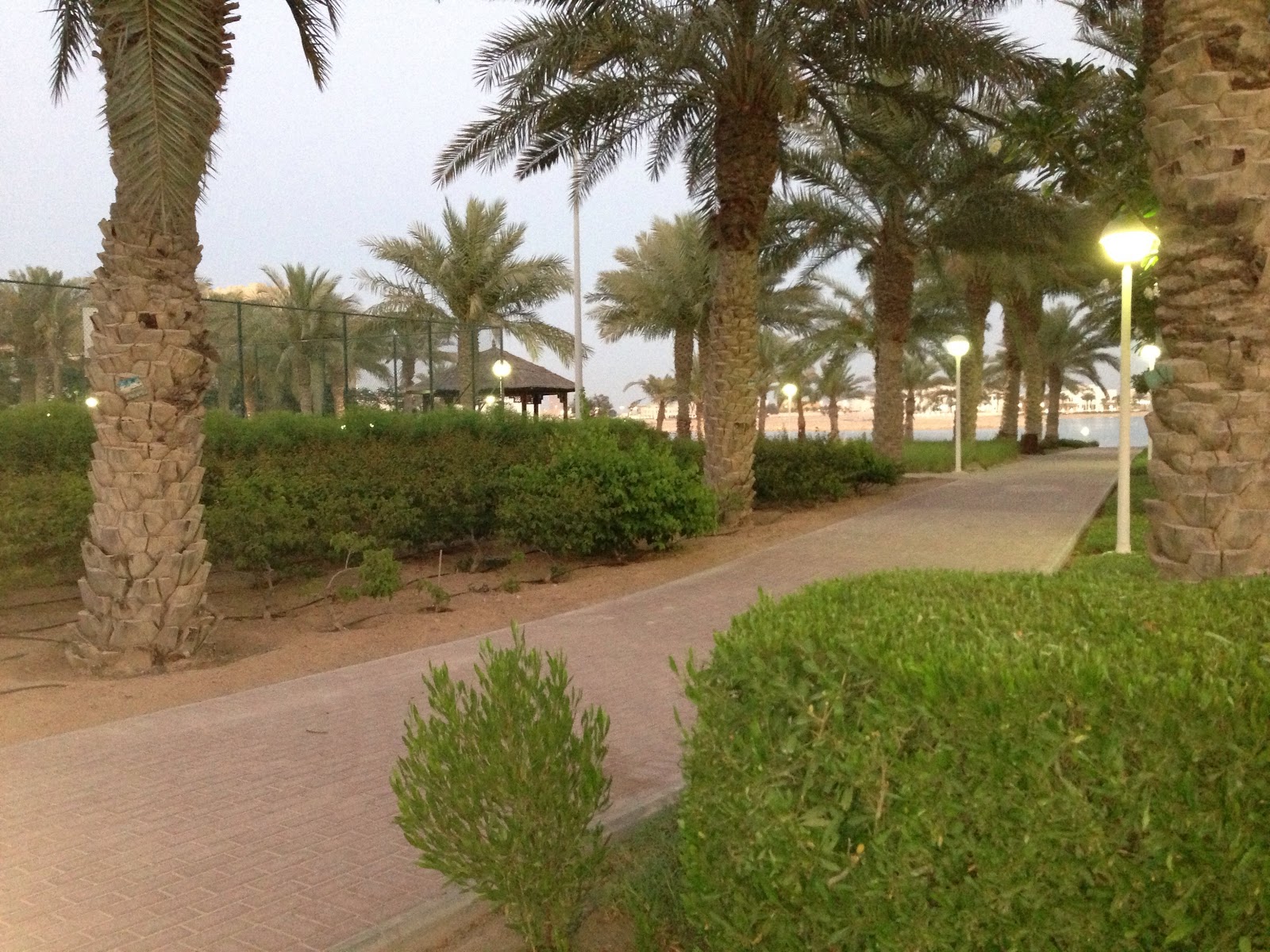
           I visited one of the parks which is a 'scene' to this subculture. It is a place where members of this community interact and create a shared identity. I saw many families dressed in sportswear playing outdoor activities such as tennis, football and cycling. If one were cycling anywhere else in Qatar, the cars driving by would stop and stare. However, it is considered a norm in this community. This park is classified as scene because it caters to every single person in this compound. They have sections for different activities and therefore it became popular in a very short period of time. The residents demanded for more parks and thus every street number have a park to themselves. Although this decreases the chances of families interacting with one another from different streets, it is common to jog through all the parks of West Bay Lagoon, allowing them all to be filled with life and happiness.

       
      While walking through the parks, I tried to think like a sociologist and observed the activities that were being held. Every park had a tennis court, basketball court, a large grass field and swings for the younger kids. It was interesting to see how every park consisted of families doing the same activities even though they all came from different backgrounds. It was the norm for children to be playing sports while their parents walk around and enjoy the scenery. This standard behaviour could only be considered ordinary and expected through the interaction of families within this compound. In addition to the park being defined as a scene in the West Bay Lagoon subculture, I would classify it as a symbol as well. The families interact in this space, they exchange thoughts and ideas of what they do during their spare time. Therefore, this park symbolises friendship and is one of the main reasons this subculture was formed.


Tuesday, March 26, 2013

Sensitive Men, and Masculine Women


Our parents taught boys to become men, and girls to become women. It was greatly unacceptable for one to act like the other gender, and if parents find out that their son, or their daughter is gay they would do anything to stop this as soon as possible, or end up kicking them out of the house.

The backbone of culture in Qatar is the religion: Islam. It is forbidden in Islam to imitate a women in action, dress and/or behavior, and similarly prohibits women from imitating men in their way of talking, dress and behavior. Before the Internet and television, it was easier for parents to raise their children and teach them about their gender roles. Parents saw the media as a threat to their children. With the Television and Internet around children it gives them a chance to adapt the gender-specific norms from the other gender. (Leaving aside the psychological or birth-deformations factors). Source.

People in Qatar believe that this is nature: Men are supposed to be masculine, and women should be sensitive and feminine. Even religions believe and encourage the same thing, in Islam and even in Christianity.

However, some people are starting to let go of these values and it became acceptable for men to be sensitive and feminine, and women to be masculine. Jawad AlAli was negatively sanctioned and disrespected by men when he first came out in 1998 because of his “sensitive” songs and the way that he was singing that was very “feminine”; women however liked his songs because they wanted men who were a bit sensitive and actually care about them. This is similar to what happened to Justin Bieber when he came out.


Then came Abdulqadir AlHadhood, who was also very sensitive and feminine in his songs, and was negatively sanctioned and made fun of because of his feminism. Both of these singers were made fun of in tv shows, and on the internet, however, they both became famous of their GOOD songs that people started to like eventually.


Original Song: Thbt Ashkra (I know I'm in love!) - Lyrics in English


Hassan AlBallam, parody: saying that he is doing the housework and is the housewife of the house, while she is watching the news, in a program called "WiFi" that was broadcast on MBC.


Parody Song: Dkht Ashkara (I know I'm confused!)


Not only sensitive men were negatively sanctioned, in fact, masculine women were even greatly sanctioned by both men and women! Therefore we have more people hating and sanctioning masculine women. Shamma Hamdan, an adolescent who participated in the Arabs Got Talent show on MBC, shocked the people from all over the Arabic countries because of her first appearance in the show, where she showed up dressed, styled and acting like a man.


People voted for her, because she was a good singer, but she dressed differently in the latter episodes, where she had some make up and wearing female clothes.


I respect all of the artists I mentioned above, and don’t want this post to be a negative critique about them, but I’m trying to show how some people has changed their opinions about acting like the other gender.

Monday, January 28, 2013

"Modern Abaya"


The culture and traditions of the Middle East are wildly different than they are in the west. Due to the majority of the Middle East being Muslim, the differences of cultural behaviors and social norms are drastic. Women in the Middle East are held under certain expectations that they’re anticipated to follow. The cultural “norm” of how a Middle Eastern woman dresses and acts is considered to be very conservative. We’re expected to be “covering” ourselves from head to toe when we’re out in public or are around men; that however is partly due to religion. Nevertheless in the Gulf, that is considered part of their tradition, and not just for religious purposes. In the Gulf women are expected to wear the Abaya. The Abaya is a loose black robe that covers the women from their neck down to their toes. The original purpose of the Abaya is to cover up the woman, and be loose enough in order to hide the shape of her body, and not attract attention to her.

In the media, Muslim Arab women are often portrayed as very conservative, veiled, and regularly, if they’re from the Gulf, wearing Abaya’s. However, what are also portrayed in the media are ideas of urbanization and modernization. In the recent years, due to the globalization and modernization theories, traditions and cultures in the Middle East are being thrown out the window. For the purposes of being “modern” and transitioning into urbanization, cultures and traditions that we once followed for essential reasons are being forgotten or drastically changed. The Abaya that was once supposed to serve the purpose of covering a woman up and concealing the shape of her body is now turned into a fashion statement. That may be due to the fact that the women here feel alienated from themselves. Marx’s theory of alienation helps us understand that. It basically states that due to the social structure and social class stratification enforced on us by society, we eventually begin to feel detached from our work, from our life activities, from ourselves, and from the people around us. We can use this theory and apply it to the situation here. Because the women are forced to wear the Abaya and look like every other woman around them, they’re beginning to feel invisible. They can’t express their personalities through fashion; they can’t stand out. This makes them feel alienated from themselves and from society, and I believe that this may be one of the reasons for the invention of the “modern Abaya”.

A variety of designers have turned the Abaya into beautifully designed dresses. I cannot deny that the art and thought put into designing those items of clothing is spectacular, but they’re not Abaya’s. Many new designers have come up with “modern Abaya” collections, a few Arab’s and a few westerners. The students of VCU in Qatar have come up with a project called the “Abaya Project” where they all contribute their beautiful designs of modern Abaya’s.

Here are some examples to demonstrate my explanations of today's modern Abaya.


The following video highlights a Modern Abaya Exhibition held in Katara’s Art Center here in Doha, displaying their beautiful designs.


I do agree that these new designs are very inventive, and can allow a woman to highlight her beauty whilst still being conservative. It allows them to express themselves and present their personalities through fashion. But going back to our original values, cultures and traditions, this is defying the purpose of the Abaya and hence defying our cultures and traditions.

Wednesday, April 11, 2012

Arabs: Bombers, Belly Dancers, Billionaires

As the blog posts can be about any aspect of sociology, in this blog I will connect this weeks reading, by Susan Williams & Travis Linnemann, about “Portrayals of Arab Terrorists in American Film”, with the music video of Jad Choueiri in Funky Arabs. Jad Choueiri’s music video is all about representing the Arabs in being a very similar culture and society to the west, and not the usual stereotype portrayed in Hollywood. According to this weeks reading, Arabs have been portrayed negatively in Hollywood, page 193, “Muslim Arabs have been stereotyped racially and religiously as the “cultural other” from the beginning of American cinema”. The lyrics of Jad’s song are trying to fight the negative representation of the Arab World, in fact the first sentence of the song says “ We are not what you see on CNN or BBC take a look at us, we’re not bombers we got the guts” using those words to describe and speak about the Arab image in the media is very interesting, especially by mentioning CNN, and BBC, the largest two news agencies in the world. Arabs always being portrayed by one of the 3 B’s, Belly Dancer, Billionaires or Bombers is the usual image portrayed in Hollywood. Later in the song, it’s said “you’re gonna experience, an Arab touch with a modern sense” the whole song moves on to showcase everything that is done in the west from tattooing to drinking, the video clip of the song showcases to the world that the societies in the Arab world are actually very similar to any other culture. I think this is a new and interesting way of showcasing that Arabs in reality are as similar to Hispanics, Americans, or even Europeans.

http://youtu.be/I4D6hJA846M

Picture: A representation of Arabs in Hollywood

Video: Jad Choueiri , Funky Arabs

Tuesday, March 20, 2012

What Makes Her Masculine.

We all grow up one of two sexes, with biological characteristics that identify us as being male or female. From the minute we are born we’re automatically part of a culture that differentiates our gender into social and cultural aspects of being one of either sexes. Gender socialization, which is the process where people learn the norms related to their sex and gender, happens to every single baby. Even as really young groups, gender socialization automatically splits girls and boys as two separate groups. According to any sociologist, all these differences that we see between men and women aren’t natural, but are all socialized or socially constructed.

As a female who grew up in a Palestinian, Arabic culture, I most definitely was socialized into a specific category, femininity. All my physical, behavioral, mental and emotional traits characterize me as a female. I wear dresses, skirts, and jewelry. I cross my legs when I sit. I cry quite often and I’m not embarrassed to say that I do. I try not to use foul language, because that is “not how a lady acts.” That is one of the things I hear my parents and family say every once in a while, that a lady isn’t supposed to use foul language, talk and laugh loudly in public and talk in a very rough manner. At least in my culture, a girl is supposed to be and act like a lady because in my religion many different lines from the Quran and sayings by the Prophet, PBUH, exemplifies a lady as a pearl or diamond, that is so delicate. For me to be that pearl or diamond, I can’t do many things in public, especially in front of men.

It’s considered deviance in my culture for a woman to smoke. Women get negatively sanctioned if they have a cigarette in their hand or if they smoke a hookah.


Smoking is considered to be a masculine habit, which automatically gives off a manly image. Many women smoke in public regardless of these cultural sanctions. This gives women power in such a culture, where women are said to be powerless. This could be considered to be a very masculine form of power based on domination and control, by simply holding a cigarette and going against all these negative sanctions. According to Sutherland, this form of power, which in a sociological perspective is called “power-over,” could be problematic because it’s abusive. So, smoking among women could influence other women to do it only to receive that kind of power as well, regardless off all the obvious health risks.