Showing posts with label Hollywood. Show all posts
Showing posts with label Hollywood. Show all posts
Tuesday, January 29, 2013
It's 2013 and We're Still Alive!
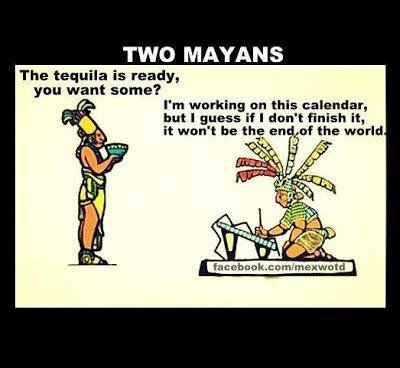
I recently watched the movie 2012, and it was basically about the world coming to an end. The movie “was inspired by theories that the calendar of the ancient Mayans foretells the end of civilisation on Dec 21, 2012” (Philip Sherwell and Hernando Garcia 2009). Hollywood spent more than $200 million on creating this film as it was meant to attract a global audience. The end of the world is considered a big catastrophe affecting every individual on this planet. Since Hollywood is a tool of capitalism as our Cinematic Sociology textbook described, all it cares about is making money. The whole story of the movie 2012 wasn’t realistic and convincing, and yet the producers managed to create the film through using visual effects to portray the natural disasters seem real.
Now let’s analyse the movie from a sociological perspective. For example, from the conflict theory lens, we see that in the movie there was a portrayal of conflict between social classes. The bourgeoisies were the elites and people with power who managed to get on the spaceship without any problems, where as the proletariats weren’t able to get on the spaceship because they weren’t rich and they were from the working class who built the spaceship. The bourgeoisies were able to protect their interests and arrange society in a way that most benefits them, at the expanse of the proletariats. This means that the elites and the people with power had the resources to afford getting on the spaceship by purchasing the boarding tickets ahead of time. The proletariats were less fortunate since they were the labourers, and didn’t own the means of production. Social inequality played a role in the 2012 movie. The innocent ordinary people in the movie were left behind and weren’t notified to evacuate ahead of time. They weren’t also informed about the spaceship to rescue themselves.
It was interesting to watch 2012 and analyse it from a sociological perspective. I happened to learn about the Mayan calendar, and I learned that Nasa ended up writing an article dedicated to answer people’s inquiries and to clarify the fact that 2012 is not the end of the world.


Saturday, April 28, 2012
Good vs. Bad
We’ve been talking about Arab stereotypes quite a bit
recently and how Hollywood portrays us
in several different negative ways: the most prominent being as terrorists.
When we see these images, we usually (as expected) criticize the film and the
filmmaker for having such prejudiced views against us.

But, when we were watching the film, Amreeka,
which was directed by an Arab woman, I realized there were a lot of stereotypes
about Arabs in there as well. These stereotypes, however, had a much different
effect on me.

For me, a lot of the comedy in this film
came from recognizing these stereotypes. My favourite one being the cute,
sarcastic grandmother that tends to worry a bit too much.

I started to wonder why these were
stereotypes different. Was it because they had nothing to do with portraying
Arabs as backwards and violent people? Or did it have more to do with the fact
that these were stereotypes I faced on a daily basis and were written by an
Arab herself?
I think who the filmmaker or the screenwriter
is makes a huge difference. Usually, when Hollywood uses Arab stereotypes, they
use it to create an outgroup – they make the Arab the “other.” They use this to
socialize the viewers
and fill them with fear, hatred, and discrimination, When an Arab filmmaker
uses an Arab stereotype, however, they create an ingroup, allowing other Arab
viewers to identify with what’s going in the film and better connect with it.
I even caught myself writing a very
stereotypical portrayal of a Palestinian mother who only cares about her
daughter getting married in one of my scripts. When my friends read it, they
found it absolutely hilarious because they could all almost relate the
character to their own mothers. When I took a second look at it myself, I
criticized myself because I know that there is a lot more to Arab mothers than
just being an obsessive and psychotic matchmaker. But for some reason, I was reinforcing
that stereotype.
I guess the important thing with all
stereotypes, whether they’re “good” (I’m not sure they can be) or bad ones, is
to recognize the fact that they are stereotypes and to interrupt the process of
socialization.
Thursday, April 26, 2012
"Don't let a few people shape your view on an entire faith."


Wednesday, April 18, 2012
NUQ vs Hollywood
Wednesday, April 11, 2012
Arabs: Bombers, Belly Dancers, Billionaires

As the blog posts can be about any aspect of sociology, in this blog I will connect this weeks reading, by Susan Williams & Travis Linnemann, about “Portrayals of Arab Terrorists in American Film”, with the music video of Jad Choueiri in Funky Arabs. Jad Choueiri’s music video is all about representing the Arabs in being a very similar culture and society to the west, and not the usual stereotype portrayed in Hollywood. According to this weeks reading, Arabs have been portrayed negatively in Hollywood, page 193, “Muslim Arabs have been stereotyped racially and religiously as the “cultural other” from the beginning of American cinema”. The lyrics of Jad’s song are trying to fight the negative representation of the Arab World, in fact the first sentence of the song says “ We are not what you see on CNN or BBC take a look at us, we’re not bombers we got the guts” using those words to describe and speak about the Arab image in the media is very interesting, especially by mentioning CNN, and BBC, the largest two news agencies in the world. Arabs always being portrayed by one of the 3 B’s, Belly Dancer, Billionaires or Bombers is the usual image portrayed in Hollywood. Later in the song, it’s said “you’re gonna experience, an Arab touch with a modern sense” the whole song moves on to showcase everything that is done in the west from tattooing to drinking, the video clip of the song showcases to the world that the societies in the Arab world are actually very similar to any other culture. I think this is a new and interesting way of showcasing that Arabs in reality are as similar to Hispanics, Americans, or even Europeans.
Picture: A representation of Arabs in Hollywood
Video: Jad Choueiri , Funky Arabs
Monday, March 5, 2012
Tradition vs. Modernity – Bollywood
About six or seven years ago, when I lived in Canada, if I spoke about Indian movies to my Canadian friends, they would automatically assume that all Indians wore traditional clothing all the time, or that the people would ride on elephants or run through fields or even live in villages. Although these are stereotypes, Bollywood classics did portray these kinds of images in their movies, that is, before the age of modernization.

Sociology has taught me a lot about the functions of societies, and has also made me more analytical of why and how societies function the way they do.
When I used to watch Indian movies before, I would appreciate the themes of tradition and family values. Although Indian movies have always been “Masala” movies – containing a variety of genres in order to appeal to a broader audience – they would address domestic problems such as arranged marriages, the role of women in their households and issues of status and caste.


At the present though, Bollywood has been pumping out movies with lots of special effects, hyperbolic plots, modernized views of Indian women, and has lost some of its traditional taste. I understand that the Indian movie industry has to keep up its pace with Hollywood and the ever-increasing rate of improvements in technology, but in terms of audiences these industries differ significantly.

While people of all ethnicities, religions, and ages watch Hollywood movies; it’s largely Indians who make up the audience of Bollywood movies. Another thing that differs vastly between Hollywood and Bollywood is the average length of movies. Hollywood’s movies are about an hour and a half, or two at the most, but Bollywood’s movies can last for three hours or more.
Why? The number of songs and dance sequences that are incorporated into Indian movies take up a large amount of time. This creates a distinction between Hollywood and Bollywood.

Modern day Indian movies still do incorporate songs and dances, but they are meant to help narrate the plot of the movie. Nowadays the plot of Indian movies seems to involve a lot of foreign back-up dancers and settings in cities like New York or London. The Indian actresses who are cast in these movies are light-skinned, super-skinny and really don’t represent the majority of Indian women. The same can be said about Indian actors – buff, light-skinned and usually portray men of the upper class.

Along with an evolution to plot, types of songs – which have now started to include lyrics in English – and physical appearance of actors, even the type of clothes that are worn in Indian movies today differ significantly than the traditional garb worn before. Before, saris – a type of traditional Indian garb for women – would be worn fairly modestly; today saris are being designed in a very “modern” way. But to maintain some dignity to the Indian culture, the elders of a household, mothers and grandmothers, are generally wearing saris in a respectable fashion. This also highlights the differences between generations.

An example of a fairly recent Indian movie that I’ve watched with a totally modernized and untraditional plot is Dostana, which means friendship. The storyline focuses on how two Indian men attempt to rent an apartment, but have to share it with an Indian woman, and in order to move in with her they have to pretend to be gay. Eventually both the men fall in love with this woman. The entire movie is shot in Miami, Florida and has the running time of 146 minutes. One of the songs in the movie is called “Desi Girl”; the word “Desi” means the dispersion of Indians in different countries, or away from their homeland. Although this song shows preference to the fact that the woman is Indian, it highlights that she is Desi. She is quite westernized in the way she dresses and thinks. This might be a subtle message encouraging Indian women to move abroad.


Is Bollywood becoming too westernized and degenerating the moral values of the Indian culture? Well, I’ve stopped watching Indian movies mainly because I see a lot of Hollywood mirrored in Bollywood. I used to watch Indian movies because of the unique plots and because of the originality of the stories.
However this is my personal opinion.
Bollywood does seem to be doing well for itself in India, with millions of viewers watching movies everyday. Then again, it could just be people wanting some air conditioning for three hours.

Sociology has taught me a lot about the functions of societies, and has also made me more analytical of why and how societies function the way they do.
When I used to watch Indian movies before, I would appreciate the themes of tradition and family values. Although Indian movies have always been “Masala” movies – containing a variety of genres in order to appeal to a broader audience – they would address domestic problems such as arranged marriages, the role of women in their households and issues of status and caste.


At the present though, Bollywood has been pumping out movies with lots of special effects, hyperbolic plots, modernized views of Indian women, and has lost some of its traditional taste. I understand that the Indian movie industry has to keep up its pace with Hollywood and the ever-increasing rate of improvements in technology, but in terms of audiences these industries differ significantly.

While people of all ethnicities, religions, and ages watch Hollywood movies; it’s largely Indians who make up the audience of Bollywood movies. Another thing that differs vastly between Hollywood and Bollywood is the average length of movies. Hollywood’s movies are about an hour and a half, or two at the most, but Bollywood’s movies can last for three hours or more.
Why? The number of songs and dance sequences that are incorporated into Indian movies take up a large amount of time. This creates a distinction between Hollywood and Bollywood.

Modern day Indian movies still do incorporate songs and dances, but they are meant to help narrate the plot of the movie. Nowadays the plot of Indian movies seems to involve a lot of foreign back-up dancers and settings in cities like New York or London. The Indian actresses who are cast in these movies are light-skinned, super-skinny and really don’t represent the majority of Indian women. The same can be said about Indian actors – buff, light-skinned and usually portray men of the upper class.

Along with an evolution to plot, types of songs – which have now started to include lyrics in English – and physical appearance of actors, even the type of clothes that are worn in Indian movies today differ significantly than the traditional garb worn before. Before, saris – a type of traditional Indian garb for women – would be worn fairly modestly; today saris are being designed in a very “modern” way. But to maintain some dignity to the Indian culture, the elders of a household, mothers and grandmothers, are generally wearing saris in a respectable fashion. This also highlights the differences between generations.

An example of a fairly recent Indian movie that I’ve watched with a totally modernized and untraditional plot is Dostana, which means friendship. The storyline focuses on how two Indian men attempt to rent an apartment, but have to share it with an Indian woman, and in order to move in with her they have to pretend to be gay. Eventually both the men fall in love with this woman. The entire movie is shot in Miami, Florida and has the running time of 146 minutes. One of the songs in the movie is called “Desi Girl”; the word “Desi” means the dispersion of Indians in different countries, or away from their homeland. Although this song shows preference to the fact that the woman is Indian, it highlights that she is Desi. She is quite westernized in the way she dresses and thinks. This might be a subtle message encouraging Indian women to move abroad.


Is Bollywood becoming too westernized and degenerating the moral values of the Indian culture? Well, I’ve stopped watching Indian movies mainly because I see a lot of Hollywood mirrored in Bollywood. I used to watch Indian movies because of the unique plots and because of the originality of the stories.
However this is my personal opinion.
Bollywood does seem to be doing well for itself in India, with millions of viewers watching movies everyday. Then again, it could just be people wanting some air conditioning for three hours.
Monday, November 7, 2011
Bombers, Belly dancers and Billionaires
Arabs have been stereotyped as sub-human throughout history and still are today to the west. They have been portrayed as barbaric, vicious and even as terrorists. Ironically enough, the power of the media industry still embraces these false mythologies. The power of both the media industry and Hollywood play a massive role in portraying these false images of Arabs to the western world at most times. Media tends to be a tool of propaganda as it is another means of expressing stereotypical and discriminatory views.

As a result of discrimination and stigma, Arab-Americans tend to be targeted the most. In this case, being an Arab is deeply discredited as it over-shadows all the other attributes they possess. In most cases, the stigma of being an Arab dominates interactions and the way others think of them. They are the minority group that are systematically excluded from participation in the American community and denied equal access to valued resources at most times. Sociologist Peggy McIntosh identifies a number of privileges that the members of the dominant group take for granted, however, the one that stood out the most was, “ I can be late to a meeting without having the lateness reflect on my race [or ethnicity].” This may be one of the greatest examples, as Arabs are stereotypically known for their bad timing, especially in the eyes of the west.

Racism against Arabs has increased along side the tension between the American government and the Middle East. Discrimination and racial violence increased towards Arabs following the September 11, 2001 attacks. The proposed development of building a mosque near Ground Zero of the former World Trade Centre site was another contributory factor that provoked the American community to anti-Arabism.

In reference to the documentary of “Reel bad Arabs,” by media analyst Jack Shaheen, Arabs have always been the “butt of a cheap joke.” Within the entertainment industry, Arabs have been looked at as the stupid but rich, wanting to buy chunks of American land. They’re often associated with not only living in exotic places where the men enjoy their time and money with the company of belly dancers, but also where the population is uneducated and surrounded by massacres. For instance, Dr. Shaheen insists in his documentary that the movie of “Wanted: Dead or Alive (1986),” portrays one of the worst images of Arab stereotypes. The movie represents Arabs as terrorists who want to set the place on fire, while killing millions of people and being ‘America’s most wanted’.
As once said by director of media relations for the American Arab Anti-Discrimination Committee Mazin B. Qumsiyeh, “ Arabs in TV and movies are portrayed as either bombers, belly dancers, or billionaires.” More often referred to as “the three B syndrome.”
Some Americans have gone as far as removing nine Arab-Muslim passengers from flying with AirTran Airways in 2009. Is this the real democracy promised? What happened to equal rights?


As a result of discrimination and stigma, Arab-Americans tend to be targeted the most. In this case, being an Arab is deeply discredited as it over-shadows all the other attributes they possess. In most cases, the stigma of being an Arab dominates interactions and the way others think of them. They are the minority group that are systematically excluded from participation in the American community and denied equal access to valued resources at most times. Sociologist Peggy McIntosh identifies a number of privileges that the members of the dominant group take for granted, however, the one that stood out the most was, “ I can be late to a meeting without having the lateness reflect on my race [or ethnicity].” This may be one of the greatest examples, as Arabs are stereotypically known for their bad timing, especially in the eyes of the west.

Racism against Arabs has increased along side the tension between the American government and the Middle East. Discrimination and racial violence increased towards Arabs following the September 11, 2001 attacks. The proposed development of building a mosque near Ground Zero of the former World Trade Centre site was another contributory factor that provoked the American community to anti-Arabism.

In reference to the documentary of “Reel bad Arabs,” by media analyst Jack Shaheen, Arabs have always been the “butt of a cheap joke.” Within the entertainment industry, Arabs have been looked at as the stupid but rich, wanting to buy chunks of American land. They’re often associated with not only living in exotic places where the men enjoy their time and money with the company of belly dancers, but also where the population is uneducated and surrounded by massacres. For instance, Dr. Shaheen insists in his documentary that the movie of “Wanted: Dead or Alive (1986),” portrays one of the worst images of Arab stereotypes. The movie represents Arabs as terrorists who want to set the place on fire, while killing millions of people and being ‘America’s most wanted’.
As once said by director of media relations for the American Arab Anti-Discrimination Committee Mazin B. Qumsiyeh, “ Arabs in TV and movies are portrayed as either bombers, belly dancers, or billionaires.” More often referred to as “the three B syndrome.”
Some Americans have gone as far as removing nine Arab-Muslim passengers from flying with AirTran Airways in 2009. Is this the real democracy promised? What happened to equal rights?

Sunday, March 6, 2011
Academy Awards - Highbrow Culture Awards?

The months of January and February are usually known as award season in Hollywood, due to the numerous film awards that take place. It starts off with certain critic awards such as the Broadcast Film Critics Association Awards or the Chicago Film Critics Association. Then perhaps the most acclaimed critics awards the Golden Globes, hosted by the Hollywood Foreign Press. These awards are decided upon by critics, who tend to fall under the lowbrow culture. These awards are followed by more presitigious awards such as the Screen Actors Guild (SAG) awards or Directors Guild of America followed by the most prestigious film awards The Academy Awards (The Oscars). These awards are voted by industry professionals such as very successful directors, actors, producers, in essence people into highbrow culture.
The winners of the various guild awards are usually great indications as to who will win the Oscars, since the members tend to overlap. Interestingly, the highbrow tastes of the members of the Academy is very evident by looking at the various Oscar winners. The year of 2009, Avatar was the most successful and critically acclaimed movie of the year. The movie won best picture in various critic awards such as New York Film Critics Online, the Critics Choice Award and The People's Choice Awards. However, it lost the Academy Awards to a much more highbrow film, The Hurt Locker, critics and people called it a huge upset. Avatar was a fantasy film revolving around aliens and magical creatures, not exactly highbrow culture, meanwhile The Hurt Locker, revolved around the struggle soldiers, mainly bomb defusers, face in Iraq, much more highbrow. In the past the last, and only, fantasy film to win the Best Picture Awards was The Lord of the Rings - Return of the King in 2003 and even that was sort of highbrow culture since it was adapted from a book.
Most recently, The Social Network , in my opinion best movie of the year, lost to The King's Speech, which was a very good movie however not as good as The Social Network, it was much

more suited for highbrow culture than the Social Network. The Social Network won most critic awards as well as the Golden Globes, during all of January and half of February it was the clear frontrunner. It was almost a sure thing. Then, the Guild Awards rolled in, with every guild award it seemed The King's Speech was gaining support and The Social Network was losing it. The Social Network wasn't Highbrow enough.
Therefore, once again highbrow culture seems to get more recognition then lowbrow with little regard to quality and more to taste.
Subscribe to:
Posts (Atom)