Showing posts with label social conflict. Show all posts

Friday, March 30, 2012

Bureaucracy and Education


            Seeking knowledge is an important task in life, as education becomes the building block of any field in life, from planting to architecture and so on. Not knowing about sociological theories and how does it shapes our understanding of life could block us from seeing things that lies beneath the word ‘education’ or educational institutes.


            Educational institutes usually work with the same guidelines. They all have rules; they’ll ask you what to do and what to prevent yourself from doing. Therefore, students or faculties are not the ones who put the guidelines for their actions in the campus; the one who has the ‘control’ is the dean, the owner of the university or someone who is responsible for the education in the country. Therefore, educational institutes tend to be utilitarian organizations that are classified also as bureaucratic. Students go to school, universities or any other educational institute in order to seek knowledge or gain a degree; hence educational institutes are utilitarian. Educational institute put guidelines and goals for achieving a higher rank of education and students graduating with a high degree in order to compete with other institutes and raise their honor, therefore they’ve a goal or value to achieve by having a certain control on the students, so it’s bureaucratic.

            But is educational institutes being bureaucratic and utilitarian is beneficial or helpless? From the point of view of society, guidelines set by educational institutes can cause social conflicts, as some rules might seem fair to one and unfair to another. For example plagiarism, as some people might get affected if someone copied their work without them knowing and at the end, the plagiarist and the victim of plagiarism will be responsible. However, from the point of view of the functionalist, rules and guidelines are necessarily for helping people to achieve a certain point as they put certain tasks with certain deadlines so that employees or students won’t delay their work and would learn this much in this time. But that also bring us back to the fact of being controlled by these guidelines that are set by someone in a higher statues, therefore, we cant satisfy both sides, education always have a functional purpose and a conflict.

            Not only the large educational institutes such as universities have rules and guidelines, however, even school nowadays provides student with a small book full of guidelines and rules to be followed. When I used to be in primary school or even secondary school, in Qatar schools never had a full book that tells you what to do and what to prevent from doing, but when I got to high school at the year 2007, guidelines and rules were filing life. Not only my high school “Al-Bayan” had a book full of guidelines, but also online courses, social and educational centers…etc. all had policies. Having such policies, didn’t allow me or any other person seeking knowledge to do what we actually want to do, as we all had to do this and that at that certain deadlines and if we didn’t do things the same why, we fail. Therefore, it’s not a choice to follow what it is giving to us if we want the knowledge or the degree; it’s a must or else, game over. 
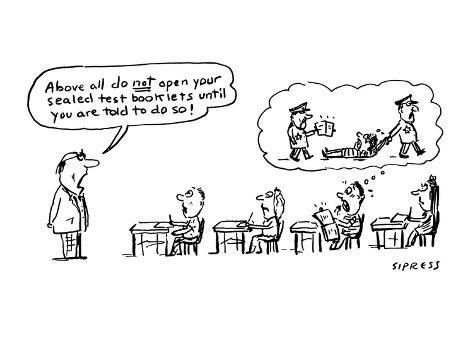

            In someway or another, we can’t do everything we want to do without following anyone’s rules. There is always someone who leads us around. Can be negative, but also positive, as if we break all the rules and we did whatever we wish, we lose organization in life as well as everyone will have his/her own revolution. 

Thursday, March 29, 2012

Is there more to ROTA than just the projects?


In sociology class we study a variety of topics by scanning through the chapters. I found the recent class to be the most interesting class from the previous classes. I say this because I learned something new and interesting that never captured my attention. We spoke about Organizations in terms of Formal and Informal organizations. The discussion looked at Voluntary organizations and Utilitarian organizations.  ROTA is an organization that best defines theses two kinds of organizations according to Sociology. 

“Towards Education for all…Today, Tomorrow, Forever” is there priority mission statement. I am currently a non-paid worker for ROTA (Reach Out to Asia) and this experience gives me a valid explanation of judging the type of Organization it is in our society. The organization has a hierarchy of employees where some are paid to run the organization, while most do voluntary projects to create awareness of the illiterate people who are less fortunate or hard working laborers to get proper education. My job in ROTA is to educate eighteen cleaning staff members of Education City twice a week. These workers are mostly recruited from Sri lank and possess low skills in communicating with their colleagues or people in charge of them in English. They fail to understand certain vocabulary that is very important in order for them to do allocated tasks.

Therefore, I am an individual who gives 2 hours of her time to help these workers learn a few English words, so that their bosses and employers have an easier time communicating with them. ROTA is also a utilitarian organization. A utilitarian organization indicates that the organization has a specific goal/ purpose and implies that some members get paid for running the few aspects of ROTA and is usually a matter of individual choice. I can strongly say this organization is not a Coercive organization. The aim of ROTA is to increase access to educationalfacilities in a crisis situation. The chairperson H.E Sheikha Mayassa bint Hamad Al-Thani and a few other Board members provide guidance and direction for the charity.

Since the organization is a utilitarian organization, this means they are Bureaucratic. A bureaucratic organization indicates that an organization has forms for everything, a lot of paper work, policies, procedures, and deadlines. This organization incorporates all of those attributes in order for an individual to be a non-paid employee, or part of a quick volunteer project. The organization strictly believes in their aim and ways to achieve that aim. The organization has to be bureaucratic because they are dealing with a large number of people of different knowledge skills and areas. They have to deal with the volunteers and the people who need the voluntary assistance. They have to try and get people to sponsor their notion and they work forward with that support and funding’s. Qtel and Vodafone are so far the most spoken about sponsors for the projects of ROTA.


ROTA is a non-profit organization, and thus there is a limit of trust and liability issues that have to be kept under control and supervised regularly. These benefits of having rules is a functional point of view, a positive way to see an outcome in every bureaucratic organization. There is an achievement, which is education that is given and received by a range of individuals.

Although, if there is too much bureaucracy pushed towards the organization, there tends to be negative issues with the organization called Social conflicts. The social conflict in ROTA is that there might be some Asian countries who do not get the privilege to receive the same sort of education everywhere. 

One reason to this is that they might not have enough students or people to do the voluntary work of teaching in those specific regions. Or, they might only get a visit of help once a year that has the possibility to hold an event of teaching. The picture of the Map above shows the different regions that ROTA has visited to help educate more illiterate individuals.

In Doha Qatar itself it becomes a social conflict because many Indian schools barely receive information about ROTA trips abroad or several local projects because the organization only picks people who have a certain amount of skills or study in Education City. Education City most of the time tries to get university or Qatar Academy students to participate in these projects, in order to build their Community and Service skills and approaches. The picture below is of a Carnegie Mellon University student teaching the cleaning staff of his University. As a teacher myself, I have noticed that there are no teachers from The College of the North Atlantic or Qatar University. The next picture identifies how serious ROTA takes their educational services because it shows the training sessions that occurred for all the upcoming teachers in Education City.

Visit this link to watch how Education city demonstrates enthusiasm for Reach out to Asia: http://www.youtube.com/user/reachouttoasiatv?ob=0&feature=results_main

“Make a Difference and take Action” says ROTA.

Wednesday, February 8, 2012

Social Class and 80s Movies

I love 80’s movies. Everything about them is beautiful. Their stories are uncomplicated and contain ideas and situations that directors wish were true.


Ferris Bueller’s Day Off, The Breakfast Club, E.T and Say Anything are only some of the movies that portray the brilliance of much simpler times. These movies discussed issues that the average American faced. Movies about high school and the angst of being a teenager- social class, misunderstanding with parents and such- but in ways so different from the modern teen movie.

Pretty in Pink, a typical movie about love, high school and social stratification explores a modern day story. Pretty in pink seems be the most perfect example of social conflict. According
to Karl Marx, revolutionary sociologist, class conflict arises from the material things, such as: economic inequality, control over parliament, occupation, education and ownership. The tension between the bourgeoisie and the proletariat was always based on these elements. Pretty in pink portrays this tension successfully between a girl who has grown up in a family that isn't close to being rich, and a boy who has always had everything.


Andie Walsh, (played by the gorgeous ‘Brat Pack’ actress, Molly Ringwald) is a teenaged working-class girl who is obsessed with being rich. Living with her father in a house that she hates, she dreams about being rich. Living in big, fancy houses and wearing expensive clothes- things that she can never afford.


Defining her own style using second hand clothes because she can't afford to buy the expensive ones from the store.


At Andie’s high school, social structure is based on economic class, where the “richies” don’t socialize with those who aren’t as economically well to do. The popular girls make fun of Andie’s clothes, which are secondhand as opposed to their own clothes that are “in season."


As much as Andie hates the preppy kids at her school, she aspires to be like them. She works at a part-time store to earn money so she can design clothes- something that she loves doing. It is at that store, that she meets the boy of her dreams- Blane McDonough. Blane who is sweet, different and interesting also happens to be rich and even better, interested in her!


Meanwhile, her best friend, Duckie, refuses to talk to her because he feels betrayed that she would date someone from a different social group- the group that always mocks them. Andie decides that the loss is inevitable. Blane also faces judgment from his friends who think that Andie and her friends are of less value because of their lower economic standing.


The story follows how Blane and Andie try and overcome the hindrances of their relationship; break the barrier of economic class and learn how to their identity does not come from how much money they have. Truly beautiful.

Wednesday, October 26, 2011

Observing the Invisible


Qatar is a rapidly developing country; where day by day we notice a change in our surroundings. By the year 2011, 1,271,000 foreigners have been recruited in Qatar and 75%of these foreigners are unskilled labor workers. Due to this high percentage of workers, as a global society, we tend to neglect these workers and walk by them as if they are invisible. It has became a usual scene, to drive by a group of workers standing in line for the bus under the sun’s heat, to drink from a cold bottle of water when they drink out of an overused 7up bottle and no longer safe to drink from, to look out of our bedroom window while laying down and watching them sleep behind the wall. Because of the social conflict, we never stopped to think about their feelings, their families, or their problems.


During my junior year at VCUQ, one of our projects for print class relates to creating a “survival kit” for workers, we were put in teams to develop a product that would facilitate the workers. To accomplish this project, we went to tailors, gardeners, and waiters, we asked them a few questions to learn about their concerns and problems and to find a solution that would help them feel more comfortable in Qatar. The results from our interview led us to find out about the average salary and the places they spend their time on their weekends, which is for most of them, the corniche and the souq.

As a group of three, we cannot change the society’s perspective but we can open up opportunities for the workers to explore Qatar, we can teach them how to deal with the society. We looked at the workers as individuals who are willing to blend in with the society but the perception they have of locals pushes them backwards. Therefore, as a design solution, we used the visual language of the Indian culture which include the colors and illustrations. This would help them accept and trust the context because they would relate to it.

Our final package “fun weekend” is a wallet which consists of a Karwa map (which we further developed) to help them explore new areas in Qatar. The map also includes different packages as a guide on how to spend a small amount of money during a day out, as well as having fun at the same time.


This project was completed in a short period of time; therefore our research was not deep enough. This semester, we decided to complete and develop our research as an independent study group, which we are currently working on.

Our recent research has opened our eyes to how serious the worker’s problems are relating to their social status. We learned that because of the division of labor, the workers are assigned tasks which they do not know how to preform, this is a result of their language barrier and the lack of experience.


The video link at the bottom shows the living conditions of migrant workers in the Gulf where we see a pattern of problems, mostly because the workers lack education, they do not know their rights. The video also includes a story of an individual who faced financial problems and was in debt and eventually led to a horrifying ending.

http://www.youtube.com/watch?v=hMxbpsw_UTE
http://www.youtube.com/watch?v=fOF97JrUej4&feature=relmfu