Monday, November 5, 2012

Star Academy vs. Big Brother: Al-Rais

In the red corner we have Big Brother (Al-Rais). Never having reached its first round of evictions. In the blue corner we have Star Academy that has completed its eighth season. The winner is clearly the latter, having been a success across the Arab region. After reading the chapter by Kraidy I began to wonder why both reality programs, that are similar in more ways than they are different got different responses.


Having briefly watches some of the original Big Brother series from Europe and America I began to wonder why on Earth it actually got picked up in the Arab world. The concept itself was very Western, so much so that it went against the traditional values and norms of the largely Muslim audience. It isn’t the idea of having an Arabic version of a show that is problematic. It’s the actual premise and nature of the show.


Largely the audiences of the original shows tuned in to see what sexual relations were going on and to see the latest explicit argument. The contestants on the western show drink, casually have sex, and bear all (literally) to the world. Those are the three aspects of it that attract the viewers. Strip all that away and you’ll have a group of strangers living in a house. Why would anyone want to watch no drama?
Star Academy on the other hand, still had its fair share of criticism and resistance. However, it was still very similar to the actual format of the original French show Star Academy. It’s singing competition that has contestants living in a house and performing to a live audience for votes. It isn’t all based on personality, and there is a purpose for being in the same house. True, people do tend to tune in to see what the contestants are doing in the house, and to see what love triangles are forming. It's still a show that is able to use a bit of the Big Brother concept minus the excessive nudity.


Now, both shows came out at around the same time: late 2003, and early 2004. One based in Lebanon, and the other in Bahrain. Both shows received a lot of criticism and weren’t expected to succeed, and it was true for one of them. The kiss in Bahrain is probably what ended it for Big Brother. I’m sure there have been kisses on Star Academy, but I find it unlikely that they’d have the same protests as in Bahrain. It is only because they are two different cultures.


I personally see that Star Academy was produced in the right place at the right time with the right concept. Big Brother might have worked if it took place in present day Lebanon. It’s interesting to see how one show gains success and another doesn’t. There has to be more to the format of Big Brother than a group of people living in a house in order for it to be successful. Reality TV works when there’s drama, and in the case of Big Brother there was definitely drama, just not from the actual content of the show.

Expression of Fashion or Subculture ?


The concept of dramaturgy and subcultures are almost intertwined. From previous knowledge and from class discussions, I decided to visit an English speaking school to see if there was any sort of subculture or if I could apply the sociological concepts I learnt in class. I decided to visit a high school, keeping in mind that most youth subcultures are formed when they are separated from their primary socializers, their family, and not under the influence of the dominant culture. Therefore, for this blog post, I wanted to study whether there was a subculture amongst the students from the way most Muslim girls wore their school uniforms and adapted to a westernized environment.


As I was walking through the playgrounds at break time, I noticed how most Muslim girls had their hairs covered with the hijab. The normal school uniform was a polo shirt and a pair of trousers. The girls wore both long skirts and long sleeves, or simply long sleeved shirts with pants. In a sociological perspective, this can be seen as a bricolage. In this case, bricolage is how the young girls adapt to the western style fashion, but at the same time respect their religious beliefs by wearing the hijab.

The theory of commodity was present as Dick Hebdige describes it as “the conversion of subcultural signs into mass-produced objects.” It was tough to determine if the girls were expressing their sense of modesty in Islamic clothing, or conveying their sense of belonging to a certain subculture. Some of the girls had hipster looking glasses, converse shoes and even wore revealing clothing with their hijab on. Some also wore high-rise leggings with their uniform tucked in, which could be another indication of a hipster style.


On the other hand, some girls were holding designer accessories, for example; Chanel, Gucci and Burberry handbags, while others were wearing punk looking bracelets and shoes with spikes on them.  In the end, it is up to us to decide if they belong to a certain subculture, or whether its jut a form of commodity Hebdige refers to.


The world is mediated. In other words, corporations and the media normalize what was once a shock to us. Probably, the way most of the girls were dressed was once considered socially unacceptable, but through media and the fashion industry, these forms of clothing have become acceptable and normalized. Nowadays it is not out of the ordinary for a Qatari girl to wear revealing clothing, where it was contemplated deviant two years ago.


If I were to apply the dramaturgy theory by Erving Goffman, I would say that these girls are all actors on the front stage of a theater. In this case, the stage would be the school. The students, principals, cleaners, security and the teachers are the actors playing set character roles as part of their performances. The students managed their setting, clothing, language, and gestures to correspond the image they tried to project. Nevertheless, this is impression management. For instance, the girls were presented differently on front stage than if they were to be in their comfort zone, the back stage. At one point, the girls took off the hijab and started singing when they were in the classroom alone, and put on their hijab and acted all reserved once they walked out.

The female students could be part of a larger subculture or they could just be consumers of style through the mediated world. 

Saturday, October 27, 2012

Taqwacore, the subculture of the Muslim punks


As I was researching about punk rock in the Middle East, I came across the Taqwacore subculture which I had no idea existed. Taqwacore is punk rock movement that has emerged following the publication of Muhammad Michael Knight’s 2003 novel, The Taqwacores, depicting a fictitious Islamic punk rock scene. The word has been derived by combining two words – “taqwa”, an Islamic concept of love and fear for Allah, and “hardcore”, the punk rock subgenre. In other words, Taqwacore can be viewed as a punk music with a Muslim connotation.


According to Hebdige, “spectacular subcultures express forbidden contents in forbidden forms. They are profane articulations and they are often and significantly defined as unnatural…” This can be applied to the Taqwacore subculture where express ion of forbidden content in forbidden forms is regular (e.g. expressing frustration of 9/11 attacks in their lyrics; women-led prayers). The basis of the subculture that is the merging of two seemingly incongruous identities contributes to the spectacular nature of the subculture. Punk rock, as a subculture and musical style actively resists mainstream society and embraces a marginalized identity and role in society. Punk rock blurs traditional boundaries between audience and performer and questions traditional or accepted norms and values. In stark contrast, Islam is a structured religion founded on a deeply personal and individual belief in God and is characterized by selflessness, devotion, and devout sense of social responsibility. From this we can call Taqwacore as a bricolage where the combination of various objects and ideas (in this case punk rock and Islam) appears nonsensical but makes perfect sense to the people involved in the subculture. For the Muslim punks, Taqwacore serves as a platform where they can embrace their own interpretations of Islam via punk rock and use internet to build communities and spread the message.Some of the popular Taqwacore bands are The Kominas, Al - Thawra and Vote Hezbollah.

For this blog article I will be examining the dressing styles and choices by the Muslim punks by viewing it from the two forms of incorporating a subculture – (a) the commodity form & (b) the ideological form. In the Subcultures Reader, Hebdige refers to the commodity form by mentioning that the subculture is communicated through commodities even if the meanings attached to those commodities are purposefully distorted. For the punk rock scene, this commodity form is represented in through the use of spikes, chains, mohawks and dyed hair. Interestingly enough, the Muslim punks combine both the usual punk rock associated styles (use of mohawk and spikes) and Arab traditional wear such as hijabs and the traditional Palestinian checkered scarves which can be seen in the below pictures.


The ideological form occurs when the subcultural style becomes more accepted through the labeling and re-defining of deviant behavior by dominant groups such as the media or the police, through various forms of communication technology. Before the use of pins and spikes on clothing was unheard of and would probably be labeled as fashion disasters. But now, it has become a part of mainstream media and hence has become acceptable. Even in the Qatari society, you can see young females wearing abayas with spikes and pins.


Thursday, October 25, 2012

Naturalization in Sport


"Andrés Sebastián Soria Quintana, is a naturalized Qatari footballer who plays as a striker for Lekhwiya" This is the brief introduction of Soria's profile on most websites. Sounds weird? Sebastian = a Qatari name? Well, no, he is a naturalized footballer who now plays regularly for most of Qatar's national team matches and is also extremely popular at club level football. Turns out, that he is not the only one. At a football match that I recently attended in Doha, I noticed that many players had Christian names and did not look Arab as well. As a student of sociology, I found this particularly interesting since one would expect to see the best local players on the national team. So how did this major change happen? and Why?

 
Qatar's National Football team

Club football has contributed a lot to the exchange of players globally. Today, most major clubs world over have international players coming across the border to play for them. The major reasons for this of course are the financial benefits that they may receive and also, the feeling of being associated with a top of the league club. Globalization has had a huge impact on the sports arena. Players, professionals, staff, money and brands have all been and continue to be exchanged across borders at high levels. Football , or Soccer, has always been the number one sport in terms of fan following, television rating points and investments. As an effect of globalization, several players moved to different parts of the world where their talent could be harnessed and they had better opportunities to make money and develop professionally.

The idea of capitalism is of course at the heart of all this change. Club football is probably one of the highest revenue generating form of sport today. Corporations spend millions of dollars on advertising and communication so that their brand gets noticed by the majority. Most major companies like McDonalds and Coca Cola are official sponsors of world class events such as the Olympics, FIFA World Cup etc. This gives them huge exposure which of course any major corporation would love to have. Corporations are known for their extensive support when it comes to subcultures and hence, sport is a major area of interest for all the big brands in the industry today.


                                   The usual sponsors at most events

The process of naturalization is not really new but its just that there is a lot of focus on it today since many countries are practicing it. Several countries today have naturalized players representing various national teams. In Qatar, most sports have naturalized citizens playing for them. In football, table-tennis, basketball, swimming etc. there are several players who are not originally from Qatar. While many players are born in Qatar and perhaps have lived in Qatar all their lives, they wouldn't have been granted citizenship under normal conditions. But, when it comes to sport, this exception seems to be made easily. In class this week, we discussed about variance. It is important to note here that variance can go in both directions. It doesn't necessarily have to be deviant. The idea of naturalized sports persons can also be seen as a form of variance. The team demographics in general isn't deviant in any respect, but there is a level of difference that seems significant. For instance, at the beginning of the national anthem in the Qatar-Japan game, there were hardly any Qatari players who were singing the anthem. The reason being that they probably didn't know them in the first place.


           The band ready for the anthems

But this is an accepted culture in the world today. The idea of dominant culture is key here. In this case, the dominant culture is the culture of FIFA, that sets the rules and regulations for international football. Players too seem to make the shift without any major issues since ultimately they benefit the most. We discussed the idea of tribalization and de-tribalization in class last week. Given the huge financial incentives, many players don't mind de-tribalizing from their original communities and seek citizenship in other countries.

Still, for varying political reasons, FIFA has deliberately kept eligibility rules rather vague. Its Article 18 reads in full:
1. Any player who is a naturalized citizen of a country in virtue of that country’s laws shall be eligible to play for a national or representative team of that country.

This culture has been introduced and to some extent supported by FIFA and so the other countries just try to adapt and thereby take advantage of the dominant culture and make it look like they are merely adhering to the broader culture. Communication needs to be clear and definite.  Statements such as these need to be more specific and clear. As per this statement, any country could grant citizenship for a period of time and have a particular player represent their country. The homology of FIFA has begun to take a different direction though. Recently, they have introduced strict regulations on the naturalization process. For instance, a player must play at least five years of club football in the country before he/she can represent the country. Qatar has done a great job with following the rules and developing a strategy. Players like Sebastian Soria and others have been around in Qatar for years and they played for Qatar only after clearing the eligibility requirements. The Qatari crowd today loves Sebastian and he is still a key performer in most matches for Qatar. The video below shows how the country embraces Sebastian as their player. Notice the commentator's support too!


While FIFA has set several regulations for this, there are other sports that continue to naturalize players for a short duration. This perhaps need to be re-thought and is in fact a complex debate since it deals with several socio-political domains such as nationality, ethnicity, religion, diplomacy, culture, belief and values. The global sporting arena would be interesting to look at in the coming years.

Tuesday, October 23, 2012

Once Upon A Subculture


Throughout the years the subculture of hipsters has evolved significantly. There has been resistance from society towards hipsters and what they embody and represent. I associate hipsters with being totally against the mainstream and conventional ideas. The phrase “don’t trust the system,” reminds me of the hipster style since it seems that the subculture strongly value nature, originality and freedom beyond the confinements of society. The hipster subculture is a culture within the larger culture. They have their own set of beliefs, values and interests. The subculture discussed is at variance with the larger culture. It seems to me that hipsters are completely against the materialistic way of life and the obsession with consumerism. However, that has drastically changed as the subculture has been accepted and incorporated into the larger culture.


Recently, hipsters have been made apart of the mainstream and larger culture. Websites like Tumblr has helped incorporate the subculture into the larger society. It has become the norm and popular to dress and have similar beliefs which were originally that of hipsters. Is it ironic that a subculture that is built on a belief that is completely against society become incorporated into the mainstream? Are we all hipsters at heart? Has the incorporation of the hipster lifestyle abolish the hipster subculture? All these questions formulated in my head when the hipster incorporation took place. It was confusing seeing a subculture resisted by the masses becoming a trend. However, further reading suggested that the taking on of a subculture by the popular media is a frequent occurrence.


Hebdige brought up two ways in which this occurrence happened. The subcultural styles are incorporated into the mainstream culture by the commodity form and/or the ideological form. The commodity form is “the conversion of subcultures signs into mass-produced objects.” This implies that corporate companies use these subculture styles to create new trends. The ideological form is “the labeling and re-definition of deviant behavior by dominant groups.” The two forms can be applied to the diffusion of the hipster subculture into the popular media. Since culture is not fixed it can take on many different trends and continuously alter.


Monday, October 22, 2012

Souq Waqif - The Kebabization Experience

As a CDA for the dorms on campus I am required to program events each month that engage the residents with the local culture. Last weekend I took the residents on my floor to Souq Waqif for a program titled “Kebabization”. Initially, I intended this program title to be a pun on the various terms in academia that are created with the “ization” standard. However, visiting Souq Waqif was a different experience this time around because I actually had those terms (that I used to come up with “kebabization”) at the back of my head. This allowed me to look at this experience from a relatively new lens.
Souq Waqif, with its fascinating streets filled with budging tourists and locals was as lively as ever. The bus dropped us off in front of a falcon shop. The falcons in the shop were pretty expensive but the falcon shop and other similar “performances” of the local culture reminded me of Cole’s notion of performance in “Bedouiness”. I regard this as a performance, as this is similar to the attempts for the “revival of tradition” in Petra and part of the quest for “authentic” presentation of the local culture. These performances are visible all over Souq Waqif in forms of the many Arab restaurants whose hosts are dressed up in elegant traditional dresses, allowing the visitor to “buy hospitality” as suggested by Cole in the same article.
I have always noticed a particular group of elderly men with carts around Souq Waqif. This time around I found out that they are called the “Hamali”. In sociological terms I would regard this group as a subculture. This is because this group shares unique instruments (their carts), uniforms and space. This aspect helps them stand out in the crowd at Souq Waqif. I have not seen them anywhere else in Doha so far.
Walking around Souq Waqif and noticing global brands like Baskin & Robins present along with the Shujja Iranian Kebab place that we visited hints towards glocalization to an extent. Souq Waqif, as previously mentioned is an attempt to revive Qatari tradition. Cole also describes this as the change from “the Bedouin into wealthy entrepreneurs of international tourism”. This is a confluence of various sociological and modern communications phenomenon presenting a very interesting situation. The architecture of Souq Waqif has always fascinated me. It reminds me of the Prince of Persia games that I played during my childhood. This time, however, with the set of academic inventory with me I observed a certain bricolage in Souq Waqif’s architecture. This is a consequence of the fusion of the modern with the traditional. The traditional, however, in this case is the general Arab tradition because many critics regard the Qatari culture as still in the process of development. The modern, for one, in Souq Waqif’s architecture can be seen in the form of beautiful lighting across the traditional alleyways.
Souq Waqif at first may seem chaotic as any marketplace because there is a lot happening at a point in time. A closer look enabled me to apply the concept of homology, which helped me consider the myriad of micro organisations in the large marketplace. One such organisation is the act of trade. Almost every entity at Souq Waqif engages in some kind of trade; whether you are the buyer or the seller or just a simple visitor, you are definitely taking or giving something either in terms of material and non-material culture.
In conclusion, it can be said that a place like Souq Waqif helps us experience the modern and the traditional in one place. It is a highly recommended place for first time visitors and a definite recommendation for locals who want to relive what Arab culture is all about.

Saturday, October 20, 2012

Speedcubers - The Famous Rubik's Cube

Over the summer, I went to Jordan for a family reunion. While I was there, I encountered a group of young teenage boys who dedicate several hours of their week simply to learning how to master the Rubik’s cube puzzle. The community of speedcubers is very small Jordan, however their size has not prevented them from meeting, competing and developing their skills. The young boys (no girls were a part of this group) meet every other week to compete and try to beat their previous records. They all have a collection of cubes that they have chosen to practice with. They have learned the technique behind solving the puzzle through YouTube videos posted by competitors around the world. They all carry their favorite cubes with them at all times so that they can practice regardless of where they are.


The Rubik’s cube is considered to be the world’s best selling toy, with over 350 million cubes sold worldwide since its invention in 1974. Although the Rubik’s cube reached its height of mainstream popularity in the 1980’s, there are many competitors who still enjoy competing in solving the puzzle in the quickest timing. Out of the small group of speedcubers I met in Jordan, one of them turned out to be the FIRST PLACE SPEEDCUBER in the MENA region, according to the WORLD CUBE ASSOSIATION.


This community might be small in Jordan, and other Arab countries, however, through globalization and the availability of the Internet, they are able to communicate and compete with people across the globe. They share common terms and have a special “language” in which they discuss the timing, type and size of the Rubik’s cube. For example, “16.21 12.66 15.68 11.34 12.52. Average: 13.62 NR Cube used: Zhanchi” Although they are opposing the larger culture, they are considered a “deviant” or “variant” subculture. To have the dedication and time to study and master the technique is difficult, and only some have done it. All speedcubers seemed to have a polished sense of style – nothing very distinct, but they do look very put together and uniform.
The video below is of one of the contestants being timed by the association in his house in Jordan:


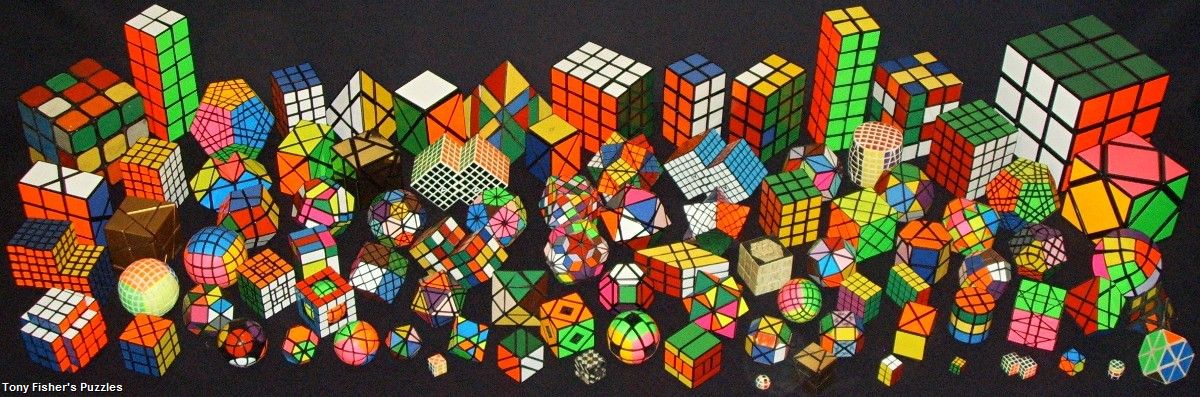
Corporations saw the popularity of this cube as an opportunity to create different accessories or items that are in the shape of the Rubik’s cube. The images below are only some of what is available. Also, they have created cubes in different shapes and sizes. Some cubes are now collectables. The mass production of these products goes back to the concept of capitalism – making a subculture mainstream!


Homology is when the structure of any particular subculture is characterized by an extreme orderliness. This evident in the way that these competitors meet and compete. They have strict rules as to how the Rubik’s cube needs to be shuffled, rules on how to time it and standardized scores to compare against.

Although some cultures are formed through "Bricolage" - where the artists make-do with what they have, this subculture was formed through consumerism and the Internet. However, being loyal to this puzzle and setting up regularities and  community around it has defined those who participate as a part of a  subculture.

One can argue that this subculture is a "Spectacular Subculture" because it is out of the ordinary and certainly amazing. When you want someone solve a puzzle that is very difficult in a matter of seconds it is very surprising!

The community of players escalated the level of challenge of the competitions by having under-water, in-air competitions etc. This has allowed them to grow the puzzle and have more records to beat.