Over the summer, I went to Jordan for a family reunion. While I was there, I encountered a group of young teenage boys who dedicate several hours of their week simply to learning how to master the Rubik’s cube puzzle. The community of speedcubers is very small Jordan, however their size has not prevented them from meeting, competing and developing their skills. The young boys (no girls were a part of this group) meet every other week to compete and try to beat their previous records. They all have a collection of cubes that they have chosen to practice with. They have learned the technique behind solving the puzzle through YouTube videos posted by competitors around the world. They all carry their favorite cubes with them at all times so that they can practice regardless of where they are.
The Rubik’s cube is considered to be the world’s best selling toy, with over 350 million cubes sold worldwide since its invention in 1974. Although the Rubik’s cube reached its height of mainstream popularity in the 1980’s, there are many competitors who still enjoy competing in solving the puzzle in the quickest timing. Out of the small group of speedcubers I met in Jordan, one of them turned out to be the FIRST PLACE SPEEDCUBER in the MENA region, according to the WORLD CUBE ASSOSIATION.

This community might be small in Jordan, and other Arab countries, however, through globalization and the availability of the Internet, they are able to communicate and compete with people across the globe. They share common terms and have a special “language” in which they discuss the timing, type and size of the Rubik’s cube. For example, “16.21 12.66 15.68 11.34 12.52. Average: 13.62 NR Cube used: Zhanchi” Although they are opposing the larger culture, they are considered a “deviant” or “variant” subculture. To have the dedication and time to study and master the technique is difficult, and only some have done it. All speedcubers seemed to have a polished sense of style – nothing very distinct, but they do look very put together and uniform.
The video below is of one of the contestants being timed by the association in his house in Jordan:
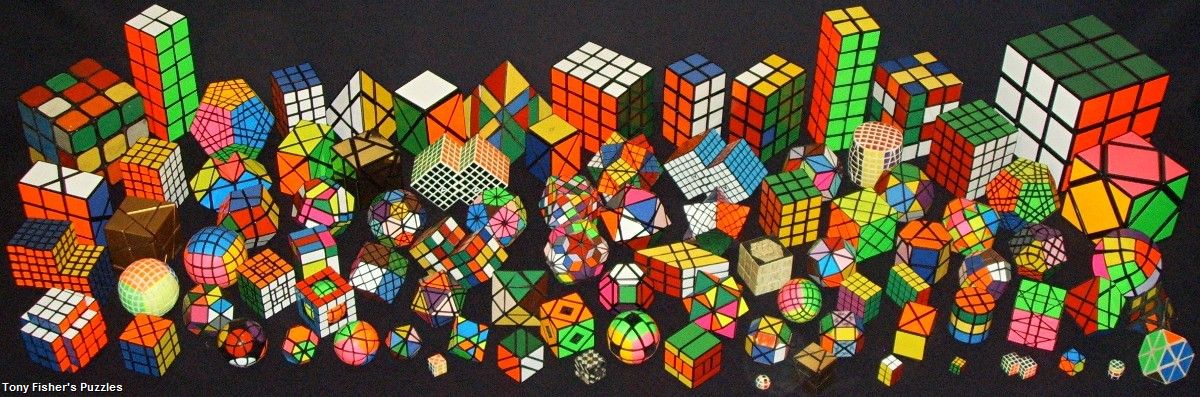
Corporations saw the popularity of this cube as an opportunity to create different accessories or items that are in the shape of the Rubik’s cube. The images below are only some of what is available. Also, they have created cubes in different shapes and sizes. Some cubes are now collectables. The mass production of these products goes back to the concept of capitalism – making a subculture mainstream!


Homology is when the structure of any particular subculture is characterized by an extreme orderliness. This evident in the way that these competitors meet and compete. They have strict rules as to how the Rubik’s cube needs to be shuffled, rules on how to time it and standardized scores to compare against.
Although some cultures are formed through "Bricolage" - where the artists make-do with what they have, this subculture was formed through consumerism and the Internet. However, being loyal to this puzzle and setting up regularities and community around it has defined those who participate as a part of a subculture.
One can argue that this subculture is a "Spectacular Subculture" because it is out of the ordinary and certainly amazing. When you want someone solve a puzzle that is very difficult in a matter of seconds it is very surprising!
The community of players escalated the level of challenge of the competitions by having under-water, in-air competitions etc. This has allowed them to grow the puzzle and have more records to beat.
The Rubik’s cube is considered to be the world’s best selling toy, with over 350 million cubes sold worldwide since its invention in 1974. Although the Rubik’s cube reached its height of mainstream popularity in the 1980’s, there are many competitors who still enjoy competing in solving the puzzle in the quickest timing. Out of the small group of speedcubers I met in Jordan, one of them turned out to be the FIRST PLACE SPEEDCUBER in the MENA region, according to the WORLD CUBE ASSOSIATION.
This community might be small in Jordan, and other Arab countries, however, through globalization and the availability of the Internet, they are able to communicate and compete with people across the globe. They share common terms and have a special “language” in which they discuss the timing, type and size of the Rubik’s cube. For example, “16.21 12.66 15.68 11.34 12.52. Average: 13.62 NR Cube used: Zhanchi” Although they are opposing the larger culture, they are considered a “deviant” or “variant” subculture. To have the dedication and time to study and master the technique is difficult, and only some have done it. All speedcubers seemed to have a polished sense of style – nothing very distinct, but they do look very put together and uniform.
The video below is of one of the contestants being timed by the association in his house in Jordan:
Corporations saw the popularity of this cube as an opportunity to create different accessories or items that are in the shape of the Rubik’s cube. The images below are only some of what is available. Also, they have created cubes in different shapes and sizes. Some cubes are now collectables. The mass production of these products goes back to the concept of capitalism – making a subculture mainstream!


Homology is when the structure of any particular subculture is characterized by an extreme orderliness. This evident in the way that these competitors meet and compete. They have strict rules as to how the Rubik’s cube needs to be shuffled, rules on how to time it and standardized scores to compare against.
Although some cultures are formed through "Bricolage" - where the artists make-do with what they have, this subculture was formed through consumerism and the Internet. However, being loyal to this puzzle and setting up regularities and community around it has defined those who participate as a part of a subculture.
One can argue that this subculture is a "Spectacular Subculture" because it is out of the ordinary and certainly amazing. When you want someone solve a puzzle that is very difficult in a matter of seconds it is very surprising!
The community of players escalated the level of challenge of the competitions by having under-water, in-air competitions etc. This has allowed them to grow the puzzle and have more records to beat.


