Due to these past few years, where the Arab society has met different types of people from various countries around the world, different subcultures have emerged, stating that they will the change the stereotype idea of Arab’s to Westerners.
These Subcultures included everything from Gothic groups to Football addicts who communicate with each other on a daily basis using the most amazing creation of our time, the Internet.
However with every change there is an opposition; and opening up all of a sudden has affected the Arab society on a great level. How? Well using the example of Goths and Emo’s who have been spreading quite quickly throughout the Arab countries these subcultures have created tension and fear to the Arab society.
What is an Emo? Emo stands for Emotional, the correct term is Emotional Punk, these people are part of a group whom want to fit in with a certain group or subculture. They tend to be suicidal, wear black and listen to rock and roll. Apart from the black clothing, Emo kids can be identified through blonde or pink streaks in their hair, dark make up and plenty of piercings.
As they are creating a deviance, meaning they have created an appearance or behavior that is not accepted by the culture, values or norms of our countries in the Arab Society.
By violating certain norms and values of a culture is that these groups have created fear in households of Arab families as I mentioned people known as Emo’s tend to be suicidal and suicide is considered forbidden and unwelcomed in most religions, whether in the Arab or Western side of the world, and due to the new fashion of Emo’s Arab individual’s are carried away with the trend not knowing what it hides.
Not only has the Emo affected the Arab communities however in the following video Westerners have been affected as well: http://www.youtube.com/watch?v=OUGYe3Ly0jE
Showing posts with label Values. Show all posts
Showing posts with label Values. Show all posts
Sunday, November 20, 2011


Monday, November 14, 2011
Trousers evolution!

In the 20th century the boyish figure appeared at the end of the First World War, where the women’s started to emancipate their clothing style. It happened when the women had to replace the men and work the factories, and all the jobs where usually men occupied it. The way they were clothed didn’t help them to move freely and work efficiently so they started to wear comfortable man clothes.

In the sociology perspective the boyish figure was a deviance. In fact at that period the beliefs and the traditional values for each gender had a specific cliché “virility for men, decency for women”. In that mater the difference between the genders was necessary represented by the clothing; so it was forbidden for the women to wear trousers. So this emancipation shocked the society. In the 1920s the biggest fashion designer, and fashion icon Coco Chanel was one of the most important figure that pushed forward this wave of liberating the female silhouette. She was one of the first women to discard the corset, cut her hair short but the most important thing is wearing trouser! She said, “ I gave back to women’s body his freedom, this body was sweating in clothes parade, lace, corsets, underwear, upholstery. "

She created in this period a subculture that had evolved untill nowadays, and it beacame a daily routine to wear trousers, jeans, pants etc…

Monday, October 31, 2011
The Conflict between the Silent Majority and the Spoken Majority (Qatar before and then)

The technological revolution in Qatar has led to the emergence of generations displaced from their values. That the Web has been able to transfer the cases of the Uncommunicative youth to the welcomed heard space. It turned “ the silent majority” to “the spoken majority“ and succeeded in putting itself on the top agenda of the world.
Without any doubt, the generations impressed with the new life's tools, and interacted with them, producing the adult form, which was “in terms of age” were recognized and dealt with more seriously than everyone thinks.
Two elements were not available for the younger generation earlier; the first social networking with the various social classes, cultural and geographical classes, which led to expand the youth minds and their vision of life and the universe. Secondly, the massive flow of information, which were not available except for limited people from security departements and Politicians.
The technological revolution has succeeded in transforming “the silent majority” to “the spoken majority” and it is no longer silent, as it shares in the production of public opinion among young people, which is almost a uniform over the social problems and the ways to deal and solve them.
It has contributed in pushing the social and political movements in all countries of the world and forwarded at a rapid pace and revolutionary. It was in contrast to the old generations to variables, and to obey and enforce to deal with them according to the mechanisms and conditions. But infront all these variables, what did the old generations do when they see what is happening to their young people? The fact refers to that; they were spending and offering the young people the money to use the new technology, and monitors, while others refuse to even carry a cell phone.


The capacity of the Qatari old generation varys to deal with the various tools and technology industries, while some managed to adapt it quickly than the others. But many eldest has suffered from the phobia and it’s became a warm cover that they tell everyone they love the old one.
For instance, there are few Qatari people almost prevents their kids from using the Internet at home, though if they could, they would prevent them from using it outside their houses.

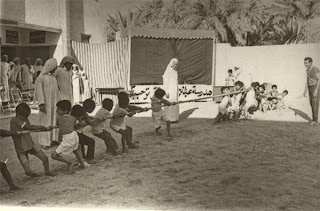
So, the conflict and the social interactions between the generations, although it takes in every age a new term which is differ from what was preceded earlier. However; who thinks that the parents will end the conflict, didn’t had the chance to see well the variability of roles between the ages. The absolute thing is that; who ever argued his/her father on the technology revolution, he/she will argue his/her son and grandson, in what they want them to do rather than what they want it against the parents rejection.
Thursday, October 27, 2011
Arabic Coffee within a Culture

Arabic coffee is a traditional drink that Arabs in the gulf serve to their guests as a welcoming drink, it is considered to be part of the Arab culture. Serving and preparing coffee embeds a number of cultural elements such as values and symbols that link directly to sociology, as well as remaining a focal point during social gatherings of all kinds. It is mainly derived from the Bedouin hospitality, but with new generations it is starting to change. The society values draw guidelines for how and when coffee should be served. When serving coffee strict rules are followed within the serving order. Age is a way to start serving the older than the younger, but when theirs a doubt a one can start serving with the person who is on the right. The coffee cups are only half filled and guests may have several refills, it is considered as an insult to fill up the coffee cup to the top. For the guest to indicate that he has finished and doesn’t want a refill he should jiggle the cup sideways. Refusing to drink the coffee either is considered impolite or the guest is trying to send a message to the host that he is here for something he wants. The guest may accept the cup of coffee but not drink from it, saying things like “your coffee isn’t to drink” meaning I will not drink your coffee unless you grant me what I came for. It is considered ashamed for the host to not grant them what they want. There are much more actions and body language during the ceremony of making serving coffee that sit on a rough surface of traditional and cultural meanings. Nowadays with the new generation not a lot of them drink Arabic coffee since they are becoming more addicted to other types of coffee such as American, French, and much more types of coffee. It might be due to the availability of this product or due to global trends that are inherited from the west.
A link to a video I designed last year about Arabic coffee.
http://vimeo.com/20022199
Wednesday, October 26, 2011
Material Culture in Sudan
Culture is everything made, learned, or shared by the members of a society, including values, beliefs, behaviors, and material objects. Culture is learned, and it varies tremendously from society to society. We begin learning our culture from the moment we’re born, as the people who raise us encourage certain behaviors and teach their version of right and wrong. One important aspect of culture is Material culture. (SparkNotes)
Material culture consists of the concrete, visible parts of a culture, such as food, clothing, cars, weapons, and buildings. Aspects of material culture differ from society to society. (SparkNotes) Here are a few features of material culture in Sudan:

This is the traditional bride, where she must be covered with gold on her wedding. Also Henna is a necessity for married women, so they are known in the society that they are married. Also the Hena is a material object because is its a part of the Sudanese culture.

Also another part of the Sudanese material culture is tribal beauty marks its done by many tribes in Sudan. Which is when young girls, becomes a woman and eligible for marriage, her face will scarred in tribal patterns to represent that she is ready.

Another important material in the Sudanese culture is the “Toub” the national dress for women. Married women wore the “Toub”, which is a representation that they are married. Young girls are not allowed to wear. The “Toub” is also the identity that differentiates the Sudanese women from other women around the world.
Material culture is important in every culture and country, it defines the identity of each nation. In Sudan we have many significant material culture that presents Sudan, and known all around the world.
Here is a Video on Youtube that elobrates more on the Sudanese Culture
http://www.youtube.com/watch?v=OZtlwD2miUE
Source:
SparkNotes Editors. “SparkNote on Society and Culture.” SparkNotes.com. SparkNotes LLC. 2006. Web. 18 Oct. 2011.
Material culture consists of the concrete, visible parts of a culture, such as food, clothing, cars, weapons, and buildings. Aspects of material culture differ from society to society. (SparkNotes) Here are a few features of material culture in Sudan:

This is the traditional bride, where she must be covered with gold on her wedding. Also Henna is a necessity for married women, so they are known in the society that they are married. Also the Hena is a material object because is its a part of the Sudanese culture.

Also another part of the Sudanese material culture is tribal beauty marks its done by many tribes in Sudan. Which is when young girls, becomes a woman and eligible for marriage, her face will scarred in tribal patterns to represent that she is ready.

Another important material in the Sudanese culture is the “Toub” the national dress for women. Married women wore the “Toub”, which is a representation that they are married. Young girls are not allowed to wear. The “Toub” is also the identity that differentiates the Sudanese women from other women around the world.
Material culture is important in every culture and country, it defines the identity of each nation. In Sudan we have many significant material culture that presents Sudan, and known all around the world.
Here is a Video on Youtube that elobrates more on the Sudanese Culture
http://www.youtube.com/watch?v=OZtlwD2miUE
Source:
SparkNotes Editors. “SparkNote on Society and Culture.” SparkNotes.com. SparkNotes LLC. 2006. Web. 18 Oct. 2011.
Tuesday, October 4, 2011
Unleashing the Qatari Culture in the Residence Halls
On September, 27th, 2011, one of the female residence halls in Education City in Qatar hosted an event to educate the International students about the Qatari Culture.The CDA’s and the residence hall director arrived before the event to set up all the items which represent the material culture of Qatar. These items included the traditional sofas, Arabic music, local pastries, regional dresses and henna cones.
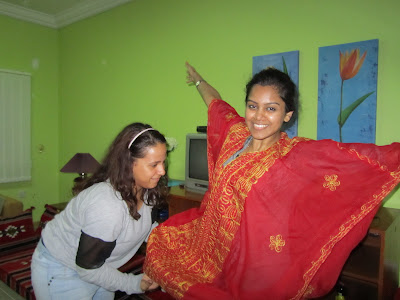
A total of 16 students made it to the event. Most of the students came from Middle Eastern and Asian countries. However major western influence reflected the way these students dressed and talked. The fact is that Education City, which consist of six American universities, sways the subculture of the students to behave in a more western-oriented manner. They all communicated in English since not everyone from the attendants could speak the Arabic language.


Throughout this social gathering, I noticed many aspects of the non-material culture of the country. For instance, folkways like greeting everyone in the event by kissing on both cheeks were firmly applied. Also, the attendants showed open-mindedness and respect towards each other, which is a value embraced within the Qatari Culture. There were norms like maintaining the cleanliness of the place by disposing all tissues, paper plates, plastic cups after using them. Everyone made sure that they kept the pillows of the traditional sofas in the correct order after sitting on the sofas. The music was played at a modest volume. These examples illustrate how keen the Qataris are about living in a hygienic and organized place.


Back to the material culture, the students indulged in the two large dishes of the freshly baked chicken, meat, spinach and vegetable pastries known as fatayer. The portions were huge and this explains the concept of hospitality and generosity when it comes to dining in the Arabic culture. The students had fun trying out the Women’s traditional dress which corresponds to the beliefs of Islam in the culture as the dress was very conservative. Also throughout the event, the students were excited to get their hands decorated with the complex henna designs as henna in the Qatari culture symbolizes beauty.

Adding to all the energy of the occasion, one of the students turned 19 on the very same day. Matea Malikanovic a freshman at Georgetown University celebrated her birthday among the many students in the event. No one knew that her birthday was on that day so there weren’t any preparation to celebrate the occasion to its full potential. However they did sing her the popular birthday song and exchanged birthday wishes, which showed an example of cultural diffusion. Originally from Bosnia, Malikanovic shares a glimpse of her past, “I was born during the war,” she states. However, the situation has improved immensely since then. Still, she decided to study in Qatar to gain a better understanding of the culture and religions of the Middle East.

Birthday girl
A role is the behavior, obligations, and rights expected of a social status. The role of an Education City student involves committing to your schedule, submitting your assignments on time, participating in class and of course passing exams. Despite the busy academic schedule of most the students at the event, they were all looking forward to relaxing and enjoying their time. In fact, 9 students had exams the next day. Elizabeth Boctor, a Weill Cornell student said “I have no idea what I’m doing here but I know I’m happy.” Similarly, Sarah Omar, from Georgetown University expressed her excitement on attending the event, “We are enjoying free food and seeing people we normally wouldn’t see because of our busy schedules.” This casual get-together permitted the students to step out of their rigorous role and engage in leisure and social activities.
While the event only lasted for two hours, it gave students the chance to renew their motivation for studying and refresh their energy. It also helped inform them about the various aspects of the Qatari culture.

A total of 16 students made it to the event. Most of the students came from Middle Eastern and Asian countries. However major western influence reflected the way these students dressed and talked. The fact is that Education City, which consist of six American universities, sways the subculture of the students to behave in a more western-oriented manner. They all communicated in English since not everyone from the attendants could speak the Arabic language.


Throughout this social gathering, I noticed many aspects of the non-material culture of the country. For instance, folkways like greeting everyone in the event by kissing on both cheeks were firmly applied. Also, the attendants showed open-mindedness and respect towards each other, which is a value embraced within the Qatari Culture. There were norms like maintaining the cleanliness of the place by disposing all tissues, paper plates, plastic cups after using them. Everyone made sure that they kept the pillows of the traditional sofas in the correct order after sitting on the sofas. The music was played at a modest volume. These examples illustrate how keen the Qataris are about living in a hygienic and organized place.


Back to the material culture, the students indulged in the two large dishes of the freshly baked chicken, meat, spinach and vegetable pastries known as fatayer. The portions were huge and this explains the concept of hospitality and generosity when it comes to dining in the Arabic culture. The students had fun trying out the Women’s traditional dress which corresponds to the beliefs of Islam in the culture as the dress was very conservative. Also throughout the event, the students were excited to get their hands decorated with the complex henna designs as henna in the Qatari culture symbolizes beauty.

Adding to all the energy of the occasion, one of the students turned 19 on the very same day. Matea Malikanovic a freshman at Georgetown University celebrated her birthday among the many students in the event. No one knew that her birthday was on that day so there weren’t any preparation to celebrate the occasion to its full potential. However they did sing her the popular birthday song and exchanged birthday wishes, which showed an example of cultural diffusion. Originally from Bosnia, Malikanovic shares a glimpse of her past, “I was born during the war,” she states. However, the situation has improved immensely since then. Still, she decided to study in Qatar to gain a better understanding of the culture and religions of the Middle East.

Birthday girl
A role is the behavior, obligations, and rights expected of a social status. The role of an Education City student involves committing to your schedule, submitting your assignments on time, participating in class and of course passing exams. Despite the busy academic schedule of most the students at the event, they were all looking forward to relaxing and enjoying their time. In fact, 9 students had exams the next day. Elizabeth Boctor, a Weill Cornell student said “I have no idea what I’m doing here but I know I’m happy.” Similarly, Sarah Omar, from Georgetown University expressed her excitement on attending the event, “We are enjoying free food and seeing people we normally wouldn’t see because of our busy schedules.” This casual get-together permitted the students to step out of their rigorous role and engage in leisure and social activities.
While the event only lasted for two hours, it gave students the chance to renew their motivation for studying and refresh their energy. It also helped inform them about the various aspects of the Qatari culture.
Wednesday, September 21, 2011
Arabian Horses - A Symbol

Growing up in high school I’ve always pictured culture as the unique traditional dresses and meals every country has. It was an idea that we constructed through the ceremonies we use to do in school such as “International Day”, where each class chooses a country to represent, and dress up in their customs in the next morning. From that sense, culture as a subject of study did not interest me, because at the end of the day, you will always prefer your own culture to others. Yet, from what we learn so far in our sociology class, culture is not just about the beautiful ceremonies and traditions, its about how each society construct a way of life that they then make sense of. If I had to explain it to my little sister, I’ll tell her that culture is the glasses we wear, to see the world around us. I decided to look at my own environment first and analyze my own senses.

There are many objects and animals that as a young Qatari I refer to. Some of these may have a pan-social references, such as the Qatari flag, or the Arabic language, while others are more related to my family and friends. For example, one symbol of pride is the Arabian horse. It is a symbol that is popular in the Islamic and Arabian history, and for many people today still has a great value. Even though for the majority of horse breeders, keeping those animals is a bad business financially, it is still a hobby that I personally attach to, and so do many in the Qatari society. Even at the national level, the government invest hugly in equestrian sports. Al Shaqab for example is an equestrian club located in Education City. It bought and bred in the previous years top Arabian horses such as Udaid Al Shaqab (picture above), and has its own Academy the is open to public to help promote the sport.

Looking closely at the equestrian sport globally, there are many values and norms that surround it. One would be that it is a sport of the elite in society, such as royals and successful businessmen. Due to that, there are expectations to the way you dress and behave. This is especially true in Europe where I noticed emphasize on royalty sense in horse races in England and France. However, the social class attributes to the sport are less noticeable in Qatar, especially in terms of dresses people ware. This can be explained when you look at the dress code of the society. Traditional Qatari Thoub and Qutra are wore by royals and citizens alike, flattening any social hierarchy there is, at least in physical appearance.
Thursday, January 27, 2011
From the big screen to your life!
Have you ever thought about the huge role of culture in our life? or at the great hole it creates when two cultures fail to communicate? if you haven't realized or experienced that, movies make a great way to portray this image and present culture's impact on the life of ordinary people, just like us.


 Also, one of the recent movies I’ve seen and had this huge cultural sense was “Eat Pray Love” which highly focused on the huge differences between the American culture and three other rich cultures (Italy, India and Bali) and the process of exchanging some of our own culture with others which is known as "cultural diffusion."

When I first saw the trailer of “Cairo Time” I was attracted by the story which mainly revolved around the meaning of love and traditions in both the middle east and the West. When I found out that Ruba Nadda (the writer/director of the movie) is a syrian - Canadian I didn't find it hard to believe what the character was going through in the movie. The director explained how that she personally experienced this cultural differences when she was young and was visiting Egypt with her mother as she mentioned in the making of the movie.
The movie made it obvious that the culture within us is never noticed until we observe other's cultures and traditions. Through the experience of the main character Juliette (played by: Patricia Clarkson) we get to see the adventure of getting into a new society filled with different customs, values and norms.
However, there must be thousands of movies which revolve around the differences in cultures. Some might talk about love, friendship, family relations or it might turn to social conflicts and cultural misunderstanding like what is shown in the movie "Amreeka" which is mainly a political movie talking about a Palestinian woman and her son trying to fit-in and get used to the American society.

What made me interested in this movie is what it's writer/director Cherien Dabis said in her interview with Marian Lacombe, when she simply commented on her self by saying that she was: " not American enough for the Americans and not Arab enough for the Arabs." What Cherien Dabis portrayed in the movie was a reflection of her own experience when she personally had to face that "Cultural Shock" back when she was young.
 Also, one of the recent movies I’ve seen and had this huge cultural sense was “Eat Pray Love” which highly focused on the huge differences between the American culture and three other rich cultures (Italy, India and Bali) and the process of exchanging some of our own culture with others which is known as "cultural diffusion."
Subscribe to:
Posts (Atom)