Showing posts with label deviance. Show all posts

Thursday, May 23, 2013

Beyond Boundaries and the Karak Culture

When I have to write something I usually take a drive down in my car to some coffee shop in Qatar. I keep a notepad in my car so that I can jot down points on my way to the cafĂ© and then develop those ideas later on. I did the same last night, after a long nap till 9 pm, in order to brainstorm ideas for an active blog post. One of the first things I asked myself was, “Dona what do you do everyday on a regular basis in Qatar? What is that one thing you missed on your trip last time outside Qatar?” What I missed the most was, going to Bandar, the “tea – port” of Qatar” (Facebook page link: https://www.facebook.com/pages/Bandar-Doha-Qatar/110456542339707)

I could write pages on how much I missed the idea of all my friends driving up in their Cruisers, and me in my Chevrolet Aveo forming a large circle in front of the Bandar seaside. Each of us would have a Karak in our hands. Karak is a traditional sweet-tea brewed in teapots. For us, this is pastime. We do occasionally go to the City Centre or Villagio malls for a movie or to some hookah lounges for a time of Sheesha or a card game, but Bandar is where we meet, every single day after each of us get done with our work shifts or college. This is how we socialize. I like to call this the “Karak culture.” In my recent readings from Mix it up: Popular Culture Mass Media and Society, author David Grazian writes about how a culture is not the product of a solidarity person, rather a product of collective activity generated by interlocking networks of culture creators. Within his study of sociology, there are  four significant criteria that define culture: 1) the culture must be “well-liked” by the masses, 2) easily recognized and widely used, 3) It must be a mass culture intended for general consumption and lastly, 4) It must relate to folk expression. The “Karak culture” conforms to all four of these criteria, as it is a well liked, an easily recognized mass culture that relates to folk expression.


Hanging out in the streets of Chicago, where I did my residency two weeks ago, I lived through a different pastime. As a Chicagoan for three months, friends took me to several museums, a Cubs game at Wrigley Field or to Second City for an evening of laughing. I would sometimes wander around Macy's on State Street, spend a few bucks on some Frango Mints or walk leisurely along North Michigan Avenue (called "The Magnificent Mile") looking at the people and the fancy shops. This post is not about the difference in pastime cultures between two cities. Rather, about the sanctions I receive regularly from different people based on my lifestyle in Qatar. Sanction is a kind of control that the society holds steadfast in the minds of the people living within the community. To act differently means to receive negative sanctions from the people who adhere to the norms in the society.


I have been stopped several times on my road trips with my friends because I’m a female and I have male friends. I would be sitting on a brick wall, across the sea in Bandar, with a Karak in my hands, and a Fazaa (cop car) would drive by. He would reverse back and ask for my Identification Card. “Do you know what time it is?” a cop would ask. “1 a.m.?” I would mutter something like that. “Who are these people? You should go home and sleep,” he would say. “These are friends and I just woke up.” I usually answer. They never take action, because obviously I’m not doing anything wrong and there is no law in this country that states that I cannot hang out with male friends past certain hours of night.
I’m being deviant certainly, straying away from the standard norm of the people in Qatar. A young lady sipping on her tea past mid-night with a bunch of guys is just unacceptable.

Saturday, October 20, 2012

The Meaning of Style and Subcultures in Qatar


For this blog post, I decided to visit a mall and, using prior knowledge about subcultures in Qatar and building off of what we had discussed in sociology class, see if I could determine if people were part of a subculture from how they were dressing, and to also observe if, and how, mainstream fashion and commercialized commodity play a role in Qatar’s subcultures or the lack of them.
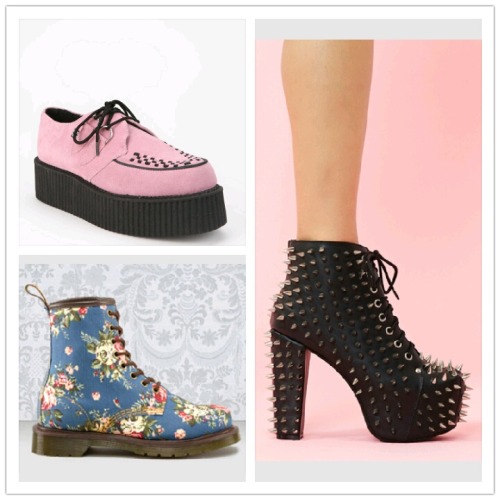
Focusing on Qatari women, it was initially hard to determine if a person was just attempting to express individuality, a shift towards a subculture, or just a slight deviance from the dominant culture. After a lot of slightly creepy staring and observation, I began to determine who might fall where. There were some girls with huge hipster glasses and dip-dyed hair peeking out from their sheila, and some with ombre fishtailed braids and galaxy printed leggings in the changing rooms. Others had on abayas with huge studs, or studded belts around their abayas, and bags with studs, and bracelets with studs, and shoes with studs and even headbands with studs. To me, these all seemed to be women who were pulled into the commodity form of a subculture, most likely that of the reemerging mainstreamed hipster or grunge, and not belonging to it at all and probably not knowing the origins of such stylistic choices. However, there was one woman that I saw who stood out (and I apologize that I have no photos of this as the woman was very conservative). One woman who I saw without her abaya, in the changing room of H&M, had on a pair of creepers, I have never seen them sold here so I doubt they are part of the mainstream culture or fashion in Qatar. She also had a lot of short pink and blue hair and chains, which I had never seen on a Qatari woman before, and, from my knowledge on such things, seemed very punk rock in the way she was talking and carrying herself. When recalling this incident to a friend, she told me “she must have been a boya”.
In such a conservative society, it is hard for many women to express their subcultural interests without being labeled as a boya (a tomboy), or being too weird or different, or bringing shame to the family name. From my time spent observing different people, I noticed that it is very important to look at the dominant culture when discussing or examining youth subcultures. To have a spectacular subculture in Qatar that creates ‘noise’ and interference in the orderly sequence and leads to deviation from the cultural norms would be looked down upon with great distain and would probably be legally impossible. The types of subcultures that we see out in the open in more liberal countries such as punks, goths, emos, cosplayers, and grunge are all represented externally by a specific style that defines them as being part of that subculture. In Qatar, these representations of subcultures still exist, but are harder to determine as if one is not fully submerged in the style of a subculture and only partaking in minimal attempts to symbolize their choice are they part of the subculture at all? There are few groups of people who consider themselves as punks, emos, goths or grunge, and yet their styles do not reflect that of the general subculture, as in Qatar, to dress in full representation would be socially unacceptable. In Qatar, it seems as though those who wish they belonged to a more stylistically expressive subculture and could publicly display this are out of luck.
The concept of the commodity form comes into play in this context, as most people who wish to represent a subculture in Qatar end up buying into the commercialized and mainstream forms of it and missing the entire concept of being a subculture. Very few people often succeed in remaining original, mostly by creating their own original clothing or adapting the mainstream fashions back to representing their subcultures in a way that is not part of the dominant culture. Dick Hebdige refers to this commodity form in “The Meaning of Style”, The Subcultures Reader, stating, “as soon as the original innovations which signify ‘subculture’ are translated into commodities and made generally available, they become ‘frozen’. Once removed from their private contexts… they become codified, made comprehensible, rendered at once public property and profitable merchandise.”
Another way of examining and defining the stylistic choices of many Qatari women can be to look at it from the ideological form. As mentioned by Hebdige, the ideological form is when the subcultural style becomes more accepted through the labeling and re-defining of deviant behavior by dominant groups such as the media or the police, through various forms of communication technology. In Qatar, the wearing of studs and spikes on almost every visible surface of an abaya would, in the past, be unheard of and would probably result in many upset mothers, however, now that it is just part of the new mainstream fashion, it seems to be very acceptable. According to Hebdige, “the media, as Stuart Hall has argued, not only record resistance, they ‘situate it within the dominant framework of meanings’ and those young people who choose to inhabit a spectacular youth culture are simultaneously returned, as they are represented on TV and in the newspapers, to the place where common sense would have them fit.” This alludes to the idea that there probably was a group of Qatari girls who did wear spikes in the beginning - for a purpose other than to be cool and fashionable and were probably trying to express their allegiance to a goth or metal subculture.

Monday, October 15, 2012

Hipsters i.e. the new punks


Hipsters started out, as having a “unique” sense of style that made them stand out, but lately seeing hipster-related fashion has become the norm in our everyday lives. We see the thick-framed ray ban eyeglasses, dip-dyed hair, studded clothes and galaxy printed clothes everywhere lately, thanks to the media.
Hipsters incorporated some elements of hippies and punks into their style, such as the long hair and studded shorts. This process of mixing styles and ideas together is known as bricolage. The subcultures bricoleur is typically the author of a surrealist collage and usually juxtaposes two incompatible realities, such as the mixing of spikes and jeans.
Hipsters were initially seen as a spectacular subculture since their style of life was seen as deviant and opposing to the dominant culture. Having different colors at the top and bottom of your hair used to be seen as a hair dye job gone wrong but these days it has been labeled as the must have hairstyle. Ombre and dip-dyed hair can be seen everywhere from tumblr to fashion magazines and celebrities. Ombre hair is less daring, as it appears to be a bit more natural than dip dying. Dip dying has gone to new extremes as people try their best to “make it their own”.
Ripped jeans are back in fashion, except now its jean shorts with spiky studs on the sides. Ripped t-shirts have also become the new fad and there are numerous videos on YouTube to show you how to rip your T-shirt in different ways. Nail polish has also become part of this hipster subculture and there are numerous creative styles that keep emerging.
Subcultures are concerned with consumption, as it through their commodities that they communicate the meanings attached to these commodities. When their purpose and style is normalized and becomes mainstream, their purpose is ruined. It is through the process of recuperation that the straying away from the dominant culture is somewhat repaired and the subculture is incorporated in the dominant culture.
There are two characteristic forms in the process of recuperation: The commodity form and the ideological form. The commodity form is the conversion of subcultural signs, such as clothes, music, into mass-produced objects. Corporations, clothing companies, benefit from this by incorporating these new styles into their market and gaining profit. The ideological form is the labeling and redefining of deviant behavior by dominant groups, such as the media. After the media normalized the concept of dip-dyed hair and socially constructed people into thinking it is fashionable, parents are more understanding to the idea, and there are more people doing it.

Thursday, October 4, 2012

Third Culture Kid


So far, I have noticed that the majority of our blog posts have been very much centralized around consumerism. Although what we eat, what we buy, and how we entertain ourselves are important in the contexts of globalization, glocalization and different subcultures, it is also necessary to examine one of the most important aspects of this cycle of human nature which is, of course, ourselves. I have to admit I did chose to discuss this because I love to talk about myself and am maybe a little egocentric (although not ethnocentric!) but I also think it is important that we examine why different people are attracted to certain subcultures, or how we can relate to others around us in a globalized environment. I myself, as a Third Culture Kid, am a product of globalization and often have issues identifying with certain groups whether it be in terms of religion, nationality, language and accents, or just general social groups. Sometimes I feel sorry for myself when people as me ‘where are you from?’ and I panic as to what to tell them, but on the other hand, it is nice to be able to be somewhat of a nomad when it comes to traveling and experiencing different cultures as I have no real attachment to a specific place and am always eager to adapt to new cultures.
This reminded me of a brief section of our reading, which mentioned supermarkets of style, and shopping for subcultural identities. For me, often traveling and settling in many different places, I end up trying out different groups, fashions and identities until I find some sense of belonging. When I lived in Singapore, I was very active in the middle school cheerleading and dance scene, and yet in Qatar I was more inclined towards socializing with very diverse groups of people, some of whom have pink hair and wear studded jackets.
Some view this bouncing back and forth between countries, cultures and subcultures as an inability to fit in and a sense of being an outcast. Yet I feel my ability to blend in and look at these different subcultures from a more external perspective helps me understand people better in terms of why they do what they do, whether it is due to a deviance and resistance issue, or a conflict of power between different groups.
Skip to 0:55 to avoid the sappy poem - and learn more about the melodramatic lives of these Third Culture Kids
Additionally, something that I always find intriguing is how certain people in Qatar react to my white-ness. I suppose it has something to do with the notion of white privilege, but from my experiences, this has not been a positive thing especially being a girl, I face a combination of racism, sexism, and also being idolized due to my skin color (which is always awkward).
Friends sometimes comment on how lucky I am to be white because my parents aren’t strict, or that I can drink and do whatever I want, but I also get harassed by some people who label me as being ‘a whore because you’re white’ or having police officers and really creepy Lebanese men constantly ask me which part of ‘Amreeka’ I am from.
My favorite comments, which I get a lot of, have to do with my freckles, which aren’t even that obvious. “You have dirt on your face”, “there’s something on your nose”, “do you want something for your sun spots?”, “when did you get that skin disease?” Mostly these comments come from Arabs and East Asians, which amuses me because really - have they never seen a white girl with freckles before? Imagine what will happen if they see a ginger. When this happens, I have to remind myself that not everybody subjects themselves to, or are open to the idea of globalization and different subcultures. I suppose certain areas of Qatar, or places where they are coming from, are not as globalized and full of western expatriates as you would expect.

Tuesday, October 2, 2012

Subcultures and Deviance


This week we discussed subcultures and deviance, so I decided to watch a local band practice for their upcoming gig to try and find out if they were a subculture, and hopefully a deviant one.

The member of the band who let me come watch their practice a few times and take pictures on a few visits, who I’ll refer to as H.O. throughout the post, is the electric guitarist. He’s an artist, and dropped out of high school to pursue his dreams for the last 2 or 3 years. The rest of the members didn’t want to be named, even by initials, but their professions range from teachers to editors to radio broadcasters, but all produce some form of art. Three of the members, including H.O., are permanent members, while the others come in and out depending on their day jobs. They perform mostly experimental and rock music, and practice in one of their homes.


One aspect of non-material culture I noticed that really narrowed them down as their own little subculture was the language they used – they referred to different “sets” they wanted to practice and had different names for instruments, their positions in the band, the level of volume they were playing at, and ways of signaling when they were taking a break. They come from all over the world, so they speak English as their common language and it was fascinating to see how they adapted their own slang. Although certain terms were borrowed, this group definitely created many because they had specific references to the band itself weaved in the language.


I (happily) noted a lot of deviance from the regional norm in their material and non-material culture. From the cigarettes and ashtrays scattered around the room, to the unfamiliar looking bottles next to the mike stands, and even their hipster-style and grunge styles of clothing. On one particular day, H.O wears a pair of purple skinny jeans and black sneakers, has an unusually styled goatee and a thick-framed pair of black glasses on. His band mates are dressed similarly, with the girls in espadrilles and both males and females in colored blazers and hoodies. The heavily printed clothes they are wearing are not of a style that originated anywhere in the Gulf region or even the MENA region – definitely not the norm, and could even be seen as a form of resistance. The substances they consume and the music they play go hand in hand with the style of clothes they have adopted, and again seemed to me like signs of deviance, although maybe not to most, but definitely mark them out from the crowd.

In class we discussed how subcultures are shaped by globalization and this band is definitely a result of the flow of culture from an external source and into Qatar, where the band members all live. The style of clothes and music that they have chosen to consume, as previously discussed, definitely come from somewhere else. Speaking of consumption, just as was stated in class, their subculture is based mostly on just that – purchasing a style from the supermarket of style and creating an identity out of it. Ironically, they decided to have McDonald’s for dinner after practice, topping of the globalization sundae.

Sunday, September 16, 2012

Keffiyeh

This week, there was a discussion about the "abaya-as-fashion" movement in the Gulf and whether deviating from the norm of how the garment is worn could be considered a form of passive resistance to cultural mores. Our discussion got me thinking about another cultural item of clothing that experienced a similar development from national symbol to fashion trend:


The keffiyeh started out as a headdress worn by men in the Gulf region, Palestine, Syria and Jordan, before becoming a symbol of Palestinian nationalism in the 1960s with the start of the resistance movement within the country. It is an extremely vital aspect of material culture in an environment where two ideologies are constantly at battle with one another. 

In recent years, the message behind the scarf has been worn away through the process of globalization, a dissemination that has rendered the keffiyeh as a major trend in the West. Highbrow brands like Urban Outfitters have added it to (and removed it from) their collections. Although the craze has died down a bit, it is not uncommon now to see images like this:


In class, three questions were posed that were very relevant to this topic, the first being: is a single homogenous culture good? There probably wouldn’t be an Israeli-Palestinian conflict if the newer generations of youth all shared the same material and non-material culture. Would this turn the keffiyeh’s role in consumer culture into an act of union?

The second question was: does globalization increase ethnic and racial inequalities? In this case, the dissemination of the keffiyeh only serves to highlight the Palestinian struggle to retain their culture. It almost seems that because Palestine is no longer considered a geographical state, that their symbol of nationalism is no longer relevant as anything more than a capitalist fashion statement for hipsters.

The third question was: what happens when you try to resist globalization? In terms of identity, the Palestinian people are quite busy resisting many other things, but it seems that other people have been handling the keffiyeh situation for them. Some are casting the trend aside because of its exploitation of Palestinian culture, while others are calling it “hate-couture” and resisting it for its connotations of “terrorism” and “violence” – a rather ethnocentric interpretation of the scarf.

Much like the abaya in the “Immodest Modesty” reading, the keffiyeh has changed and continues to do so. But unlike the abaya, which started out as a traditional garment and became a form of passive resistance through fashion (or so it seems), the keffiyeh developed from a symbol of resistance into a fashionable way to be passive.


Sunday, April 15, 2012

Deviant art style?

Wherever you go, unless you go to Japan or Asian country, Anime will be looked down upon. whether it's just Anime, or Anime drawing style(Manga) or just anything related to anime.


But what I'm going to talk about in this post, is the deviance of anime style in the eye of westerners and western artists(mostly, and I'm not saying that all of them look down on anime art, but many do so).

I started to notice this problem when I started to attend university. I do not consider it a big problem, but I don't really feel comfortable when someone look down on anything I do ( since I draw in anime/manga style.) months ago, we had to draw a still life for our drawing class, Alhamdulle-Allah, my drawing was turning out quite well. My teacher noticed that I was doing pretty well so he approached me and asked whether I drew in regular basis or something, and I told him, "I try to draw everyday, I like to draw in anime style." just after I told him that, I felt like his face changed (not in a positive way) so, I just stopped talking after saying that sentence.
Not only that, but I get that negative vibe from some students as well. So I try not to talk about drawing with others unless I thought a person might not give me that vibe.

But since I have online friends from all over the world, I know that this problem is not only here, but it's rather spread. I have found blog posts about people with the same problem. (1-2)
People usually think that manga and anime style is just some people who just copy the Japanese animation and think of it as art, they think that each anime is the same and the style is just a copy of another. (But what if it was a copy? people actually learn many things from copying other works, it can also be called "inspiration", you can always copy but you can never claim that the piece you did is original. Artists back in Florence has been copying Roman architecture and monuments. why? because nothing produced is original, everything is a copy of a copy, of another copy.)
But what did they know? how can they say that all anime style is the same? [see picture below]


Why do some realism/drawing artists/professors think anime art is the 'lazy' style? why is it deviant to them? I seriously cannot comprehend that. I draw anime style, and I know what a person has to do to become better at drawing. First they should learn the anatomy (of almost everything, and how things work and function) and every professional anime artist practice anatomy, very much. Just like any kind of artist. Anime art requires hard work as much as any other form of art. It's certainly not lazy.


The Examples(pictures) above is mostly taken from anime series, but how about I show you anime art with a message and meaning to it?

Yuumei, is an anime artist who tries to convey messages and spread awareness through her art. Such as global warming, divorce, and many other subjects.


To conclude this post, I want to ask once again, why is anime art style considered deviant to many other artists? is it because the stereotype of anime style is the shiny-big-eyed-huge-forehead-cute-girls characters? or is it because it doesn't carry a meaning(which I should consider invalid, seeing Yuumei's art) or is it because people think it doesn't require hard work? does it do any harm to the society(I think not, just in some cases which is individual's fault, not the style) or is it because it's stylized and not realistic? (if that's the case, then why is Picasso considered one of the most well-known artist though his art was not very realistic?) But in the end, everyone has their own definition of 'Art' but they do not have to look down on certain styles with no good reason. 

Friday, April 13, 2012

The Deviant in Space

I happen to be a Freshman at Virginia Commonwealth University, Qatar, and had to take a Foundation class called Space Research. For our final project for that class, we were asked to design prostheses for our own bodies to enhance a certain function, or to make our body perform an action that it normally would not. An Attachment with two mirrors to see the back of your head, for example.

Now prosthetics normally are primarily meant for those people in the society who are given the social status of disabled.  Yet, we were made to think of our own fully capable bodies as imperfect. I wouldn’t necessarily agree with that, but, regardless, it was deviant thinking for the sake of good design.

I took a good look at myself and came up with this idea: finger extensions with wheels on the ends. Here's a picture!


Seemingly, a ridiculous thing, but it served my purpose well. Why? Because, whenever I am around someone I am close with, my hands tend to want to play or touch them or tug at their clothes – a terrible habit that usually ends with me the other person screaming and giving me horrified looks (unless they’re used to it). Sociology would very formally refer to this as informal negative sanctions. 

The prosthesis I would design would enable me to…well…not touch anyone by being too busy trying to keep control of the contraption on my left hand. Win-win situation for everyone, yes?
I took my half-constructed prosthesis to a mall once just to see people’s reactions, but surprisingly, I only received a few looks now and again in spite of the deviant nature of the object. No sanctions from security, nor anyone coming up to me to ask what that is, or trying to take pictures. It is possible that the shoppers were already used to seeing deviants inside of malls. We’ve experienced that a few times in and around Doha.

...Or it could have been that I was just ignoring everybody too well.

However, at VCUQ, it was quite different. Many times, when I would walk by wearing them, people would stop me to ask me about the project. I’m thinking the difference between the reactions of the two groups was two things--

First off, they were different groups with different interests. One was larger, and mainly focused on their shopping, while the other was comparatively smaller and an active participant in ‘deviant design’ and in engaging with whoever was involved.
Second, it was the space/environment they were in. The mall was a large, open space surrounded by many attractive, luxury items. Also, it was what people had come to look at, primarily. My project didn’t fit the bill, even if it did make a few heads turn. It just wasn’t enough.

The university, on the other hand, is full of projects like mine on display, and the social group in there typically strives to make their work as deviant as they can manage. They were able to recognize my project and offered me more curiosity because the prosthesis was more uhh ‘involved’ with the space. In other words, it made perfect sense for it to be there.

It was definitely very interesting to see what placing one object in two different spaces would do to people. Now I only wish I could try and interchange those two groups by putting them in each other’s environment. Would it give me the same results?


I'm sure most of the regular readers have seen the video of the flash mob at the City Centre Mall that appeared out of the crowd and started dancing to Maroon 5's Moves Like Jagger. So I'll leave you with a different flash mob video clip from July last year at Villaggio Mall:


Loving how they melt from the crowd and gradually grow in number~ Till next time!

Impressionism and Deviance


Impressionism is the name of the first contemporary art movement, Led by The French artist Claude Monet (1840-1926). Since he was starting something new, breaking the folkway and norms of painting, traditional artists and the art community at that time considered him a deviant. 

This is an Image of the artist compared to a portrait of a traditional artist or (academic): 


And this is the second Portrait of the French Master Jacques louis David, the artist I picked in my previous Blog.


We can see the loose and clear brush strokes in Monet’s work, unlike David whose brush strokes are very controlled and hidden. Monet did not even bother covering the entire canvas with colors; on the other hand David does not have any empty spot on his canvas without a color. And there are so many other differences between the two portraits that could be easily noticed just by looking at them.  

Ironically, one of Monet’s teachers was David’s student.

Monet and his friends and followers tended to paint outdoor, which is something unusual for traditional artists. Monet focused on painting landscapes directly through observation; he did not like the traditional subject matters because to him it’s just a blind copying of the old masters.

Regardless the Impressionists’ creativity and innovation they got negatively sanctioned, especially by the French Academy of Fine Arts, the formal Organization of art at that time in Paris. The academy disallowed Monet and his fellows from exhibiting their works in the Salon, which is an art exhibition organized by the Academy.  Therefore, he and his fellows organized their own art exhibition somewhere else. In the beginning, their work received a lot of criticism and they did not have a lot of visitors. This could be considered as an informal sanction, since it is a disapproval without any kind of written rules.

However, it was just a matter of time. Impressionism was the spark that lit the fire, because other new movements followed it quickly; breaking from the traditions and looking for the new to explore.

In a sociological point of view, Monet was a deviant who created a sub culture of deviants who shared the same principles as him. He challenged the norms and the academy, the formal organization of art. As a result, he and his fellows got negatively sanctioned and perhaps Falsely accused. But Impressionism got accepted later and got followed by other new and innovative movements. And Monet became famous and rich until his death.

Here are some paintings by Monet just to get an idea about his method of painting. 


The following link is for a video about Monet Impressionism, it is quit long but if you like painting you are gonna like it.  


And for more Information about the artist here is the following link: