Showing posts with label Communications. Show all posts

Tuesday, December 11, 2012

Female Participation in Equestrianism

This short video shows an insight of what equestrianism means to the Qatari culture and the subculture of female riders. Female horse riders are challenging the societal gender norms in Qatar by conforming to their culture and traditions, yet at the same time, 're-fashioning' what it means to be a woman. 
We should also keep in mind that, treatment of women in Islam has changed according to the patriarchal system and solely because male scholars have interpreted most texts.  This video examines how women have accommodated their role in society and still manage to take part of equestrianism. 


Mahdiyeh from Mahdiyeh on Vimeo.

Sunday, December 9, 2012

Heavy Metal in Pakistan - Final Class Project

Heavy Metal in Pakistan - Final Project from Hassan Asif on Vimeo.

This video features three of the active underground heavy metal acts in Pakistan: Dionysus (Lahore, Death/Doom Metal), Takatak (Lahore, Groove Metal) and BlackHour (Islamabad, Thrash Metal). The video includes small extracts from the in-depth interviews conducted over a period of one year. In addition to these three bands various other heavy metal performers and online bloggers were interviewed to give this study a well-rounded approach. I also attended various performances and jam sessions of these bands. This research aims at studying how heavy metal is re-contextualized in Pakistan as a genre and as a social phenomenon. The analysis that is conducted in the written paper shows that, heavy metal music in Pakistan is essentially elitist in character and these musicians adopt/prefer this genre over other available options primarily because of its foreign-ness. These performers treat heavy metal as a labor of love, with no possible economic, or even cultural gains. The distinctly non-local nature of this kind of music allows the Pakistani youth, both performers as well as the audience, a means to craft and perform temporary alternate identities in the highly polarized Pakistani culture. In case of heavy metal, “foreign-ness” first restricts the access to the genre to a particular social class on the one hand, and re-contextualizes and transforms it during reproduction in an alien land on the other hand.

Saturday, December 1, 2012

Mighty Jokerz

During the Doha Tribecca Film Festival, we came across a group of very talented B-Boys. After talking to them some more, we realized their lifestyle really defines what a subculture is. Check out our video below to learn more about the B-boys and B-girls that make up the Mighty Jokerz:


Monday, November 19, 2012

Qatari Weddings

For this active blog, I chose to write about a traditional Qatari wedding I attended this weekend. The wedding was especially interesting because it had elements of tradition, but also introduced new concepts and broke through some cultural barriers.

Usually, Qatari weddings are segregated events. The males celebrate with the groom and his family in a “Majlis,” where they enjoy a variety of traditional dishes, desserts and endless supplies of tea and coffee. The males also preform a traditional dance with the swords, known as “Al 3ardah” to mark the marital celebration.


On the other hand, the females celebrate in a fancy hotel ballroom where they enjoy showing off their soiree dresses, taste in jewelry and beauty skills. Usually, the girls arrive wearing the traditional “abaya”, but once they are past the security check point and their smart phones are confiscated, they head to the nearest washroom to touch-up themselves and put away the abaya to reveal what’s underneath.


In the ballroom, one can expect to see catwalk of all the latest designer dresses and trends. Young girls, dolled up, gather with their girlfriends and strut their stuff. Meanwhile, older women are seated with their friends to enjoy some time together. This is every girl’s time to shine! Many mothers take this opportunity to scan the available bachelorettes for their sons, and the girls know it!

An array of beautiful, carefully selected flowers line the dance floor stage and
“Kosha” where the bride and groom will later be seated.

Another common trend seen in weddings is the presence of a male singer, who performs live, but is located in different room in the hotel. He sings traditional and new wedding songs that are simultaneously broadcasted into the ballroom. The girls take to the dance floor and perform.

One can argue, that weddings are the perfect opportunity for girls to demonstrate resistance through performance. They utilize this an opportunity to show their love for fashion and beauty. This is what one of the young girls attending the wedding had to say, “Weddings have become a fashion statement. Literally, girls will go all out and splurge so much to look good on this one night because they know everyone is watching and judging.” This is a perfect example of a situation where the performance takes place behind closed doors.

The wedding last weekend was different because the bride and groom entered the ballroom together and the groom stayed in the female-populated room for more than an hour. Although women are warned that a man is about to enter and do cover up, it was shocking that the groom stayed for that long. Also, a male band entered the ballroom and sang “Zafeh” songs to the bride. Some older women took to the stage and danced with them, while others showered them with 1 Qatari Riyal bills to request songs.

This scenario is not common in Qatari weddings, but with globalization and the modernization of the state, more and more girls are stepping out of their shell and trying to deviate from the parent culture.

Since the study of subcultures is usually dominated by men, making it difficult to find analysis on female interaction. This can be portrayed in the example of the wedding because all action takes place behind closed doors. Women tend to be more cautious in public, whereas they feel comfortable showing off their styles and dance moves in private spaces. Also, Ken Gelder argues that females are usually on the consumer end of the spectrum, and that can be seen in how they have created their own subcultures by adopting those that are more common and mainstream in the rest of the world, but not in theirs.


For obvious reasons, I couldn't take my phone or camera in to take pictures and therefore do not have any original photos to share.


Tuesday, November 13, 2012

Cheb Khaled and Pitbull: Rai and the World

Cheb Khaled’s latest studio album, C’est la vie, was released in September this year. The album features signature Khaled songs such as Wili Wili that are slow and catchy, reminiscent of hits like Aicha and also songs like Hiya Hiya which are upbeat dance tracks similar to previous chart toppers, Didi Didi.
Most of the songs on the album consist of the quarter-tone notes (Langlois pg.265). These are a rather rare feature in Rai music considering the element of fusion with Western instrumentation. The use of the derbukka (goblet drum) is also prominent in some of the songs on the album.
Khaled has followed the trend of merging the local and global and ‘East’ and ‘West’ (Langlois, pg. 259) in this album. This sort of musical style is not new in the Rai musical scene where previous experiments by artists like Cheb Mami and Sting have proved to be very successful in the form of hits like Desert Rose. This particular type of collaborative art between the different regions has elevated the status of the Rai music scene in the ‘World Music’ business. Khaled’s song Hiya Hiya in this new album, is in line with the tradition mentioned above. The song features Pitbull, who is a hip name in the world dance music scene. Pitbull’s musical affiliations and marketing strategies are interesting to note here because he uses various alcoholic beverages as elements of product placement in his videos. The implications of this kind of collaboration with an international artist like Pitbull on Rai music will be an interesting subject to study. Previously collaborations between the Rai music producers and the ‘West’ have also been seen as having certain political connotations. An example is Rachid Taha’s song Barra Barra that was featured in Ridley Scott’s film, Black Hawk Down (Swedenburg pg. 183). Critics comment that this application has relevance to the political contexts of that time, that is, the Iraq war. These kinds of examples are recalled as the ‘cultural resistance’ feature notably present in the original Rai music forms. The joint production with Pitbull can also be regarded as a return to the roots of the Rai music that goes with its association with spaces such as nightclubs (Langlois pg. 260). However, such premature conclusions are inadequate, as a confluence of forces such as globalization, glocalization and cultural hybridity are at work here. This album presents a unique situation in terms of the merging of East with the West. But this phenomenon is not entirely new as pointed out above. It is a definite recommendation for those who want to get a sense of the typical Rai dance tunes sprinkled with English verses sung by Pitbull at different points, leading the music to be relevant across different cultures.

Musheireb Heart of Doha


For this active blog post I decided to revisit an area of Doha that I had not been to in a while, and to check on its development. In our sophomore year as journalism students we were stationed in the area of Musheireb and reported on the different issues that the community was facing.
Before I delve into a more sociological analysis of the Musheireb community, I will touch briefly on the history of the area. The Musheireb area is located behind Souq Waqif, close to the Al Kout Fort, which was built in 1917. It is part of the area that made up the founding city of Al-Bida and is the area where Al Kahraba Street is located (the first street in Qatar to have electricity and be fully lit). As this area was the beginning of the capital city, it had many traditional buildings and families that had built their lives around the fishing and pearling industry. After the discovery of oil, the economy flourished and the capital shifted across the corniche and adopted a more modern approach. Many of the more historical buildings and neighbourhoods were forgotten or destroyed to make way for more aesthetic buildings to celebrate the country’s new found wealth. Some argue that this destruction of what appears to be the original capital city of the country is why there is not a strong sense of history.
The reason I wanted to discuss the issue of Musheireb, and actually went there to see how it has changed, is that it relates to readings discussed in class such as that of Phil Cohen’s reflections on subcultural conflicts and the working-class community, and also readings relating to cultural and political resistance. After the Qatari families moved out of Al-Bida and Musheireb, it became inhabited mainly by south-Asian bachelors who live and work in the area doing blue-collar jobs. This created an interesting mixture of culture, as it is such a close community full of different types of small shops, ethnic restaurants and some very strange houses. Walking down the streets it felt more like being in a remote town in Nepal or India, than it did being in one of the richest countries in the world. Some of the houses from the olden days are still intact and some of the architecture is refreshingly different. However, the reason our journalism class was even reporting there in the first place was due to Msheireb Properties, a company that has taken a large portion of the community, and is in the process of changing it into a ‘luxury community’ with townhouses, designer shops, restaurants and other living spaces and using various communications strategies to make their goals known. Their aim is to “bring people back to their roots – to make Doha unique and rediscover a sense of community and togetherness”.
Although I commend the passion of those who wish to transform the country into a thriving hub of modernity, our readings on the transformation of East London made me think of the repercussions of such a change. We can examine this from the point of view that after the influx of wealth into the country, the older generation was more reluctant to move from their homes but the younger generation was eager to create and express a difference from their parent culture and yet still maintain an identity with them. This can be seen as the youth of that generation buying into the consumer culture, moving out into larger houses and more spread out areas, buying landcruisers and all things luxurious, while still maintaining the traditions of their forefathers, some even holding onto the seafarer habits. While this isn’t necessarily a subculture, it is still evident as a split from the parent culture and the issues between this new culture and the parent culture most likely caused a weakening of historical and cultural continuity. This conflict of tradition versus modernity came from the end of a particular community and the emergence of new communities all around Doha including a new south-Asian community in the abandoned areas.
Now, the south-Asian community is being forced to leave the majority of the community and move to places such as Barwa Village, far away from the city, their customers and their friends. This relates back to the reading as it is mentions that the improvement of material conditions can destroy the functions of the communal space and destroy traditional patterns of socialization. I returned to the areas where we used to report and found that the majority of the shops, with shopkeepers we knew and people who we spoke to, are now cornered off for construction. An entire section of the community and part of the Kahraba Street (Panasonic Square) has been demolished and turned into a massive building site. More and more shops were closed and I couldn’t find a single shopkeeper that I knew. Most of the people I approached didn’t want to talk about it as when we were reporting, the issue was relatively new, but now with the looming presence of such a huge organization, I am sure that nobody wanted to speak a word of resistance. This alludes to the reading about cultural and political resistance. The power in this situation lays with the government who make choices on what gets built where, in this case, although the working class has created a comfortable existence in their own corner of society, they have no citizenship rights and their sponsors get the final say, so they have no chance of resisting or revolting against the decisions that impact them.
It is clear that in this on-going quest for modernity and to somehow create a history through “finding a new essence of Qatari architectural tradition”, the urban regeneration has, in this case, broken many community and family ties.

Saturday, November 10, 2012

Al MuQanaa' - Qatar's Man in the Mask!

In the streets of Doha, I came across Ahmed Mohammad Al Jaber. He is also known in Arabic by his alias, Al Muqanna'. As we grew up in Qatar, the sight of his cars and motorbikes always drew our attention outside of our portable video games, and we'd peek from our cars to take a look at this enigma. During my sophomore year, I filmed a short documentary about him, but for this blog I met up with him and found he was exactly as I had last seen him!

Al MuQanaa' posing with one his motorbikes!


Al MuQanaa’ earned his name after participating in a car race, many years ago in Qatar, wearing a “batman” shaped face mask. Since then he has been known as the “man in the mask.” He spends his days in his Majlis, which was granted to him as a gift from the Emir. In a secret parking, he also keeps his treasured cars, each which he uniquely hand-designed and pampers every day. He has three cars and a few motorbikes.
Al Muqanaa' talking about his cars

Al Muqanaa’ is a perfect example of subculture in Qatar. His creativity has encouraged more people to follow in his footsteps and design cars to entertain pedestrians. “I like that there are other people who appreciate the art of cars,” he said about the people who have taken the initiative to decorate their cars like his.
Everyday at sunset, summer or winter, fall or spring, Al MuQanna takes one of his “rides” out and drives along the popular streets of Doha. He blasts his favorite Iraqi tunes on maximum volume, rolls down the windows and embarks on his journey. Al MuQanaa’ is known for his distinct look, long hair and a fu Manchu mustache. According to Ken Gelder, a subculture is composed to two symbolic subsystems, the plastic form, and the infrastructural form. Al MuQuanna’ has a distinct sense of style and he listens to a certain genre of music. These elements constitute the “plastic” subsystems. Moreover, he has developed a ritual of going out at sunset or any special occasion, such as Eid or National Day to celebrate. “The Emir used to let his children ride in my car when they were kids,” he said. Also, clearly, he is resistant to innovation because he has maintained the exact same style and look for decades.
Al MuQanaa’ belongs to a subset of society, that is distinguished by unique aspects of its clothing, style and "performance practice". Most subcultures have a unique practice of performing their “art.” In the case of Al MuQanna, it is taking his cars to the street and driving around. “Nothing makes me happier than to see the children smiling from their cars, and the people look at me in disbelief, but I know they enjoy it.” Although in many cases, the subcultural performances take place behind closed doors, he takes it out into the public! The purpose of his art is to remind everyone about how Qatar is is safe and welcoming and break barriers between foreigners and locals through entertainment!

2 of his cars in the "secret parking"

New car he plans to decorate soon.

He aimed to remind everyone of how safe and welcoming Qatar is through art! 


Monday, October 22, 2012

Souq Waqif - The Kebabization Experience

As a CDA for the dorms on campus I am required to program events each month that engage the residents with the local culture. Last weekend I took the residents on my floor to Souq Waqif for a program titled “Kebabization”. Initially, I intended this program title to be a pun on the various terms in academia that are created with the “ization” standard. However, visiting Souq Waqif was a different experience this time around because I actually had those terms (that I used to come up with “kebabization”) at the back of my head. This allowed me to look at this experience from a relatively new lens.
Souq Waqif, with its fascinating streets filled with budging tourists and locals was as lively as ever. The bus dropped us off in front of a falcon shop. The falcons in the shop were pretty expensive but the falcon shop and other similar “performances” of the local culture reminded me of Cole’s notion of performance in “Bedouiness”. I regard this as a performance, as this is similar to the attempts for the “revival of tradition” in Petra and part of the quest for “authentic” presentation of the local culture. These performances are visible all over Souq Waqif in forms of the many Arab restaurants whose hosts are dressed up in elegant traditional dresses, allowing the visitor to “buy hospitality” as suggested by Cole in the same article.
I have always noticed a particular group of elderly men with carts around Souq Waqif. This time around I found out that they are called the “Hamali”. In sociological terms I would regard this group as a subculture. This is because this group shares unique instruments (their carts), uniforms and space. This aspect helps them stand out in the crowd at Souq Waqif. I have not seen them anywhere else in Doha so far.
Walking around Souq Waqif and noticing global brands like Baskin & Robins present along with the Shujja Iranian Kebab place that we visited hints towards glocalization to an extent. Souq Waqif, as previously mentioned is an attempt to revive Qatari tradition. Cole also describes this as the change from “the Bedouin into wealthy entrepreneurs of international tourism”. This is a confluence of various sociological and modern communications phenomenon presenting a very interesting situation. The architecture of Souq Waqif has always fascinated me. It reminds me of the Prince of Persia games that I played during my childhood. This time, however, with the set of academic inventory with me I observed a certain bricolage in Souq Waqif’s architecture. This is a consequence of the fusion of the modern with the traditional. The traditional, however, in this case is the general Arab tradition because many critics regard the Qatari culture as still in the process of development. The modern, for one, in Souq Waqif’s architecture can be seen in the form of beautiful lighting across the traditional alleyways.
Souq Waqif at first may seem chaotic as any marketplace because there is a lot happening at a point in time. A closer look enabled me to apply the concept of homology, which helped me consider the myriad of micro organisations in the large marketplace. One such organisation is the act of trade. Almost every entity at Souq Waqif engages in some kind of trade; whether you are the buyer or the seller or just a simple visitor, you are definitely taking or giving something either in terms of material and non-material culture.
In conclusion, it can be said that a place like Souq Waqif helps us experience the modern and the traditional in one place. It is a highly recommended place for first time visitors and a definite recommendation for locals who want to relive what Arab culture is all about.

Saturday, October 20, 2012

Speedcubers - The Famous Rubik's Cube

Over the summer, I went to Jordan for a family reunion. While I was there, I encountered a group of young teenage boys who dedicate several hours of their week simply to learning how to master the Rubik’s cube puzzle. The community of speedcubers is very small Jordan, however their size has not prevented them from meeting, competing and developing their skills. The young boys (no girls were a part of this group) meet every other week to compete and try to beat their previous records. They all have a collection of cubes that they have chosen to practice with. They have learned the technique behind solving the puzzle through YouTube videos posted by competitors around the world. They all carry their favorite cubes with them at all times so that they can practice regardless of where they are.


The Rubik’s cube is considered to be the world’s best selling toy, with over 350 million cubes sold worldwide since its invention in 1974. Although the Rubik’s cube reached its height of mainstream popularity in the 1980’s, there are many competitors who still enjoy competing in solving the puzzle in the quickest timing. Out of the small group of speedcubers I met in Jordan, one of them turned out to be the FIRST PLACE SPEEDCUBER in the MENA region, according to the WORLD CUBE ASSOSIATION.


This community might be small in Jordan, and other Arab countries, however, through globalization and the availability of the Internet, they are able to communicate and compete with people across the globe. They share common terms and have a special “language” in which they discuss the timing, type and size of the Rubik’s cube. For example, “16.21 12.66 15.68 11.34 12.52. Average: 13.62 NR Cube used: Zhanchi” Although they are opposing the larger culture, they are considered a “deviant” or “variant” subculture. To have the dedication and time to study and master the technique is difficult, and only some have done it. All speedcubers seemed to have a polished sense of style – nothing very distinct, but they do look very put together and uniform.
The video below is of one of the contestants being timed by the association in his house in Jordan:


Corporations saw the popularity of this cube as an opportunity to create different accessories or items that are in the shape of the Rubik’s cube. The images below are only some of what is available. Also, they have created cubes in different shapes and sizes. Some cubes are now collectables. The mass production of these products goes back to the concept of capitalism – making a subculture mainstream!


Homology is when the structure of any particular subculture is characterized by an extreme orderliness. This evident in the way that these competitors meet and compete. They have strict rules as to how the Rubik’s cube needs to be shuffled, rules on how to time it and standardized scores to compare against.

Although some cultures are formed through "Bricolage" - where the artists make-do with what they have, this subculture was formed through consumerism and the Internet. However, being loyal to this puzzle and setting up regularities and  community around it has defined those who participate as a part of a  subculture.

One can argue that this subculture is a "Spectacular Subculture" because it is out of the ordinary and certainly amazing. When you want someone solve a puzzle that is very difficult in a matter of seconds it is very surprising!

The community of players escalated the level of challenge of the competitions by having under-water, in-air competitions etc. This has allowed them to grow the puzzle and have more records to beat.


The Meaning of Style and Subcultures in Qatar


For this blog post, I decided to visit a mall and, using prior knowledge about subcultures in Qatar and building off of what we had discussed in sociology class, see if I could determine if people were part of a subculture from how they were dressing, and to also observe if, and how, mainstream fashion and commercialized commodity play a role in Qatar’s subcultures or the lack of them.
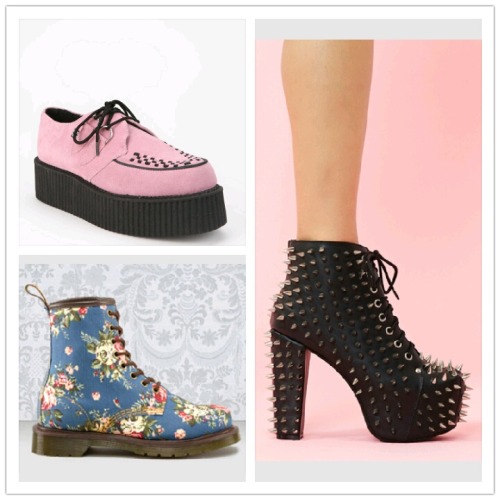
Focusing on Qatari women, it was initially hard to determine if a person was just attempting to express individuality, a shift towards a subculture, or just a slight deviance from the dominant culture. After a lot of slightly creepy staring and observation, I began to determine who might fall where. There were some girls with huge hipster glasses and dip-dyed hair peeking out from their sheila, and some with ombre fishtailed braids and galaxy printed leggings in the changing rooms. Others had on abayas with huge studs, or studded belts around their abayas, and bags with studs, and bracelets with studs, and shoes with studs and even headbands with studs. To me, these all seemed to be women who were pulled into the commodity form of a subculture, most likely that of the reemerging mainstreamed hipster or grunge, and not belonging to it at all and probably not knowing the origins of such stylistic choices. However, there was one woman that I saw who stood out (and I apologize that I have no photos of this as the woman was very conservative). One woman who I saw without her abaya, in the changing room of H&M, had on a pair of creepers, I have never seen them sold here so I doubt they are part of the mainstream culture or fashion in Qatar. She also had a lot of short pink and blue hair and chains, which I had never seen on a Qatari woman before, and, from my knowledge on such things, seemed very punk rock in the way she was talking and carrying herself. When recalling this incident to a friend, she told me “she must have been a boya”.
In such a conservative society, it is hard for many women to express their subcultural interests without being labeled as a boya (a tomboy), or being too weird or different, or bringing shame to the family name. From my time spent observing different people, I noticed that it is very important to look at the dominant culture when discussing or examining youth subcultures. To have a spectacular subculture in Qatar that creates ‘noise’ and interference in the orderly sequence and leads to deviation from the cultural norms would be looked down upon with great distain and would probably be legally impossible. The types of subcultures that we see out in the open in more liberal countries such as punks, goths, emos, cosplayers, and grunge are all represented externally by a specific style that defines them as being part of that subculture. In Qatar, these representations of subcultures still exist, but are harder to determine as if one is not fully submerged in the style of a subculture and only partaking in minimal attempts to symbolize their choice are they part of the subculture at all? There are few groups of people who consider themselves as punks, emos, goths or grunge, and yet their styles do not reflect that of the general subculture, as in Qatar, to dress in full representation would be socially unacceptable. In Qatar, it seems as though those who wish they belonged to a more stylistically expressive subculture and could publicly display this are out of luck.
The concept of the commodity form comes into play in this context, as most people who wish to represent a subculture in Qatar end up buying into the commercialized and mainstream forms of it and missing the entire concept of being a subculture. Very few people often succeed in remaining original, mostly by creating their own original clothing or adapting the mainstream fashions back to representing their subcultures in a way that is not part of the dominant culture. Dick Hebdige refers to this commodity form in “The Meaning of Style”, The Subcultures Reader, stating, “as soon as the original innovations which signify ‘subculture’ are translated into commodities and made generally available, they become ‘frozen’. Once removed from their private contexts… they become codified, made comprehensible, rendered at once public property and profitable merchandise.”
Another way of examining and defining the stylistic choices of many Qatari women can be to look at it from the ideological form. As mentioned by Hebdige, the ideological form is when the subcultural style becomes more accepted through the labeling and re-defining of deviant behavior by dominant groups such as the media or the police, through various forms of communication technology. In Qatar, the wearing of studs and spikes on almost every visible surface of an abaya would, in the past, be unheard of and would probably result in many upset mothers, however, now that it is just part of the new mainstream fashion, it seems to be very acceptable. According to Hebdige, “the media, as Stuart Hall has argued, not only record resistance, they ‘situate it within the dominant framework of meanings’ and those young people who choose to inhabit a spectacular youth culture are simultaneously returned, as they are represented on TV and in the newspapers, to the place where common sense would have them fit.” This alludes to the idea that there probably was a group of Qatari girls who did wear spikes in the beginning - for a purpose other than to be cool and fashionable and were probably trying to express their allegiance to a goth or metal subculture.

Thursday, October 11, 2012

Dramaturgy: Abaya and Shayla vs. Public and Private Locale


The society we live in can be portrayed as a play. We are all the actors.
Erving Goffman first established this dramaturgical theory. Dramaturgical theory is basically a model in which our social interaction is viewed as if we were in a theatre, the people would be the actors, and our roles in society would be the performances. But that is not it. The more crucial part is the way we carry ourselves in social situations to reach our goals by using impression management.

The theory of Dramaturgy can be applied to nearly every interactive scene in our life in Qatar. A great example could be how Qatari girls act when they have their abaya and shayla on in public spaces and when they take it off in more private locale. 

In order to carry this experiment out, I decided to go for a walk around the cafeteria at Carnegie Mellon University in Qatar and the more private spaces in the university. From Goffman’s perspective, he uses the terminologies of ‘backstage’ and ‘front stage’ to describe this behaviour. By front stage, his stating the visible behaviour we have, where we take care of how we act and conserve our persona. Backstage behaviour would be when we get to do things that would be inappropriate by the public and the societal norms of the particular setting. I noticed how the girls in the cafeteria were more preserved around men and strangers, whereas, if they were in the private conference rooms in the library, they would have taken off their shayla and acted more inappropriate. For example, the girls at the cafeteria who were wearing their abaya and shayla spoke more softly and delicately, whereas the girls in the more private locale were louder and free.

Lastly and ironically enough, culture is created and consumed through our social interactions. And in this case, our interactions are with our friends, family members and colleagues.

Wednesday, October 10, 2012

My Residency Experience – Grayling UK

As a journalism student at Northwestern University in Qatar, I was required to go on a student residency abroad. This was one of the best experiences of my life, because I was able to gain work experience from a top-notch PR firm, as well as immerse in four different fun departments - Internal Marketing, Corporate and Finance, Digital Media, Consumerism. Moreover, this experience helped me realize the importance of globalization to global firms and how the various tools of communication have helped make that happen.
First off, I was working with the internal marketing team. Our job was to make sure the firm, GRAYLING, was on track with its clients, and maintained a good image on the global and local scale. Grayling employs more than 1000 people around the globe. As an intern, I had to research the top players in Public Relations, and create an in-depth presentation comparing Grayling’s standard against theirs. In doing so, I had to study the social networks, web design, number of offices, client names and much more. My findings proved that each of the competing firms was trying to grow a larger global empire and gain top clients. In CAPITALISM, success comes from making more profit every year than the one before, and to do so the firms need to win more clients. Another interesting fact was that Grayling had several different versions of its website in different languages to reach the maximum number of people. This is a form of GLOCALIZATION, whereby a company is making itself more accessible and easy to use so that it can grow and reach more people. Although the headquarters are in the UK, the firm had established offices in many different regions including the USA, Australia, Ireland, Spain, Dubai and their latest addition, Doha. I got to sit in on meetings with BRITISH AIRWAYS members, brainstorm ideas with other departments, make phone calls to local agencies and had to present my findings to the department I worked at. The most interesting part of my stay was when I moved to their Soho office and worked with the digital team. They were working on a top-secret proposal on a project for HRH Sheikha Moza Bint Nasser. This was a dream for any intern. I was the perfect asset because, a) I was the only Arabic speakers, b) I grew up in QATAR and am a student at QATAR FOUNDATION. They extended my stay at the office an extra week to make sure I was there the entire time they worked on that project. There were several procedures we had to do including, monitor the Internet for any news, publicity or negative feedback of her. We had to translate some articles from Arabic to English. We measured her reach globally and compared it in different regions. We also found out how many times people search her name. Having an experienced Arabic-speaking team member made the process much faster, and allowed me to share general knowledge that is not usually available online. Our main goal was to make her a GLOBAL FIGURE, and increase her outreach as much as possible.
I witnessed the power of the internet and globalization at its fullest, because here I was in an office full of people who had never been to Qatar, working on a project that requires familiarity with the culture, history and current situation in Qatar. It was very exciting for me to see how quickly information could be gathered and understood. Also, it was scary that so much information was available with the click of a button! I don’t know if Grayling ended up working on this project, however when I returned to Qatar I was offered a summer internship with their local office here. By WORD OF MOUTH, the local team heard positive feedback about my internship and thought I would make a good addition to the team. PUBLIC RELATIONS is all about spreading the message, maintaining a positive image and monitoring feedback. Whether for the company itself, a client, or even an individual, communication methods play an important role in providing us with information. We need to be aware of where this information came from and who we share it with. Knowing that I was able to survive a three-month-internship with a high standard, demanding firm, I am now much more confident with myself and feel proud of my accomplishments!

Tuesday, October 9, 2012

Desi Subculture in EC


The general population of Qatar is mostly comprised of Indians, Pakistanis, Bangladeshis and others from the Indian subcontinent, which is about 50% of the total population. Even in Education City, a majority of the student population comes from the Indian subcontinent and commonly referred to as "Desis". A big event that is going to take place in Education City (EC) next week is Desi Night which is an event that showcases the talents of various desi students which includes singing; dancing and stand-up comedy. 


For the Youth Culture in the Middle East course, the class discussed about how interaction plays a huge role in the development of subculture. According to Grazian, culture is conditioned by interaction and the context about which it revolves. We also discussed about using the dramaturgy approach to analyze subcultures. Hence, I noticed that the dramaturgy approach could be used for the Desi Night to examine the desi subculture in Education City. So, I wiil be applying this approach for Desi Night 2011 that took place last year.The five important elements that need to be considered while using the dramaturgy approach are – Actors; setting; roles; audience; front stage and backstage behavior.

Actors – The actors for this particular event included all the desi students of EC. For this particular event, all the EC students who performed the various desi songs and dances were the actors. The facilitators of the event that included the VCUQ student government association can also be grouped as actors. (Not surprisingly, the VCUQ student government association is completely comprised of desi students)

Roles – The roles includes the roles taken up by the various actors for this event. This includes performers who put on the show and facilitators who were in charge of making sure that the event took place smoothly; the MCs who ensured the smooth transition from one performance to next.


                                                                        The main MC   

Setting – The setting for this event was in VCUQ lounge. Every year, it is held there as it can provide space for a large number of people up to 50 students.
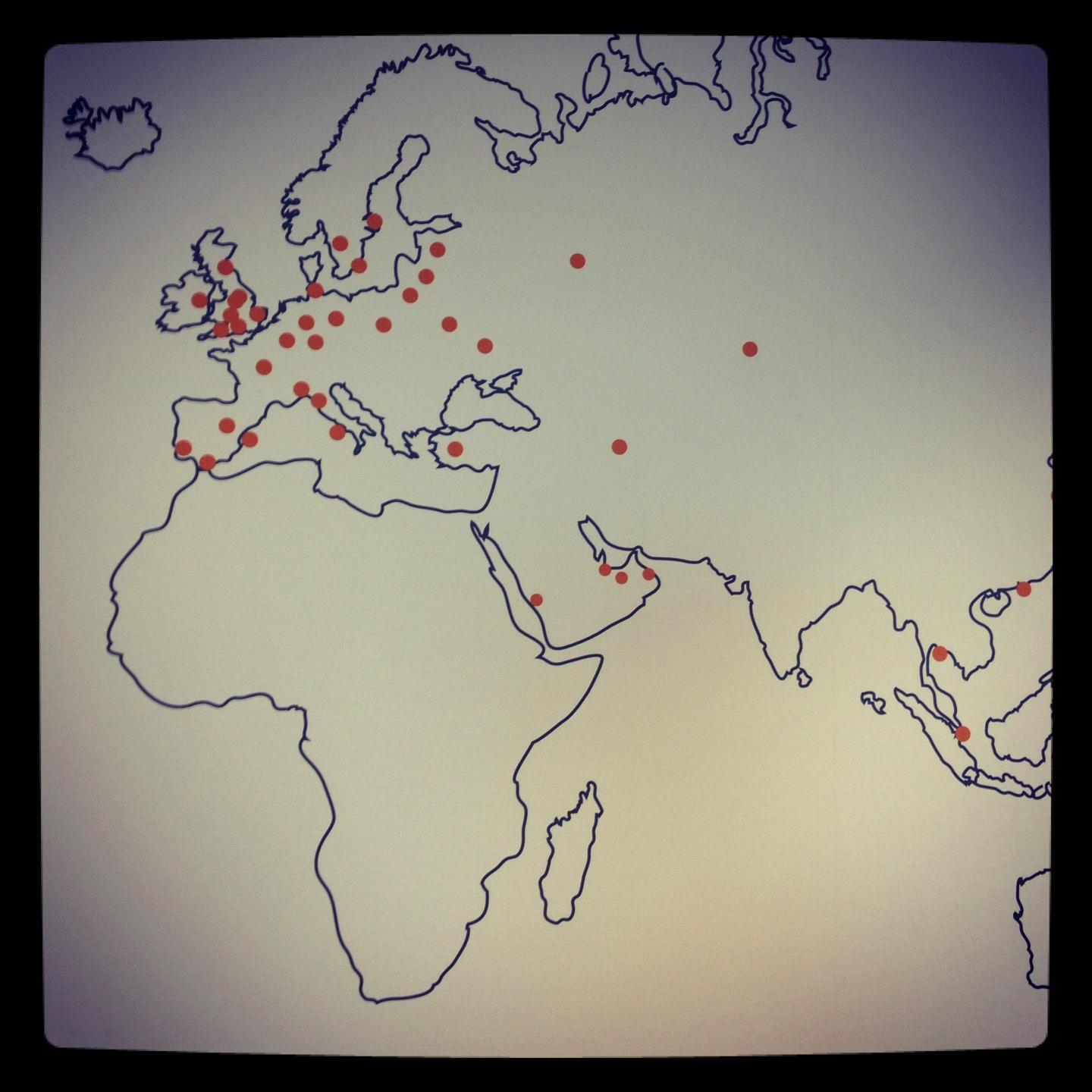
Audience – The audience includes all those people who attended the event which includes various students from EC; guest students from universities outside EC and families of the performers.


Front stage and backstage behavior – The front stage behavior includes the performances put n by the actors such a singing, dancing and stand up comedy.


The backstage behavior includes the actions of those facilitators who helped around the event such as taking care of the caterer; helping out the performers in changing costumes; providing materials for the MC for the order of events.

After observing the event through these elements, it becomes obvious that interaction is the link that joins all the elements together that contributes to the Desi subculture in EC. For example, there are a lot of groups that are segregated on the basis of their nationality. However, for this event, people from various countries were involved in dance performances together. This would not have been possible without interaction which includes word of mouth communication Even in the audience, you could see groups of students that would not usually interact outside would interact and comment on performances together.

It is interesting how these events act as platforms of impact on the Desi subculture in EC.