Tuesday, February 5, 2013

You and Your Coffee


I hate Coffee. I do not understand why people like it or use it to wake up. It tastes so bad. Perhaps the bitter taste keeps students from drifting off to dream land. All I know is, apparently, you are as cool as the coffee cup you are holding.

In Education City, an awesome and wonderful place full of weird social habits, I noticed an interesting pattern when it comes to students. Every morning, they spend riyals and riyals on different beverages to sooth their dropping eyelids. We do not have a lot of coffee shops and cafeterias, or a lot of food options for that matter, but even so, we managed to make distinctions based on our social class.

Most Qatari people, for example, get their coffee from Starbucks. Although this sounds very general, it is true. Starbucks is fairly expensive, especially in this region, so people from the elite class will tend to buy things from there, even though there is nothing special about it. I mean other than the fact that the cafeteria’s coffee sucks so bad, there might be another reason as to why people buy water from this place even though it is located in a faraway building.

It could be as simple as this. “I am rich and I want other people to know that.” Or, “I am rich and I must buy from this place because that is what other rich people do and I do not want to stand out.” Whatever the answer may be, it is clear that in Qatar, we practice the concept of conspicuous consumption.


Like everywhere else on this planet, everyone in Qatar belongs to a class system. A class system exists when people are ranked according to characteristics such a as income. The richer you are, the higher the rank you are in. Those who have the same rank belong into the same social class. A social class is a group of people who share a similar position in society based on wealth, education, and occupational prestige. For example, rich people with well-paying jobs and a good education belong to the same social class, the loaded class.

In any event, people like to show off their rank in society and do so by buying things that say that about them. Conspicuous consumption is an attempt to display class and status through the purchase or consumption of high culture and luxury goods or services. Starbucks is expensive. We are expensive. Therefore, we must buy Starbucks. 

Now that we think we understand what's going on with the Starbucks people, let's see what kind of coffee do others buy. The second group of people, the “regular people,” tend to buy from the more reasonably priced, Gloria Jeans. They are rational, with a hint of self-love. “I’m gonna spend some money on a Latte because it is delicious. Also, people still think I’m classy.”

Then there are the smart students, those are the ones who think a cup of coffee is neither worth the distance, nor the price for social distinction. They usually buy the ready-made coffee that the cafeteria provides, downstairs, near their classes.

Although this is might sound really general, but when you go to Starbucks most of what you see is black and white (if you know what I mean) and when you go to the other places, most of what you see is expats. There is always a connection between class and race/ethnicity. It is difficult to separate the two even when we try to not be racist and stereotypical about it. It’s just what it is and it happens for so many reasons that are beyond what we can comprehend. All I know is, it’s interesting.   

This morning, I went to three different coffee shops to document the coffee drinking patterns of the EC community. 


Even though this exists everywhere, it is important to note how ridiculous it is if we actually think in that manner before we buy things. We should not try to confine ourselves in those “norms” we are creating because they will eventually suffocate us and limit us. One day we are going wake up and realize it is not about the people. It is about the coffee.


Sunday, February 3, 2013

Tea Time Time!

If you ask a Qatari guy to pick you up from the airport on your first visit to Doha, he will first take you for a cup of karak before he takes you to your hotel. This is because of the Arabic hospitality manners, and also because karak is this generation’s addiction. Karak, is tea with milk, but prepared by boiling the tea leaves to make the flavor stronger. This drink has become the Qataris' identity which, in sociology, means the expressions and conceptions of a person.

History:
A couple of years ago, AlNaimi cafeteria was popular because of its delicious karak that was served in the petrol station behind Landmark Mall. The location was not only popular because of the karak, but because people treated this location as an assembly point to meet before going out anywhere or just to chat. The place eventually created an organization of young adults where they would challenge each other in drifting skills as rumors say. I found a video on YouTube that actually proves that people actually were drifting there:

The cafeteria eventually became popular and opened a couple of different branches, and here came the competitor: “Tea Time.” AlNaimi owner did not know that the place will become what it is now, but Tea Time owner had a plan to compete against AlNaimi and beat him. Tea Time’s managing director, Mr. Abdulkareem, was very smart when he opened his first branch at AlMerqab Street, in AlNasr, located closer to the center of Doha than AlNaimi and capturing a wider variety of customers (because of the location). “Our inception was in 2002 at Al-Nasar, Doha. Since then we never looked back and we are still continuing our triumph successfully.” – Tea Time Website.

Tea Time, AlMarkheya Branch
Tea Time also had a wider selection of beverages, and snacks, with Soufflé as its leading top product; this delicious cake was the main reason many people went to Tea Time instead of AlNaimi cafeteria. Take a look at their menu here. Tea Time overtook AlNaimi cafeteria, but still there are some common things we can notice in both of these chains of restaurants: They both follow Ritzer's theory of McDonaldization - efficiency, calculability, predictability, and control. They both also stick to the popular culture, like the things that the consumers' love. The simplest example I can think of is how they stick to the "1-Riyal" karak, which is what the customers' expect when they go for a drink.

It is our Bar! (without the alcohol):
Aside from Sheeshas and Hookah Lounges, Tea stalls have sort of become our "bars" in the sense of gathering with friends, or alone, and drinking until you figure out your plan for the day. The good thing is that you can have your breakfast there, lunch, dinner, and even a midnight snack. These places are usually crowded by middle aged Qataris, 16-28 years old, from different classes of people, elites, middle classes, and lower classes, you can clearly identify them by their cars.

Beyond the Karak...
Karl Marx believed that it is the social conflict that drives the change in society. The government and the police hate these gatherings because it makes people want to drift and show off their skills. To stop that, cops often pass by to make sure everything is in order.
In addition, Karak sort of became the youth's most consumed drink; they drink to think, play, hangout, study, smoke, and to think about drinking karak.
To a certain degree, Qataris have been stereotyped as being karak-addicts; indeed it is a nice hot drink that you wouldn't mind enjoying any time of the day, but to Qataris, this has become their identity and that's how they feel as a part of the society they're in.

Don't believe me? I will let this annoying guy share his aesthetic feeling: P.S. This kid is not Qatari; his expressions about simply drinking karak tells us about his feelings of belonging to the society.

Saturday, February 2, 2013

Life of Pi


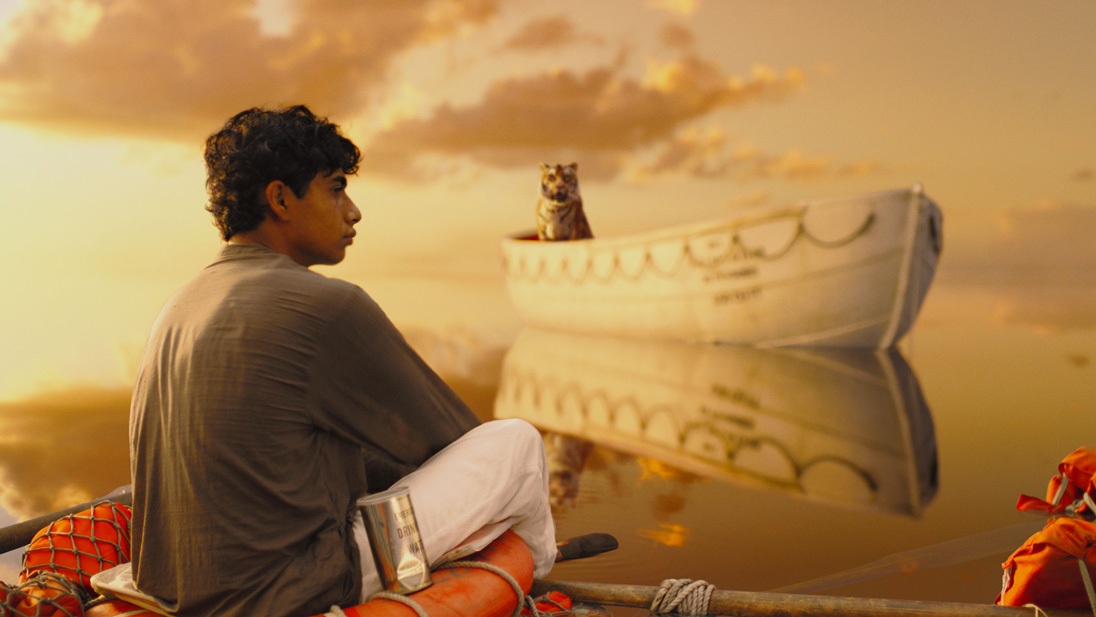
I remember reading Life of Pi in grade 9 and being absolutely mesmerized by Yann Martel’s novel. The story starts of with the main character, Pi, saying that his story will "make you believe in God." I shared the vastly agreed on opinion that the book was “unfilm-able” when I heard it was being adapted to the screen. seeing the movie this past week—possibly making me the last person to do so taking into regard my hesitation of another “the movie didn’t do the book justice review” (i.e. Lemony Snicket’s A Series of Unfortunate events—sigh)—I was pleasantly surprised and utterly blown away.

Apart from the movie being a cinematic masterpiece and Ang Lee’s greatest work yet, and the main star of the movie only having gone to the audition in trade for a subway sandwich, the stunning story in the book is adapted so well that it carries the whole movie. Usually, IMAX movies have something lacking, and more often than not are terribly overdone so the audience doesn’t notice all the loopholes in the dialogue, storyline or casting (i.e. Snow White and the Huntsman). (The following is spoiler-ish.) Even after watching the amazing story of Pi’s survival at sea with Richard Parker (the tiger), the zebra, the orangutan and the most annoying hyena ever—who had me yelling at the screen. Of course, the main twist comes at the very end, where you reevaluate everything you've come to learn about the story and sympathize with Pi even more.
The main idea stemming from human sympathy, survival, grief, Pi’s sudden adolescence and that the choices we make and the inevitable realization that we have to live with them and grow. Here comes the kick. When Pi asks the man he's been telling the story to chose between the story of the humans (which includes human cannibalism) or the one with the animals, the man says he liked the one with the animals. The reality of the story is called into question, bringing in the idea of an agent of socialization. In which Pi's world is changed dramatically through an event or group, as well as includes audience (in both book and movie) in being included and choosing to believe which story they liked more. I, of course, along with the two Japanese officials, preferred the one with the Richard Parker (the tiger).


photos courtesy of 20th Century Fox.

Thursday, January 31, 2013

Amanda Todd: Killed By Society


Her story and her struggle was one of most talked about stories worldwide. Her name was Amanda Todd. From the outside she looked like a healthy 15 years-old teenager who is having the time of her life.

Every person is allowed to make mistakes. Honestly we all did it, we were all exposed to circumstances that cause us to make mistake. However, in her case her mistake haunted her till the end for her incredibly short life. That mistake happen when she was 12. She was video chatting with an older male stranger. When he convinced her – a child – to uncover her breasts to him. She - being naively young - approved.  He captured that moment of her mistake and a year later 
he contacted her Facebook threatening her to expose the photo, unless she make a “show” for him. Amanda refused, so he sent her photo to her classmates in school. There she was exposed to a lot of hurtful agents of socialization

Agents of socialization are the factors that effects how we act and who we are in society. In Amanda's case, the agents of socialization were her friends and her classmates in school. Firstly, she was teased in school by here classmates. Secondly, all of her friends abandoned her after her nude photo got public. Due to those hurtful interactions her parents decided to move her from her school. But the bullying continued, so she moved again. There Amanda was manipulated by a male friend to have a sexual intercourse with him. When his girlfriend found out, she was furious about his unfaithfulness, so she got it out on poor Amanda. It was infront of the entire school where she was left to bleed on the floor. Being the young age she was, and going thought the painful social interactions she went through, she couldn't handle it, so she attempted suicide. She was rushed to hospital and she survived. The entire time she was suffering from severe clinical depression, she was on anti depressing’s and moved to another city again. There she posted this video telling her story to help others.


 Unfortunately, She couldn’t escape the past in her mind. On October 10th 2012 she painfully committed suicide, she hanged herself.

Amanda had a very fragile identity. The circumstance that happened to her permanently destroyed her. And the agents of socialization around her did help her through it. She didn’t have the support system of her friends. Also, she faced a lot of hurtful social interactions from school that followed her to the comfort of her home by the hurtful online social interactions. Amanda Todd was killed. Yes killed and I use the word very strongly here. She was effected by the society that didn’t embrace her for the mistakes she made. She was easily manipulated for her young age and fragility.

In the end, we all make mistake and we learn from them.
Rest In Peace Amanda Todd. 


 Sadly for Amanda, it is too late. </3


Wednesday, January 30, 2013

The Recreation Room … Is It Excluding Qatari Girls?


Carnegie Mellon University’s recreation room was built for students to hang out during their breaks or after their classes’ time. It is equipped with many facilities like a table tennis, foosball, video games, a vending machine, a computer cluster that includes a printer as well, and a couple of couches for the students to relax or do their homework. However, if you’ve been there you will notice that a wide range of students uses the rec room except Qatari girls, you can barely see them hanging out there! In a response to a question I asked them, Ghaya Al-Sulaiti and Sara Al-Sulaiti, whom are both CMUQ students, expressed that among the places in CMU they mainly like to hang out in the atrium (The Majlis) or the library. ‘I had to go to the recreation room once for a book club meeting that was hosted there,’ said Sara.

In a deeper context, the Qatari girls are raised in a culture that forces them to have certain limits between them and the others (boys), but that doesn’t mean they aren’t socializing with others. The agents of socialization for Qatari girls are usually their parents. Their parents are raised in a community that doesn’t allow the interaction between girls and boys. However, the Qatari girls now are engaged in a constant balancing between modern and the traditional way of life; they don’t want to cross the “red lines” between them and the boys, as they don’t feel that they belong to this room, they need their own space. Thus, their interactions with others are commonly less, as they want for their identities to be known as protected ones.
 

On the other hand, Akhmed Sungorov and Khalid Allouba who go to the rec room everyday, think that the place is ‘fun and convenient’, as Allouba likes to describe it. ‘We sometimes see some Qatari girls in the rec room. They come only for either the vending machine or for the computer cluster,’ added on Sungorov. Khalid thinks that the reasons Qatari girls don’t come to the rec room is because it is loud, there are lots of guys hanging out over there and the girls don’t want to be around them. He also pointed out that he heard from some of the girls that the smell of the rec room is bad but he doesn’t think it is. Till this moment, it seems that there is no proper explicit answer for this question that continues on being raised every now and then.

Tuesday, January 29, 2013

It's 2013 and We're Still Alive!

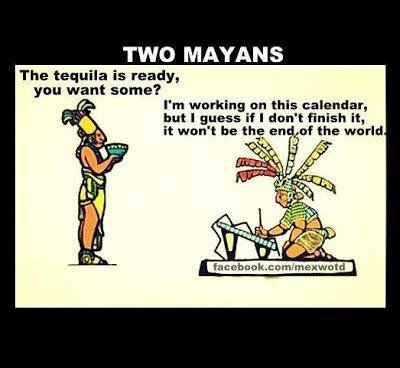
I recently watched the movie 2012, and it was basically about the world coming to an end. The movie “was inspired by theories that the calendar of the ancient Mayans foretells the end of civilisation on Dec 21, 2012” (Philip Sherwell and Hernando Garcia 2009). Hollywood spent more than $200 million on creating this film as it was meant to attract a global audience. The end of the world is considered a big catastrophe affecting every individual on this planet. Since Hollywood is a tool of capitalism as our Cinematic Sociology textbook described, all it cares about is making money. The whole story of the movie 2012 wasn’t realistic and convincing, and yet the producers managed to create the film through using visual effects to portray the natural disasters seem real. Now let’s analyse the movie from a sociological perspective. For example, from the conflict theory lens, we see that in the movie there was a portrayal of conflict between social classes. The bourgeoisies were the elites and people with power who managed to get on the spaceship without any problems, where as the proletariats weren’t able to get on the spaceship because they weren’t rich and they were from the working class who built the spaceship. The bourgeoisies were able to protect their interests and arrange society in a way that most benefits them, at the expanse of the proletariats. This means that the elites and the people with power had the resources to afford getting on the spaceship by purchasing the boarding tickets ahead of time. The proletariats were less fortunate since they were the labourers, and didn’t own the means of production. Social inequality played a role in the 2012 movie. The innocent ordinary people in the movie were left behind and weren’t notified to evacuate ahead of time. They weren’t also informed about the spaceship to rescue themselves. It was interesting to watch 2012 and analyse it from a sociological perspective. I happened to learn about the Mayan calendar, and I learned that Nasa ended up writing an article dedicated to answer people’s inquiries and to clarify the fact that 2012 is not the end of the world.