Showing posts with label product placement. Show all posts

Sunday, May 26, 2013

Truth revealed


In the following post, the term product placement will be used a lot. Product placement is a form of advertisement where branded goods or services are placed in a context usually devoid of ads, such as movies, TV shows, or news programs.


I was looking through movie trailers when I noticed the sequel Fast and Furious 6. While watching, just the trailer, contained unbelievable amounts of product placement; the movie contains that multiplied by a hundred. If one were to watch the entire movie they probably wouldn’t notice any of the product placements in it. But after having learned about product placement and its role in the media, it’s hard not to notice it anymore.


An action movie like Fast and Furious probably costs the producers millions of dollars to make, $160 million dollars to be exact. And then I remembered a film I once watched. The greatest movie ever sold. That film showed us how a producer can fund their entire movie solely on the income they receive from companies requesting product placement. Product placement achieves success and profit for both sides. The producer will get the majority of the budget for their movie, and the “investor”, lets say, gets their product advertised, while making sure people can’t skip it like a regular Ad. Both side’s benefit, and both sides get millions or even billions back in profit.


If we consider just the cars used in Fast and Furious 6, and set aside all other brands being advertised to us in the movie, we still find a great deal of product placement. The owners of those companies are paying millions to have their cars used in a movie like Fast and Furious. Think of how much increase in sales they’d achieve. And the movie would just look good for having mind-blowing cars like these in it, and of course, having most of it’s budget already taken care of. So everyone comes out a winner.


The funny thing is, the person who owns the car company, might also belong to the same organization that owns the production studio. In that case neither of them have to spend any money whatsoever because they’d be working as a synergy. They’re benefiting each other, multiplying profits by thousands, and not spending a dime out of place. That’s how the culture industry works. You never know which companies or corporations are working under the same umbrella, and most of the time they shock you. But at the end of the day, they have profits pouring in, and we have no idea where the money we pay actually ends up. We probably don’t even care where it ends up, as long as the process of spending it brought us joy and entertainment.

Saturday, March 9, 2013

Can't Escape Advertisements!

We, the consumers, are the victims of corporate conglomeration. Corporate conglomeration means when one company owns a number of smaller companies that are being controlled and operated independently, but are all managed by the main company. Therefore, corporate conglomeration has taken over every aspect of the world economy, from soda to food to hotels to gas. Our money is wasted on fuelling the businesses of corporate conglomeration. Media and film production companies ensure their success by using a variety of risk reduction strategies to make the most money from the biggest hits. David Grazian, the author of the book Mix it Up, argues "that decision making in the media industries is primary driven by the minimization of risk," (Grazian, 113). He highlights in his chapter six the strategies of risk reduction which include using as secondary market in way to generate profit from a cultural product beyond its domestic sale in its original format and using product placement as it happens to be a type of advertising but placed in a place we don't expect to see it. There are also other interesting risk reduction strategies, but this time I'm focusing on other risk reduction strategies that I found in Villaggio's cinema. Since thousands of people go to watch movies weekly in Doha, the cinema has become a perfect location for some businesses to advertise about their products and services. For example, Dr. Hassan Al-Abdulla, a well-known dermatologist doctor in Qatar, has placed a poster of his clinic in Villaggio’s cinema right in the center of the main entrance. So, that as customers walk into the cinema before even getting they’re snacks, they could stop and read about the services that he offers at Dr. Hassan Al-Abdulla Dermatology & Venereology Anti Aging Laser Center. There are also advertisements placed around the top of the wall. Cadillac, an American luxury type of car, has also placed an ad to advertise about their cars in Doha. You can’t escape looking at all sorts of advertisements when you’re in a movie theater. I recently went to watch a movie in Villaggio’s cinema, and as I was watching the commercials before the movie started, a Pepsi ad played. It was my first time to see Nicki Minaj’s Pepsi commercial. Nicki Minaj is an American rapper/singer. I must confess that I once heard her song Moment for Life, but when I heard her song again in the Pepsi ad, I liked her song more. Nicki Minaj’s song was played in a Pepsi ad; therefore it must be a form of using product placement. According to Professor Harkness, product placement is “a form of advertising where branded goods or services are placed in a context usually devoid of ads,” (class notes 02/18/2013). I found out from my online reading that Pepsi is doing a campaign called Live For Now “to amplify the company's longstanding ties with pop culture, said Brad Jakeman, who oversees the creative strategy for Pepsi's carbonated drinks around the world,”(Huffington Post). Pepsi decided to use a popular singer like Nicki Minaj to help flourish the brand’s name and gain it’s popularity back. Pepsi hopes to be number one on the beverages list, but Coca-Cola still is the top soda. The advertisement in this case is promoting both the singer and the Pepsi company. Maybe the song Moment For Life will gain more popularity because of the Pepsi ad, and maybe a lot of people will feel like having Pepsi after watching this advertisement.

Sunday, March 3, 2013

Product Placement in the Arabic Music Industry


Product placement is advertising through non-traditional ways, especially by appearing in different cultural products of the media such as films, Television series, ...etc. In Hollywood, product placement is most famous for being used in almost every movie nowadays. On the other hand, in the Arab world, product placement in films is not a technique that is used as much. However, product placement has been highly associated with Arabic music industry for years. Product placement in the music industry has proved to be highly effective to the point that Rotana, one of the leading production companies in the Middle East, requires any singer that signs a contract with them to include product placement in his/her music video. Here are some examples for product placement in Arabic Music videos.  

Sony Xperia in Elissa's latest music video for her song "Ajmal Wahde"

Infiniti car in Elissa's latest music video for her song "Ajmal Wahde"

 
LG phone in Nawal Al Zoghbi's music video for her song "Aghla Al Habayeb"

It is also very common that certain companies would sign endorsement deals with famous singers or actors. For years, the most obvious endorsement deals were Coca-Cola's and Pepsi's deals with various super stars such as, Amr Diab, Nancy Ajram, Haifa Wahbi, Carol Smaha, Tamer Hosny, Cairokee, and many others. These deals end up in the production of different cultural products such as: programs, music videos, and films. All of these cultural products end up being an extended advertisement for these companies.

   
Coca-Cola's logo, cans, and red color all over Nancy Ajram's music video of her song
"Oul Tani Keda"

However, Coca-cola's presence in Nancy's music video isn't as ridiculous as Pepsi's campaign, as they produced an entire film and made sure they colored it blue. Bahr Al Nojoum or Sea of Stars is the name of the musical that Pepsi co-produced. Bahr Al Nojoum is the first Arabic promotional feature film. With no proper storyline, a lot of famous superstars, Pepsi made sure their logo would be on screen as long as possible. Here's a short clip from the film.


On the other hand, Coca-cola was smart enough to bring it's program, Coke Studio to the Middle East. A program they first launched in Brazil, then took to Pakistan, India, and lastly the Arab world. Coke Studio focuses on mixing two completely different genres of music in one song. The program puts more effort in presenting the audience with good music than rubbing Coca-Cola's logo in their faces. It's definitely a program that includes product placement, however, it respects it's audience way more than Pepsi's musical. Here's an example.


Wednesday, February 27, 2013

Starbucks and product placement


Product placement in movies is an embedded way of advertising a product. Bands use it to create the image they want about their products. When product placements are used in movies viewers are getting affected without even knowing it. Because brands choice a character or a scene that will get their product associated with the image and characteristic they want to create about their products.

Ads are boring!

Most people don’t like to watch TV commercials! They’re waste of time and they are not effective. People know that this is just an ad and it is not real! So most people skips ads when they appear on the screen. But if the advertisement was placed on one of the movie scenes it’s hard to skip it! So, brands use product placement to advertise their products in an interesting way and in a way where people can’t skip it.

Starbucks in Devil wears Prada


The Devil wears Prada, is a movie that was directed by David Frankel and released on 2006. It talks about Andrea as a Northwestern graduate that goes to New York and work for the most powerful fashion magazine. She worked as a co-assistant for Miranda Priestly, the icy editor-in-chief. In the movie Andrea had to run to Starbucks everyday to get Miranda a cup of coffee. And if you are wondering why does Starbucks choice The Devil wears Prada, simply because it is associated with many other big brands and this is the image that
Starbucks wants to create about itself! Another thing is that, Vogue editor Anna Wintour inspired Miranda’s character, and by getting her a Cup of coffee from Starbucks everyday is a very influential way of advertising.

You’ve got mail


In the movie you’ve got mail Starbucks attempt to popularize the verity of choices they have there! In addition to that they are trying to highlight the fact that both high-ranking businessmen and little shop owners they both are alike and this is when Kathleen and Joe will meet at Starbucks. This movie has done a great job of advertising the image Starbucks wants to create about itself. Because the time Kathleen and Joe have spent together have led them to fall in love.


Risk Management in Television Shows


Its seems to me that television networks realized what people want and they give them that in order to mange the risk of having a failure television.  There are 13 risk management ways that the studios use to minimize the chances of having a flop for both television and cinema. I will provide the examples from television that producing studio used to manage the risk of having a flop and it worked! They had/having a successful television show.


1-    Fringe: 
The first risk management that was used here is using J.J. Abrams who is a winner of two Emmys. Also, he is a famous producer and director of
Star Trek and Lost. Attaching the name of J.J. Abrams to the show gave it the credibility of being good. So people starting to tune it making it a hit TV show. The second risk management technique that was used in the show was the product placement of Sprint mobile devices.


2-    Dark Angel:
The producer of that show was the mega famous James Cameron. The show was a big hit making the actress Jessica Alba very famous during and after the show stopped airing. So when the name of Cameron was attached to the show, people were excited to watch it. Making it a hit television show in the early 2000’s.


3-    The Walking Dead:

 The walking dead was produced and developed by Frank Darabont. Frank wrote the screenplay for both The Shawshank Redemption and The Green Mile. This is one of the reasons that the show is one biggest hits that are currently running on television. The second risk management technique for this show was showing the product placement of the car Dodge Changer.


The Vampire Diaries revolves around a girl who is confused about her feeling between two guys and doesn’t know who to pick. Sounds familiar? Yes it sounds just like twilight.  The vampire diaries came out after girls were going crazy for the mythical creatures of vampires after the first movie of Twilight came out.  So it had a big built in audience for that genre, which is one of the risk management techniques.


Another one that was used for this television show was the product placement of Apple devices, such as phones and laptops.


Tuesday, February 26, 2013

Product placement in Cast Away

The movie Cast Away staring the famous actor Tom Hanks and directed by a well known director called Robert L. Zemeckis was a box office success. The movie’s plot is about a FedEx CEO that’s been in a plane crash, and found himself lost in a deserted island.

Not only Cast Away was a great movie, it was also a great example of product placement, it’s almost impossible to miss the FedEx building, boxes, sings, airplane, packages and cars in the movie. In sociology product placement is defined as an advertisement that is placed in movies and music video and not in ads. We see them without realizing that they are advertising their products. Moreover, in most cases the companies pay to be in those movies.

Tom Hanks or chuck as he is known in the movie was flying in a FedEx airplane, the only thing he had with him in that island was the FedEx packages and there’s a famous scene in the movie where he starts opening the boxes and FedEx’s leftovers basically to find things to help him survive on this island. In that process he finds a volley ball that he calls Wilson and puts his bloody hands on it to make a face, and later on it becomes a character in the movie. Not only that the volley ball was an example of product placement and co-starred with Tom Hanks, Wilson the Castaway volley ball was being sold on Amazon.com, after the movie was shown. This took product placement to a whole other level as it made the audience bond with the product and it had an important part of the movie.


Cast Away is one of the best movies for product placement. Moreover, the only thing Tom Hanks had in that island was Wilson and FedEx, you can literally overdose from seeing that much FedEx logos in one movie. Yet, ironically FedEx did not pay anything to be in this movie. And it’s an ongoing debate for wither Cast Away was good advertisement for FedEx or not because their plane did crash but Chuck delivered the packages at the end of the movie so that’s good. However, Wilson Sporting Goods Company paid for Wilson to be in the movie and also it was a different form of product placement since he was somehow a character in the movie. I personally think it was a huge success in terms of advertising for both products and for FedEx in particular.

Product Placement in Music Videos


Ever felt like you could use an ice cold Dr. Pepper every time you watch 90210? Or maybe you've felt like you need a Macbook because that's the only way your work will turn out spectacular? There's a reasonable explanation for that and the perfect term for that is called "Product Placement"

Product placement is an advertising tool, which is used as an alternative to long, and boring commercials. This is a successful way of promoting a product because not only will the targeted audience remain seated while watching it instead of the usual case where they would get up and run away, this will also find its way into their subconscious in the form of a subliminal message. The product will therefore dwell in their materialistic frame of mind.
Here's  the Queen of Nothing aka Lady Gaga promoting Diet Coke in one of her music videos...
And a closer look...
And sure why not promote some beer for the young ones ...
I am going to focus on product placement specifically in music videos. Product placement is both subliminal and persuasive, and not necessarily in a good way. They are advocating for a consumerist society with the purchase of the latest products at the top of their to do list. Most companies would pay millions of dollars in order to push their products into any form of media outlets including social media sites or as it is also known as "Social Media Marketing" Here's a sloppy presentation of products that don't necessarily belong in the video, which makes me wonder why on earth are they there?


 Thanks to channels like Mtv which has nothing to do with music anymore I have some more examples…


 Pay attention to what happens in minute 3:54
 You'd think that there are various companies that would profit from this whole product placement business whereas in the end of the day there are only 1 or 2 companies who will benefit. What those videos have in common is the Sony products parade. This is not a coincidence since Sony BMG owns more than a quarter of the U.S. music market. 
My advice to you is think, think and think before you purchase a new product, do you actually need it? How is this going to add something to your life?

Monday, February 25, 2013

Product Placement in Movies


Companies use advertisements to draw their audiences’ attention and get them interested to buy their products. However, people usually don’t like to watch the ads. People think of the ads as a break from movies, they can get up, go to another place, or they can change the channel; people hate watching ads. Therefore, companies figured another way to advertise their products, which is in movies; this process is called product placement.

According to sociology, product placement is defined as a form of advertising where branded goods or services are placed in context usually devoid of ads. Audiences are forced to look at the brands or the products in the movie. However, Audiences indirectly feel it, or they may get have the desire to buy the product that they saw in the film. Thus, companies now can reach their customers and have new ones locally and globally. The Terminal is a movie about Navorski (Tom Hanks), this movie sets inside the airport and many major brands took place during the movie, in this scene, Navorski figured out how to collects coins to get himself a Whopper meal. Navorski finally lifted the inaccurately well-dressed burger to his mouth as the sound of the music is heroically increasing. From this scene, Burger King restaurants wish you to get up, drive to the nearest Burger King and get a Whopper meal.


The product placement in movies is prevalent because it works. When a celebrity’s fans see him/her in a movie with a certain product, they want to get it so that to become like them. For example, Will Smith’s admirers may got the Ray-Ban glasses once they saw him in Men In Black with his Ray-Ban sunglass. Product placement with an attractive character may make the product placement more successful. The more the product pairs with a good-looking actress, the more people like the product.


However, in Cars movie, product placement weren’t directly paid to cars like Ferrari, Porsche etc. But they helped in the technical field of the vehicles during the film's creations. Porsche AG was the latest model for Porsche, and Prosche was the female version in Cars who fall in love with Ferrari (McQueen); McQueen is the hero in this film, and all kids’ dream is to get a Ferrari once they grow up. This film has produced cultural products that lend themselves to branding and merchandising opportunities, such as McQueen toys in McDonald’s happy meals.


The Island movie – a sci/fi-thriller movie - used many products in it, maybe to make the story more realistic! But when you see the movie, you suddenly feel compelled to buy all the luxurious stuff such as the yacht, the Cadillac car, Apple iMac, or any product from Calvin Klein etc. all of the products in the movie get exposure and promoted internationally.


The more you see a name, consciously or subconsciously, the more likely you will buy that product compared with another brand, or a no-name brand “TRUST ME”. When I saw The Devil Wears Prada movie, I wanted to get Miranda (Meryl Streep)’s Prada bag, or her amazing shoes, clothes and everything, every time I watch the movie, I get the desire to do CRAZY SHOPPING.


Product replacement in movies can help the companies to strengthen their names in the long run, because many movies from the secondary market have the opportunity to generate profit from a cultural product beyond its domestic sale in its original format. On other words, the products in the films can be seen in DVD format, airplane displays, iTunes etc.; that’s why many companies are trying to be part in scenes in movies.

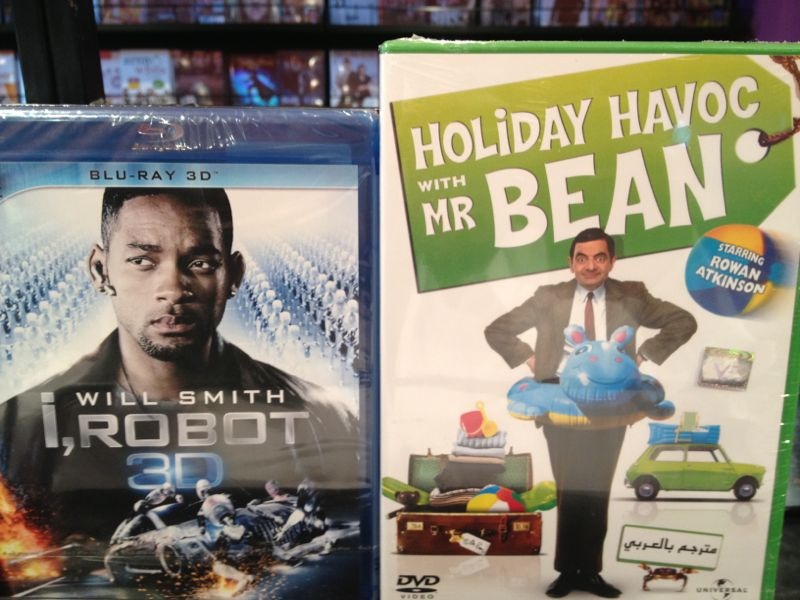
The Audi RSQ car plays a central role in I, Robot movie. Mr. Bean's car, a British Leyland Mini 1000 has its own character in all Mr. Bean's movies and episodes. 

Thursday, March 17, 2011

Sending Messages Through Songs


Considering the fact that we’re living in an era full of all sorts of sociological phenomena and “modern issues”, there’s clearly no doubt about the big role that music play in discussing and conducting such stories through their lyrics. While music is actually originated in Europe for the purpose of serving the people of highbrow culture, as well as being a handy tool for their producers (artists) and consumers (listeners) to express their suppressed love and affection, it has noticeably broadened to wider horizons.

Nowadays, music is played everywhere and in almost every sort of occasion. It’s not necessarily meant to be for special groups of people to enjoy it by attending elite or rock music concerts. Music now is played in weddings, birthday parties, restaurants, shops, and sometimes in public restrooms too! We even listen to music when we are turning on the radio while driving, as well as the background music in TV shows. But if we would consider the question of what role does music serve in the modern sociology of culture, the answers are pretty inspiring.

For instance, the best example would be presented by the King of Pop Michael Jackson with his major hit “Earth Song”, in which he expressed his sympathy toward the destruction that our planet is going through. Another valid example about socially conscious material in songs would be in the remade version of Michael Jackson’s song as well “We Are the World.” The remake version is a charity song that was sung by famous 21st century artists, in which the song was dedicated to the people of Haiti who suffered the horrible catastrophe. And finally the song “Just Stand Up” by famous pop and R&B artists, a charity song too to stand up against cancer disease. The collaborations of famous artists in these songs have certainly kept the messages they delivered persistent and more considerable due to the fact that they’re famous and their fans are always following their achievements (efficiency of secondary markets and product placements).

Furthermore, let’s not forget about inspirational songs that have jobs of spirit-lifting and changing one’s negative perceptions about life. Some of these songs are “Firework” by Katy Perry, “We Are Who We Are” by Ke$ha, “Raise Your Glass” by P!nk, “Born This Way” by Lady Gaga, and “Fly” by Hilary Duff. Most of these songs discuss a variety of the relevant sociological and psychological issues that people encounter at least once in their lifetimes, such as breaking down, feeling worthless, hating life, being stereotyped or looked down at, and the feeling of not being a productive member in a society. Some of these songs also talk about people who feel shy or ashamed to admit their sexuality, and these songs are the ones by Ke$ha and Lady Gaga.

Saturday, March 5, 2011

Hit me baby one more time?

Okay so mostly everyone living in the 21st century knows, or was once shamefully obsessed with, the one and only Britney Spears. Less than a decade ago she was a pop culture sensation and was known throughout the world for her talent.
Popular culture refers to the aesthetic products created and sold by profit-seeking firms operating in the global entertainment market (Grazian, p7). So technically britney is regarded as a "product" to be sold to the public, and profit is expected to be made out of her talent.
She started out as an innocent young country girl who just loved to sing but somewhere along the way she lost herself and became a lesser version of herself.
The worst part is that the whole world had to witness her breakdowns and her face was all over the magazines and tabloids.


Who could forget this phase of her life. The whole world witnessed as Britney went through a bad breakup and watched as her career went down to shambles compared to how it was before.
Enough about her past for now. What really got my attention this week was her new music video for her latest single "Hold it Against Me".


I figured this would be the time for her to regain herself and maintain her initial claim to fame. The fame that came without the rumors and drugs; the fame that came out of respect for her talent.
But I couldn't be more wrong. The video was not the comeback we were all waiting for, it was more of a video promoting her products and enticing people to buy specific brands.
The video revolved around product placement. Each product was shown really quick but the audience could easily notice the brand and anyone would notice that it was no coincidence that the products were placed in the video.


Less than one minute into the music video Britney receives a perfume from one of the background dancers and of course it is "radiance" by Britney Spears, and the camera zooms in on the perfume and large bold letters are clear to the audience. She sprays some perfume and continues to look for other products to introduce next. Next there is a short pause on a make up packet, Make up forever, which she opens and applies to her eye lids. Then she is shown using the sony plasma touch screen, surfing the web on the the plentyoffish website, which was also seen in Lady Gaga's Telephone video (which is a whole other shameful story about product placement). After that there are plenty of other clips where the word Sony dominates the screen.
Even though the video looks like it would be a high budget project, I reckon it easily broke even and received profit from the ridiculous amount of advertisements in the video.


Tuesday, February 22, 2011

Feels like Déjà vu


Well, for the older generations it’s déjà vu. The teenagers and young adults today never watched 90210, V and Hawaii Five-O. Of course, I am talking about the original versions of these television shows which aired in the late 20th Century. It seems to audiences that Hollywood has lost it- or has it? After all, the media corporations are in the money making business, and what better way to make money than to retell old and highly successful classics? With the exception of Melrose Place which miserably failed due to the bad acting and Bionic Woman which only lasted a season. However, in Bionic Woman’s defense, the writers' strike was going on at the time and caused the series to go on a short hiatus.


As well as rehashing old classics, Hollywood is bringing in successful UK based television shows such as The Office, American Idol (known as Pop Idol in the UK), Skins and many more. As previously stated, Hollywood has not lost “it”. Media firms need to minimize risk. To make money, they have to go with what they know and adhere to the rules of the game. There are multiple ways to minimize risk, like using well known actors and following genre conventions.


As you probably guessed already, another method which is becoming somewhat of a trend is the remaking of old hits and the adoption of successful television shows from abroad. Basically, remaking pop culture hits- popular culture here is defined as culture that is well liked and which is demonstrated through measurable commercial success.


In the case of bringing back the old classics, the target audience is not only the young generation such as the teenagers and young adults, but also the older ones. This is because they have already watched the original versions of the shows and are curious to know how the new ones are. Some of the new versions even feature story lines from the old version to make the audiences of the original versions keep watching.


Appealing to international audiences is another thing that the media companies want to do- this is part of the secondary market. When bringing in television shows from abroad, appealing to the international audience is not as hard anymore because the audiences abroad, from which the television show is originally based in, would simply watch the show out of sheer curiosity.


With the recreation of television shows, many elements have stayed the same- like the type of car the main character uses in Hawaii Five-O. However, things such as cell phones and laptops an other products, which perhaps were not used back then are being integrated into the shows to promote products (product placement) and this is producing a materialistic culture in the United States and it is promoting consumerism.


The recreation of television shows is sociologically intriguing because the cultures twenty, thirty or forty years ago and those abroad are significantly different to those currently in the United States. It would be interesting to study the different audiences and see how one television show affects different kinds of audiences and cultures.