Showing posts with label advertisements. Show all posts

Sunday, May 26, 2013

Truth revealed


In the following post, the term product placement will be used a lot. Product placement is a form of advertisement where branded goods or services are placed in a context usually devoid of ads, such as movies, TV shows, or news programs.


I was looking through movie trailers when I noticed the sequel Fast and Furious 6. While watching, just the trailer, contained unbelievable amounts of product placement; the movie contains that multiplied by a hundred. If one were to watch the entire movie they probably wouldn’t notice any of the product placements in it. But after having learned about product placement and its role in the media, it’s hard not to notice it anymore.


An action movie like Fast and Furious probably costs the producers millions of dollars to make, $160 million dollars to be exact. And then I remembered a film I once watched. The greatest movie ever sold. That film showed us how a producer can fund their entire movie solely on the income they receive from companies requesting product placement. Product placement achieves success and profit for both sides. The producer will get the majority of the budget for their movie, and the “investor”, lets say, gets their product advertised, while making sure people can’t skip it like a regular Ad. Both side’s benefit, and both sides get millions or even billions back in profit.


If we consider just the cars used in Fast and Furious 6, and set aside all other brands being advertised to us in the movie, we still find a great deal of product placement. The owners of those companies are paying millions to have their cars used in a movie like Fast and Furious. Think of how much increase in sales they’d achieve. And the movie would just look good for having mind-blowing cars like these in it, and of course, having most of it’s budget already taken care of. So everyone comes out a winner.


The funny thing is, the person who owns the car company, might also belong to the same organization that owns the production studio. In that case neither of them have to spend any money whatsoever because they’d be working as a synergy. They’re benefiting each other, multiplying profits by thousands, and not spending a dime out of place. That’s how the culture industry works. You never know which companies or corporations are working under the same umbrella, and most of the time they shock you. But at the end of the day, they have profits pouring in, and we have no idea where the money we pay actually ends up. We probably don’t even care where it ends up, as long as the process of spending it brought us joy and entertainment.

Saturday, March 9, 2013

Can't Escape Advertisements!

We, the consumers, are the victims of corporate conglomeration. Corporate conglomeration means when one company owns a number of smaller companies that are being controlled and operated independently, but are all managed by the main company. Therefore, corporate conglomeration has taken over every aspect of the world economy, from soda to food to hotels to gas. Our money is wasted on fuelling the businesses of corporate conglomeration. Media and film production companies ensure their success by using a variety of risk reduction strategies to make the most money from the biggest hits. David Grazian, the author of the book Mix it Up, argues "that decision making in the media industries is primary driven by the minimization of risk," (Grazian, 113). He highlights in his chapter six the strategies of risk reduction which include using as secondary market in way to generate profit from a cultural product beyond its domestic sale in its original format and using product placement as it happens to be a type of advertising but placed in a place we don't expect to see it. There are also other interesting risk reduction strategies, but this time I'm focusing on other risk reduction strategies that I found in Villaggio's cinema. Since thousands of people go to watch movies weekly in Doha, the cinema has become a perfect location for some businesses to advertise about their products and services. For example, Dr. Hassan Al-Abdulla, a well-known dermatologist doctor in Qatar, has placed a poster of his clinic in Villaggio’s cinema right in the center of the main entrance. So, that as customers walk into the cinema before even getting they’re snacks, they could stop and read about the services that he offers at Dr. Hassan Al-Abdulla Dermatology & Venereology Anti Aging Laser Center. There are also advertisements placed around the top of the wall. Cadillac, an American luxury type of car, has also placed an ad to advertise about their cars in Doha. You can’t escape looking at all sorts of advertisements when you’re in a movie theater. I recently went to watch a movie in Villaggio’s cinema, and as I was watching the commercials before the movie started, a Pepsi ad played. It was my first time to see Nicki Minaj’s Pepsi commercial. Nicki Minaj is an American rapper/singer. I must confess that I once heard her song Moment for Life, but when I heard her song again in the Pepsi ad, I liked her song more. Nicki Minaj’s song was played in a Pepsi ad; therefore it must be a form of using product placement. According to Professor Harkness, product placement is “a form of advertising where branded goods or services are placed in a context usually devoid of ads,” (class notes 02/18/2013). I found out from my online reading that Pepsi is doing a campaign called Live For Now “to amplify the company's longstanding ties with pop culture, said Brad Jakeman, who oversees the creative strategy for Pepsi's carbonated drinks around the world,”(Huffington Post). Pepsi decided to use a popular singer like Nicki Minaj to help flourish the brand’s name and gain it’s popularity back. Pepsi hopes to be number one on the beverages list, but Coca-Cola still is the top soda. The advertisement in this case is promoting both the singer and the Pepsi company. Maybe the song Moment For Life will gain more popularity because of the Pepsi ad, and maybe a lot of people will feel like having Pepsi after watching this advertisement.

Monday, February 25, 2013

Product Placement in Movies


Companies use advertisements to draw their audiences’ attention and get them interested to buy their products. However, people usually don’t like to watch the ads. People think of the ads as a break from movies, they can get up, go to another place, or they can change the channel; people hate watching ads. Therefore, companies figured another way to advertise their products, which is in movies; this process is called product placement.

According to sociology, product placement is defined as a form of advertising where branded goods or services are placed in context usually devoid of ads. Audiences are forced to look at the brands or the products in the movie. However, Audiences indirectly feel it, or they may get have the desire to buy the product that they saw in the film. Thus, companies now can reach their customers and have new ones locally and globally. The Terminal is a movie about Navorski (Tom Hanks), this movie sets inside the airport and many major brands took place during the movie, in this scene, Navorski figured out how to collects coins to get himself a Whopper meal. Navorski finally lifted the inaccurately well-dressed burger to his mouth as the sound of the music is heroically increasing. From this scene, Burger King restaurants wish you to get up, drive to the nearest Burger King and get a Whopper meal.


The product placement in movies is prevalent because it works. When a celebrity’s fans see him/her in a movie with a certain product, they want to get it so that to become like them. For example, Will Smith’s admirers may got the Ray-Ban glasses once they saw him in Men In Black with his Ray-Ban sunglass. Product placement with an attractive character may make the product placement more successful. The more the product pairs with a good-looking actress, the more people like the product.


However, in Cars movie, product placement weren’t directly paid to cars like Ferrari, Porsche etc. But they helped in the technical field of the vehicles during the film's creations. Porsche AG was the latest model for Porsche, and Prosche was the female version in Cars who fall in love with Ferrari (McQueen); McQueen is the hero in this film, and all kids’ dream is to get a Ferrari once they grow up. This film has produced cultural products that lend themselves to branding and merchandising opportunities, such as McQueen toys in McDonald’s happy meals.


The Island movie – a sci/fi-thriller movie - used many products in it, maybe to make the story more realistic! But when you see the movie, you suddenly feel compelled to buy all the luxurious stuff such as the yacht, the Cadillac car, Apple iMac, or any product from Calvin Klein etc. all of the products in the movie get exposure and promoted internationally.


The more you see a name, consciously or subconsciously, the more likely you will buy that product compared with another brand, or a no-name brand “TRUST ME”. When I saw The Devil Wears Prada movie, I wanted to get Miranda (Meryl Streep)’s Prada bag, or her amazing shoes, clothes and everything, every time I watch the movie, I get the desire to do CRAZY SHOPPING.


Product replacement in movies can help the companies to strengthen their names in the long run, because many movies from the secondary market have the opportunity to generate profit from a cultural product beyond its domestic sale in its original format. On other words, the products in the films can be seen in DVD format, airplane displays, iTunes etc.; that’s why many companies are trying to be part in scenes in movies.

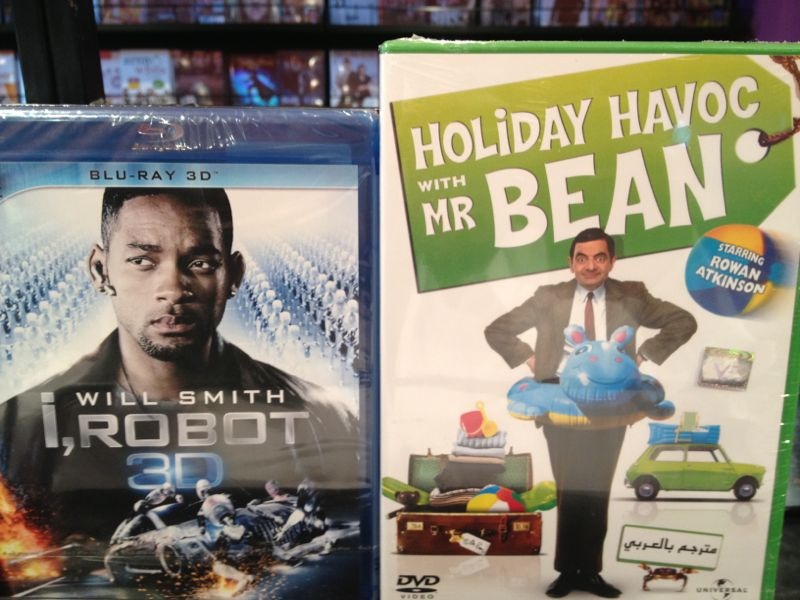
The Audi RSQ car plays a central role in I, Robot movie. Mr. Bean's car, a British Leyland Mini 1000 has its own character in all Mr. Bean's movies and episodes.