Showing posts with label Sports. Show all posts

Tuesday, September 25, 2012

Glocalization: Muslim Women and Sports

Once again, here I am writing another blog post relating to what we recently discussed in Sociology class about globalization and glocalization. Globalization can be defined as the flow of goods, services, money, people, information and culture across political borders, while, glocalization is a combination of globalization and localization. In other words, glocalization is established and disseminated globally, but also recognized to remain the local customs and traditions of a particular setting.


The beauty of sociology is that whatever theory or concept we learn, we could apply it to nearly every aspect of our society. I will be applying the concept of glocalization and globalization to the Qatar Women’s Sport Committee and specifically, Qatar’s National Team of Table Tennis for women, as I am a former player.


When it gets to glocalization and globalization, we should consider the multi-national corporations involved, governments, resistance and the consequences. Multi-national sports corporations such as Nike, Stiga and Adidas will benefit by increasing their markets and increase their profits from supplying the players and the teams with shoes, equipment’s and clothing. Also, governments and the Olympic committees will get involved in this matter when deciding on whether which countries should play against each other. For instance, when the Third Muslim Women’s Games was taking place in Iran in 2001, the Table tennis team had to get the approval from the Olympic Committee on whether they could participate in the games. In addition, I always had the sense of resistance while playing table tennis. The more conservative women and the more traditional locals were against playing. For example, one my friends had to stop playing because her family did not allow her to due to the societal norms and culture. On the other hand, some girls were conservative and played with their hijab on. Another form of resistance I noticed was segregation. Most of the time we were playing tournaments with only females, as most players and officials were uncomfortable in an environment with men. Lastly, consequences were evident when most parents and elder people were complaining about the loss of traditions and culture. The players spent more time in school and then playing table tennis, while barely making enough time with the family. The way the girls used to dress was westernized; the language we communicated in was English rather than Arabic. At one instance, one of the officials questioned me on why I don’t speak Arabic when I’m a Muslim and live in Qatar. All of these cases could be a representation of material and non-material cultural loss. At the end of the day, it depends on the individual and how they allow globalization influence their life and what they do.


At most times, I felt like I’m playing table tennis, but the Arabic version in respect to the Qatari and Islamic traditions and customs.

Wednesday, April 18, 2012

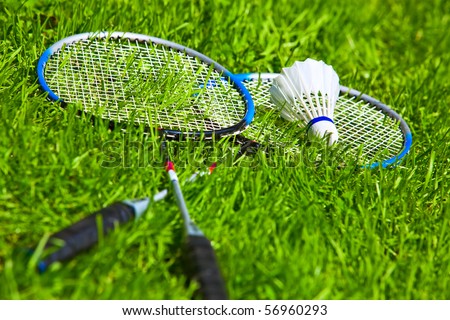
BAD-MATH-TON

Question:

How would you mathematically clarify the important elements required to succeed in world sports, particularly badminton?


Answer:

Skill+ 2(strength)+ resolution+ practise= Prerequisites for any sport

Endurance+ agility+ confidence+ good control= Necessities for badminton

Optional: Interest in sociology of sports

It turns out that yet another component plays an influential factor in a game like badminton—a person’s gender.

Badminton, one of the 8000 varied sports in the world, shares the common feature of being an inherently male dominated sport. As of 2004, the number of male badminton players (in the 16-34 age-group) was almost double the number of their female counterparts (retrieved from sports.espn.go).

Originally traced back to 16th Century Japan and Greece, badminton as we know today, was a 300-year-old European innovation in India. Then, elite men and women somberly playing shuttlecock and battledore were a very common sight.


Over the years though, the formula has changed dramatically as restrictions in movement have completely vanished.


Present day badminton= verve+ vitality+vivacity [B= 3V]

There is a certain degree of ease for those with a strong and supple body that is fairly well-built and amply energized. Men naturally have an upper hand in such a fast racquet sport that requires continuous exertion.

Here is how these gendered processes related to sports can be justified by hegemonic masculinity:

To summarize (and, once more, grossly to simplify) such positions, sport is a crucial site for the reproduction of patriarchal structures and values, a male- dominated secular religion that has celebrated the physically aggressive and often violent deeds of men. Sport has been an integral element of self- sustaining forms of exclusivist male culture, lubricating a closed system of male bonding and female denigration. (Rowe, 1998)


The last game of badminton I played was at EC, barely a few hours ago, and I must say I still feel dizzyingly tired. In the 45 minutes I spent at the game, I left the court four times to get a drink of water, and spent a total of about 15 minutes being an "audience," simply because I was too tired to play. Which brings me to the next formula:

Energy Level= Exhaustion- (Spirit + Motivation)


Towards the end of the game, my right hand ached as if it were bloated. Physical discomfort aside, I couldn't help but notice that throughout the entire span of the game, a majority of the shots were
a) exceedingly fast-paced;
b) usually directed upwards (because of the amount of strength expended on each shot, the shuttlecock would sometimes reach the ceiling, which was several feet high).

Every five seconds in a game of badminton, you are guaranteed to be doing either one of the following: jumping, running, skidding, stretching, hitting-as-hard-as-you-possibly-can. (And occasionally saying “Dayyum!” when you miss a shot because you are too distracted by the lights overhead, but that is an altogether different matter). Badminton is a reaction sport that can drain energy levels very easily, so sufficient physical strength is a must to stay buoyant.


That established, the following statistic is not particularly surprising:

Total number of badminton players in Rec Center on 18/04/’12
= 13
= 12 Males + 1 Female

Yes, I was the only female.

There are usually an equal number of women around though, said my badminton partner, Kee Guan NG. Although he agreed that such a sport involves intense physical activity, he stressed that the you-should-constantly-be-on-your-toes part of the game has not lugged back women in any way, at least in his home country, Malaysia. I learned that badminton is Malaysia’s national game and that the world’s leading player, as of 2012, is a Malaysian Lee Chong Wei.


Kee, a regular player at the Recreation Centre, continued about the relatively negligible gender segregation and equal woman proactivity in badminton, even in EC.

But I noticed that while he mentioned Wei as being the foremost international competitor, Guan said nothing about a similarly top-ranked woman player.

Which can be explained by the fact that badminton definitely has a manlike connotation attached to it. Wikipedia-- one of the most frequented websites around the world-- is proof enough of this: of the six coloured pictures of badminton players, only one shows (and rather vaguely) a woman player.


But it’s not just badminton.

For most of us, the term “Woman’s sports” is fed into our mental lexicon, while the term “Men’s sports” sounds deviously wrong.

Imagine, for example, Men’s cricket, or Men’s hockey. Or Men’s badminton. Somehow, the former part is taken for granted-- if it is a game, it is assumedly men’s.

Another interesting trend I noticed was that most players played for points

i.e. Men playing a game ∞ Level of competition


Throughout, the intense games were heavily peppered with split-second conversations like:

“What is the score?”
“Six to Seven.”

The competitiveness was amusing. Interestingly though, my game with Kee was a score-free, casual one-- the only competition-bereft game he played. Perhaps this can be explained as follows (retrieved from jsssagepub.com):

The competitive hierarchy of athletic careers encouraged the development of masculine identities based on very narrow definitions of public success. The fact that winning was pre- mised on physical power, strength, discipline, and willingness to take, ignore, or deaden pain inclined men to experience their own bodies as machines, as in- struments of power and domination—and to see other peoples’ bodies as objects of their power and domination.

Men, masculinity, speed, competition, women, socialization, badminton.

The math is really simple.

Tuesday, November 15, 2011

Sports - A Man Thing?


 For my blog today I’ve decided to visit the Aspire4Sport conference held in the Aspire Sports Academy here in Doha. I went there while considering in mind how does gender, and prescribed gender roles play a part in sport? The conference attracts hundreds of sport professionals from all over the world, and was a great chance to meet and listen to legends in each sector.


The first thing I noticed was the blue color that cover most of the academy and was heavily used in the booths and walls constructed for the conference. If blue, and especially darker shades of it, is culturally prescribed to masculinity, then the academy definitely give the idea that this is a place for boys and men. The huge pictures of sport legends such as Pele of Brazil and Zidane of France certainly give emphasize the idea of masculinity in sports and limit the presence of femininity.


Out of all the visitors and speaker that were invited, I noticed that Serena Williams, the world-class tennis player, was one of five female speakers in the conference compared to 72 male speakers over the course of three days that the event is held. This could be explained because sports are just more appealing to men and therefore more of the male genders are involved in it. Another explanation can be due to the biological sex features that give men advantages over women in sports such as soccer and rugby. Or do these explanation have any truth at all?


As a kid I remember loving football because I used to watch a cartoon show called Captain Majid. It was a typical Japanese comic cartoon that tells the story of a football team and their super captain those scores from a hundred yards away. If it was not for that cartoon, and the genrder nroms that allowed be to watch such a show as a young boy, would I even have loved the sport as much today? I doubt it.


Thursday, September 29, 2011

How I Prefer Qatari Culture

My relationship with Qatar goes back to the day I was born, which means I have been in Qatar all my life. I was born and brought up in a street named Al Nasr (nearby Al Sadd). However, I was not educated in a Qatari school, but in an Indian school. I am not writing a biography about my life, or me, but I am going to explain how I have become a part of Qatar, culturally and socially.

As a little kid, I used to hang around with some of the Qatari kids. As a result I got to learn the Qatari version of Arabic language, their culture and it was religiously easy for me to integrate with them because I am a Muslim like most of them. I am at a stage where I love Arab food more than anything. I even got some of their passion for football, which I think is a blessing because Indians are crazy about cricket and I despise that sport. Most importantly, I was able to get rid of the culture shock. For instance, I was used to being a guest at my friends’ Majlis, a place basically where all the Qatari men gather to drink coffee, watch football and gossip. I was aware of the folkways and the accepted behaviors in such a place.


At the same time, I am also in touch with my mother culture. I can speak my mother tongue fluently, still love the Indian food that mom cooks and I am well aware of Indian history, culture and heritage. Many of the Indian folkways are still foreign to me because there are a number of them, but I am still very comfortable with the Indian way of doing things. However, I do not play cricket.


If I had to make a choice between Qatar and India, I think I would choose Qatar, the reason being my emotional attachment to this country. With globalization, I can still relate to my Indian backgrounds with ease and at the same time be a part of different social and cultural groups.

Sunday, September 25, 2011

North Korea VS Qatar


The eye-opening documentary “A State of Mind” is centered on two North Korean gymnasts, Pak Hyon Sun and Kim Song Yun, who are preparing for the Pyongyang mass games, an annual event in NorthKorea. Throughout this documentary we not only see the ongoing struggles and challenges the girls face but also how their everyday life is, living in a communist run country that is extremely secluded from the rest of the world. After watching the documentary, the vast differences in culture between Qatar and North Korea were extremely apparent especially when it came to cultural diffusion, but regardless of North Korea’s ethnocentrism, some sociological similarities were visible as well.


The importance of family is a major one. Qataris and North Koreans share the same intense respect and love for family. For example we see Pak Hyon Sun is an only child living with her parents and grandparents under the same roof and Kim Song Yun is one of three girls in her family also living with their parents. Similarly, Qatari families have the same values when it comes to loved ones and express the same admiration towards elders. Mother daughter relationships in particular resemble each other in both cultures even in the smallest things, like mothers showing maternal affection and telling you to finish your food or go do your homework.


The mass games require an extreme amount of determination, skill and training especially in a sport as challenging as gymnastics however when compared to Qatar we see how similar that is with soccer in the region. Qatar has assembled a young team of athletes just over a decade before the event in hopes of reaching the impeccable standard it needs to win the world cup in 2022. This includes vigorous training sessions and ongoing will power, very much like what the two girls had to go through to be ready for the mass games.

The music and dancing portrayed in the documentary also shares the same essence as Qatar’s in that it’s very tradition oriented. During celebrations such as the mass games we hear patriotic music played by an orchestra and each dance or performance is telling a story. Qatar also has traditional dances and music originating from Bedouin times, in particular a sword dance called the Ardha, usually performed by men. Qatari music revolves largely around percussion and string instruments such as drums, violins and oud.

Qatar and North Korea are widely different from each other when it comes to most things, there’s no denying that. North Korea is definitely one of the more secretive countries in the world so their way of life might look strange to foreigners, but no matter how different a culture is to the other, there are certain aspects that they all have in common no matter how ethnocentric they are.

Saturday, March 12, 2011

Progress In Souq Waqif


Two types of progress are seen in souq waqif and sociology allows us to track these diverging behaviors in cultural behavior. One is cultural progress. Specifically, I am talking about the art exhibitions that are held in the galleries and some of the restaurants found there. The second kind of progress is that of westernization and globalization.


I have been to souq waqif many times and each time I go there, I am amazed at both of these types of progresses.


I remember the first time I ever went to souq waqif was with my school, and I remember telling one of my friends “Why is there a Baskin Robbins in the middle of souq waqif? Isn’t this supposed to be a cultural place?” What I had failed to realize then was that even though Baskin Robbins was not part of my culture, it is still part of culture- just not mine. Baskin Robbins’ motto is “Your Neighborhood Ice Cream Store” which shows how dominant it is in American society, or how dominant it wants to be. I can’t be the judge of that because I’ve never actually been to California- which is where Baskin Robbins first started out. The same goes to the restaurants in souq waqif, for example the Iranian, the Indian and the Italian restaurants.


Also, another form of cultural progress is the art exhibitions that can be seen in the galleries of souq waqif. One of the exhibitions that I went to focused on Qatari artists and I could actually see the artist painting his work onto the canvas. Not only was it interesting to see an artist at work, creating a cultural object, but it was interesting to see a Qatari one because it was the first time that I’ve seen this type of thing. I’ve also seen an exhibition where more than one person has worked on a piece of art, so it was a collective activity and there was a division of labor amongst the people. I also heard many people talking about their thoughts of the many artworks and each person had a different opinion, which proves that cultural objects are multivocal.


The other kind of progress is the westernization and globalization. The Baskin Robbins example could be put in this category as well. As I previously mentioned, Baskin Robbins started out in the United States of America, specifically the state of California. So the fact that it is located in Qatar means that Qatar is becoming westernized, even if it is through a simple thing like ice cream. Another example of westernization in souq waqif is the fact that many of the cafés have multiple television screens in them that usually play some sort of western sport, usually football. Once when I was walking around the souq, I heard a loud cheering noise coming from the cafés, I assumed a team had won and the people were cheering because of that and that they were experiencing collective effervescence. Another example is the parking lot surrounding the souq. This is part of westernization because the need for parking lots came from the west, which is where cars were invented. Traditionally parking lots were not needed because all people needed were posts to tie their camels to.


Wednesday, February 9, 2011

Product Placement In Sports - you can't escape it!


Imagine this scene in a movie: The protagonist is driving his fancy Porsche, drinking a bottle of soda and then parking next to a KFC delivery truck.

People may not notice, but the sitting in that scene was not chosen randomly; there is always a reason behind this ‘embedded marketing.’ In Sociology, that reason is called Product Placement, and it is more prevalent than one might suspect.


According to sociologists, product placement can be explained as an advertising or marketing tool in which companies pay a fee or provide services in exchange for a prominent display of their products. People frequently see this technique in movies, the story life of Television shows, or news programs. However, it has also been prevalent in sports, from professional sports to college sports and it even extends to sport video games.


Clearly, people now pay greater attention on sports events than they used to do in the past. Therefore companies are using that as an advantage to market and advertise their products to sports fans. However, this phenomenon is intensively spreading everywhere that its few advantages are turning to overwhelming disadvantages. For example, consumers are angry about the growth in the number of product placements. They feel that their favorite shows are being turned into commercials.


In addition to that, some sociologists has discussed major problems of the process of integrating ads into the content of sports programming, which include the following:


First of all, by this technique, some companies can easily advertise ethically charged products that may destroy a culture's belief, such as guns, cigarettes, and alcohol to a huge audience and portray them as appealing.


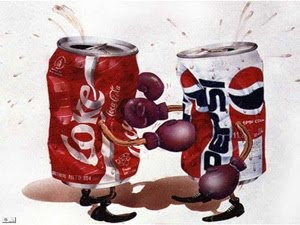
Secondly, product replacement in sports can create huge marketing risks. This risk is not only for the producers or studios, but also for the consumers themselves. For example, it creates clutter for both sides. Consumers may get frustrated with the placements or feel that these placements prevent them from watching their favorites matches. It also creates clutter in consumers’ choices of certain products such as, Coke versus Pepsi or Mac versus Windows, and that may negatively impact the companies’ revenues.


In conclusion, product replacement is greatly increased in sports and it is becoming a threat to the businesses fields and other sectors. However, I think product placement can be a useful tool if controlled and executed properly. For example, it may attract new potential customers and produce mutual beneficial relationships between the companies and consumers.

Monday, January 24, 2011

A Clash of Cultures - Qatar Versus Japan.


On Friday the 21st of January 16:25, two cultures clashed in the soccer field. Only the clash was not between the players but rather the fans. Supporting soccer teams is a very popular subculture in both the Qatari and Japanese cultures. Therefore, when they faced off in such an important game, Qatar could've made history the second time this winter. I knew there was no way I was going to miss such a high stake game and miss the chance to see how these two spectator heavy cultures collide.

In Qatar, supporting football, or to the American readers soccer, teams may just be one of the biggest subcultures within the culture. Every man, woman or child supports a certain club feel passionately about that said club. Usually the club chosen is passed from father to son or daughter. When watching the national team play it is a way for all of Qatar to unite and support the team. Some folkways that belong to the culture do not apply when involved with this subculture for example how one acts around a stranger or the idea of personal space. Once you're in the stadium the person next to you or behind you might as well be your brother. The subculture has its own set of norms and traditions, for example designing your car with flags and blasting loud music or honking continuously to celebrate victories.


I got to the stadium around 3:30 to find there were more Japanese fans than there were Qatari fans. Thankfully, 30 minutes before the game started the Qatari fans made a comeback greatly over numbering the Japanese fans. Both sides were equally enthusiastic with flags, instruments and costumes representing their respective countries, some however may have been confused or simply an effect of cultural diffusion.


Qatar supporters were very important to this match as the Qatari coach mentions in countless interviews. Therefore this subculture was as important as ever. The two cultures and their different norms and traditions were made very obvious when put in contrast. The game was very close with teams taking turns scoring goals with fans and players both going crazy after each goal till the final winning goal by Japan in the final minutes of the game crushed the hopes and dreams of the Qatar fans while simultaneously increasing the hope of Japan winning the cup a 4th time. The final goal created such a thick atmosphere with the blue side of the stadium cheering and the white and maroon side somber and searching for the exits to avoid traffic. Interestingly, once the team losses the cultural norms come back and the person next to you is back to being a stranger, winning is another story however.


Overall, it was quite interesting to see how the folkways can change due to certain subcultures and how according to the score they can easily be changed back. While the score was a disappointment, one hopes we have better luck in 2022.

Sources

http://cache.daylife.com/imageserve/0d7r1YW6Xl76P/350x.jpg