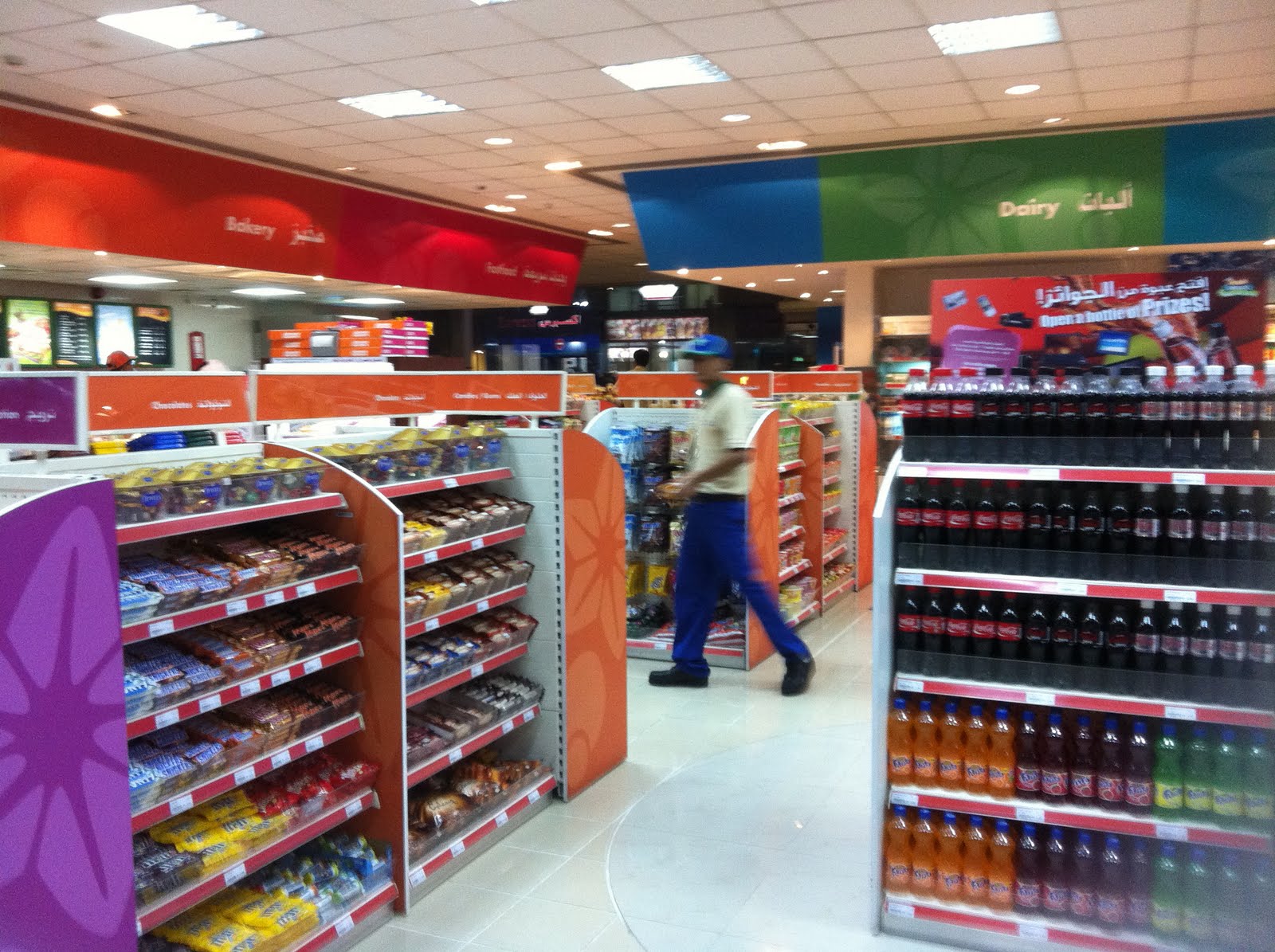


As I drove into a Woqood petrol station, I didn’t really think my sociological imagination was in gear. I wanted to fill up my car tank, grab some treats and candy after a very long day, re-fill on some comfort McDonalds meal just in front of the Sidra convenient store of Woqod – and go home. However, waiting for my gas meter to fill up, I look around and notice the countless sociological concepts that can be applied in every corner and feature of this location. Apart from the McDonaldized process of the car wash service, the gas meters, oil change, and convenient store including a small fast food corner, an Internet area and other services and adjacent fast-food chains located next to the Woqood Petrol station, I move on to observe the social stratification of people within this cluster of car and food services in the context of this petroleum-rich country.


According to this source, in 1973, petroleum production and profits radically increased, moving Qatar from the position of one of the world’s poorest countries and leading it to have one of the highest Gross Domestic Product (GDP) in the world. Today, Qatar is probably viewed as a very “wealthy” nation. And in sociology, wealth can refer to income, property, buildings, businesses, assets, stocks, bonds etc. However, this wealth is not distributed equally. Although absolute poverty, where people live without the basic needs of living such as food, water, and shelter, may not really exist in Qatar, relative poverty can be observed when the wealth of different people in this society is compared to other standards within the same country.

For example, if the situation of the employee who filled my gas tank and wiped my front and back windows, or the person who served me my fries were compared to the living standard and wealth of the owner of Woqod for example, their situation would be ranked way at the bottom, or at a significantly lower level. Even though these workers might be way better off than the people in their home country, compared to the standards of the average situation or elite and high status members of the Qatari society, they would fall at the bottom of the hierarchy.


If you are born into a Qatari family, your life chances are not likely to lead you to any of the jobs I observed in the services offered at Woqod. Instead, you will more likely to earn a relatively high income, and belong to a social class that shares characteristics of high economic and social status, high level of education (with lowest being a college degree), and an occupation that holds a certain prestige. If I come across a “Land cruiser”, or an expensive car on the road, I would assume, that the driver is most probably Qatari, or a driver for a Qatari family or businessman, based on my cumulative experiences and observations.


Furthermore, the arrangement of people into divisions of power and wealth can be determined by ascribed statuses (characteristics you cannot control/inherited) or achieved statuses (characteristics you achieve or attain). Due to Qatarization most top ranks in management roles are given to Qataris instead of expatriates and non-Qataris. This program or system favors or prioritizes Qataris for the positions of higher authority and management. According to the book by Joan Ferrante, a caste system of stratification is a form of assigning people into social classes on the basis of their ascribed status, which they have no control over, and usually cannot change. A car wash worker is not likely to move up the social ladder to become the CEO of Qatar Gas. And neither would the McDonald’s cleaner, or the server, or the laborer moving stock around the store. Therefore, social mobility is unlikely for those in the caste system that is more prominent in this society.


