Showing posts with label cultural diffusion. Show all posts

Thursday, June 6, 2013

The Outback in Qatar


I recently found out that an Outback Steakhouse opened up here in Qatar. My parents decided to take us there, having been there during the opening and trying out the food. When I asked, dubiously, if it was any good compared to the franchise in Canada, the first answer I got was "It's in Lagoona!" As if that answered my question, but to them it did. Having recently learned about authenticity and what it means to different people of different social groups and classes, we also learned through Grazian's research that authenticity is linked to location. The next answer I got was "They have the same menu and everything, the food isn't AS good as the one in Canada but almost." So by replying that "It's in Lagoona," and relating it to the experience in Canada in a positive way, it implied that because of the location and the atmosphere it was going to be as authentic an experience as it could get outside of Canada. Grazian's readings also emphasize situational authenticity, which comes when an outsider makes a claim to realness that emphasizes certain characteristics while under-emphasizing others. In this case, the owners of the Middle Eastern franchise have made the claim by blurring certain distinctions, such as the fact that rather than being in North America, where the steakhouse experience is somehow more "authentic," it is in Lagoona, which, being surrounded by the Pearl, Grand Hyatt, the Diplomatic Club, and other hubs of Western cultural activity, represents a chunk of the West transplanted into and shaped by the local experience and context. In addition, although the Steakhouse is American, it is Australian-themed, and in addition to attempting to emulate the authentic "Australian" experience, it is owned by a company called Bloomin' Brands (the word "bloomin'" and its spelling is colloquial Australian), which is also American. However, the company attempts to downplay the fact that it is American by employing colloquial Australian in their language and offering Austrlian food and steaks imported from, you guessed it, Australia.

Monday, October 8, 2012

Your Typical Mix of Romance, Tragedy & Subculture


On Wednesday 3rd of October I attended a play held in Katara titled Romeo and Juliet in Baghdad. The play was heavily glocalized in terms of production design and content .The script was tweaked to be made applicable to the events which occurred/are occurring in Iraq. Globalization can be seen by the fact that the Iraqi Theater Company is touring to certain countries to showcase their adaptation of the famous Shakespearean play.


To be honest I was quite hesitant to attend. Being a huge Shakespeare fan, I automatically thought that it would be extremely unoriginal since ‘Romeo and Juliet’ is a play that has been taken on heavily. However, I was pleasantly surprised to how original and glocalized the play was. Also, the production was extremely beautiful and simple. The mood of the scenes was incorporated in the lighting and sound used. The sound was somewhat manipulated to act as a constant reminder to the war and tension in Iraq.


My friends and I are really into plays and have very similar tastes in terms or music and television shows. I guess we internalized the same cultural attitude. There’s a sense of reassurance one gets when having similar social interactions with a group of individuals. Interestingly enough I heard about the play from a person who isn’t part of my close social network. Even though the person was a weak tie, in a social network sense, he virtually introduced me to the play by posting the link on Facebook. Having diversity in a social network proves to be beneficial in terms of accessing knowledge. By posting the link on Facebook he passively influenced his Facebook friends to know attend or at least know that this event is taking place in Doha.

During class a metaphor was used to describe identity and the ways in which we perform in our everyday life. The metaphor suggests that social roles are like dramatic performances “enacted” on a public stage. While watching the play I couldn’t help but think of the metaphor and how it applies to the different roles we play in different situations. My student self is completely different to my role as a daughter. In our roles we act depending on whom we’re interacting with and what is expected of us. The actors in the play were doing so in trying to communicate a certain message about the destruction of war and the destructive tension between different religions.

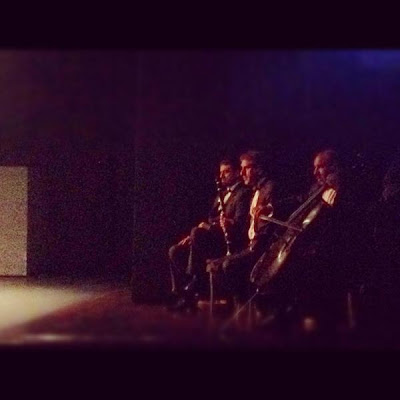
Also, the subcultures within the play could be applied to our everyday life. The mujahedeen and the musicians stood out as subcultures. In the play the mujahedeen took part in destruction, which essentially led to the death of the two main characters. The intensity of the subculture was evident by the fact that the character had no problem getting himself killed in the name of what he and his subculture believes in. The musicians on the side of the stage were not part of the play yet they provided an interesting soundtrack.


The evening spent made me realize the ways in which pop culture is diffused and the power of interpersonal word-of-mouth communication.


Friday, March 16, 2012

Mass Media Effect


One time, my brother entered someone he knows' car, not his friend but someone he knew. My brother noticed a big yellow thing sitting in the back seat. When my brother turned his head toward it, he freaked out, a huge Spongebob doll taking a space of a real passenger sitting in the back. My brother asked that person about the reason of having an Enormous Spongebob in the back seat. That person's reply was " for girls". Which is a lame reason in my opinion. 

Anyway to that person Spongebob is a symbol of attraction, his enormous size will probably attract the attention of anyone in the road. 

Because of the Mass Media and the cultural diffusion, Spongebob became a phenomenon that cannot be denied, you can see him everywhere in a different forms. The following images show few examples of Spongebob items: 


What really caught my attention is the fact that many adults are also interested in this character. Even though the main audience for this character are children.

Some questions came to my mind when I think about adults who like spongebob, like:

How do we look at an adult who is waering a Spongbob clothes, especially men?
How do the old generation people look at that person compared to people from the new generation?
Isn’t it important for those people to think about how people will at them?

Many people judge on others by their appearances. Spongebob is usually associated with children, a symbol; probably that person will be looked at as a childish person, especially from the people of old generations. People from the new generation on the other hand might look at Spongebob as a cute and funny character and obtaining his items is just a choice and nothing more.

Regardless, I think the Spongebob fan should imagine and role-take before wearing it?   

In general, is Spongebob a negative or positive influence on society?

Regarding this question, I would like to share an article called “SpongeBob SquarePants: Bad Influence on Children?” This article showed a result of a research in which 2 groups of 4 years old children had an attention tests after doing an activity for 9 minutes. One group spent the nine minutes watching Spongbob, while the other group spent the nine minutes in drawing. Surprisingly the children who scored a higher result are the ones who spent their time in drawing.

This phenomenon is not first of its kind, Power Rangers and Pokemon were a big hit too. It is the Mass Media and the cultural Diffusion are behind these phenomenon. God knows about what will come later.  

Works Cited: 

Saturday, October 29, 2011

Doha Tribeca Film Festival


The third Doha Tribeca Film Festival finally began this October after a long highly anticipated wait by people living in Doha. The festival usually goes on for about five days and showcases films and holds various events for each day. The whole purpose of bringing the Tribeca fIlm Festival to Qatar is to introduce people to the film culture by cultural diffusion. The festival brings together directors and actors from both the western and middle-eastern parts of the world, allowing the people of Qatar to learn from both sides and potentially inspires them to make their own films. The introduction of Doha Tribeca Film Festival was to encourage its citizens to start their own projects while receiving support from Doha Film Institute. The films are screened in Katara and at the city center.

This year there were many films that were based in the Middle East but a lot of them had western actors as part of the cast. There has been a lot of criticism around these films, such as Black Gold, as people believe the Middle East is not being portrayed in the correct way and that the only reason some of the films had western actors was to secure its distribution in the western and European parts of the world.

A very recent incident that occurred a few days ago at the red carpet has stirred quite some controversy. The Egyptian actor Omar Sharif was caught on camera slapping a woman while he was posing for pictures on the red carpet.

He broke social norms when he did that and now he is receiving negative sanctions for his behavior, as they are many articles being written about the incident criticizing his actions. In the actual video taken, it is unclear whether the actor actually slapped the woman or not, but he did appear quite rude when he was talking to her as he basically called her stupid when he said, “put something in your brain” in Arabic. After he finished posing for his solo pictures he calls over the woman and takes a picture with her. The woman did not look the least bit annoyed or angry as she smiles and takes the picture with him with without causing a scene. Despite the fact there have been some negative occurrences at the festival, it still remains a vital medium to transfer film culture into the Arab world.

Tuesday, October 18, 2011

Sociology on the road

Instead of learning from the typical power points presentations in class, our Sociology Professor, Geoff Harkness, decided to take us to the Al-Mathaf museum last Thursday during our 80 minute long class. We all showed up on time, which illustrates how disciplined we are to our role obligations. While we were all in the bus heading to the museum, we were all quiet and uncertain about how the trip will integrate the contents of our sociology syllabus. One of the students was brave enough to tell to Professor Harkness that museums are boring. Professor Harkness played his role wisely by responding “When I was younger, I didn’t appreciate museums, but as I grew older I started to gain this appreciation.”


Once we arrived, we were welcomed by the Head of Education Michelle Dezember who has a sociology degree. We spent the first 15 minutes discussing the formal organization of the museum. First to define formal organization; it is the coordinating mechanisms that bring together people, resources, and technology and then channel human activity toward achieving a specific outcome. So at the entrance, there were desks with computers that store the data about the visitors. An example of a formal dimension of the museum is asking the visitors about their nationality, gender, age and their visiting status to the museum. About the organizational values, the museum is quite flexible to the type of exhibitions it hosts. It’s not limited to a specific type of culture. It accepts exhibitions from various cultures, which highlight the involvement of significant cultural diffusion.


The museum had some norms like not entering to the Gallery hall with food and beverages and also not taking photos of the art work inside. The exhibition that we saw was called the Swalif project which means short stories. There were a plethora of traditional Arabic paintings but we only had time to analyze two paintings. The first painting was by Jassim Zaini and it was called oil on panel. The painting showed how the Middle East has gradually progressed towards urbanization. On the right of the painting, there were women on a rowing boat just simply sitting, and a young boy fishing with a stick. But moving onto the middle and left side of the painting, there was a man holding a book and switching on an industrialized oil panel. There were also two men lifting some heavy objects and a man fishing with a huge fishing net. The painting explained an aspect of the gender roles in Arab countries which was that men are the ones expected to work hard and engage in some physical labor and technology, while women are expected to just take care of the family and support them. The background of the painting had some buildings which is a symbol modernism. There were also palm trees and a sun, which are quite common in the material culture of the Middle East.

The next collection of paintings was done by Sultan and they elaborated again the role of women in the Arabic society. The paintings showed women in their homes, sitting on the ground and grinding bread or cooking. The women were wearing their long traditional dress and burqa,which explains how conservative the Middle Eastern culture is. Also, the women in the picture had many serving plates beside them, which reflect the symbol of generosity and hospitality of the Arabian culture.


Head of Education Michelle Dezember

The trip was immensely enjoyable and educational at the same time. Many thanks to our Sociology Professor ,Geoff Harkness, for his creativity in planning for our class and making us more interested in the study of sociology.

Tuesday, October 4, 2011

Unleashing the Qatari Culture in the Residence Halls

On September, 27th, 2011, one of the female residence halls in Education City in Qatar hosted an event to educate the International students about the Qatari Culture.The CDA’s and the residence hall director arrived before the event to set up all the items which represent the material culture of Qatar. These items included the traditional sofas, Arabic music, local pastries, regional dresses and henna cones.


A total of 16 students made it to the event. Most of the students came from Middle Eastern and Asian countries. However major western influence reflected the way these students dressed and talked. The fact is that Education City, which consist of six American universities, sways the subculture of the students to behave in a more western-oriented manner. They all communicated in English since not everyone from the attendants could speak the Arabic language.


Throughout this social gathering, I noticed many aspects of the non-material culture of the country. For instance, folkways like greeting everyone in the event by kissing on both cheeks were firmly applied. Also, the attendants showed open-mindedness and respect towards each other, which is a value embraced within the Qatari Culture. There were norms like maintaining the cleanliness of the place by disposing all tissues, paper plates, plastic cups after using them. Everyone made sure that they kept the pillows of the traditional sofas in the correct order after sitting on the sofas. The music was played at a modest volume. These examples illustrate how keen the Qataris are about living in a hygienic and organized place.


Back to the material culture, the students indulged in the two large dishes of the freshly baked chicken, meat, spinach and vegetable pastries known as fatayer. The portions were huge and this explains the concept of hospitality and generosity when it comes to dining in the Arabic culture. The students had fun trying out the Women’s traditional dress which corresponds to the beliefs of Islam in the culture as the dress was very conservative. Also throughout the event, the students were excited to get their hands decorated with the complex henna designs as henna in the Qatari culture symbolizes beauty.


Adding to all the energy of the occasion, one of the students turned 19 on the very same day. Matea Malikanovic a freshman at Georgetown University celebrated her birthday among the many students in the event. No one knew that her birthday was on that day so there weren’t any preparation to celebrate the occasion to its full potential. However they did sing her the popular birthday song and exchanged birthday wishes, which showed an example of cultural diffusion. Originally from Bosnia, Malikanovic shares a glimpse of her past, “I was born during the war,” she states. However, the situation has improved immensely since then. Still, she decided to study in Qatar to gain a better understanding of the culture and religions of the Middle East.


Birthday girl


A role is the behavior, obligations, and rights expected of a social status. The role of an Education City student involves committing to your schedule, submitting your assignments on time, participating in class and of course passing exams. Despite the busy academic schedule of most the students at the event, they were all looking forward to relaxing and enjoying their time. In fact, 9 students had exams the next day. Elizabeth Boctor, a Weill Cornell student said “I have no idea what I’m doing here but I know I’m happy.” Similarly, Sarah Omar, from Georgetown University expressed her excitement on attending the event, “We are enjoying free food and seeing people we normally wouldn’t see because of our busy schedules.” This casual get-together permitted the students to step out of their rigorous role and engage in leisure and social activities.

While the event only lasted for two hours, it gave students the chance to renew their motivation for studying and refresh their energy. It also helped inform them about the various aspects of the Qatari culture.

Friday, September 30, 2011

The X Factor: Cultural Diffusion

The new season of The X Factor has started, and with it comes talent, drama, and the U.S. version of the show. Simon Cowell, creator of the successful reality TV show, decided it was time to take The X Factor across the Atlantic, and so The X Factor (US) was born.What makes this show so successful? It has proven to have an impact on the viewers in the United Kingdom, but what makes Cowell sure it will do the same in the United States? These questions can be answered by looking at cultural diffusion, and the unwritten rules of the shows subculture.

The X Factor (UK), broadcast on ITV1, consists of four celebrity judges, and the contestants. The contestant must be at least 16 years old to audition. After the auditions, each judge is given a certain category to mentor, Girls, Boys, Over 25s, or Groups. The U.S. version of the show differs slightly form the original format, with the age of the contestants starting at 12, and the Over 25 category extended to the Over 30 category.

We can say that The X Factor is being culturally diffused, because the show is a subculture that belongs to a different society and it is being adapted by another society. By taking the show to the Unites States, Cowell is diffusing the subculture amongst another group of Westerners. How is it being diffused? It is diffused through mass media, of course. The show is broadcast to a large audience and is sending out a message to them. The message can be seen as entertainment, competition, or going after one’s dreams.

Within the subculture of The X Factor there are certain unwritten rules of the show that have remained the same in both versions of the show. This could be due to a secret formula that seems to attract audiences in the Western world. There are always those with the touching stories, and the freaks who are talentless but are put through for the sake of audiences. The contestants are all competing against each other, and so are the judges. Everyone wants to be the winner, and from what I’ve seen that is an outlook that is very popular in the Western world. I doubt North Korea would want to have its own version of the show promoting the ideology of winner takes it all.

The X Factor has disseminated its culture to the United States, and the reason why is because it has adapted to their interests. At the same time the show didn’t change drastically, this could be due to the fact that both shows are from Western countries, but nevertheless it was altered to fit into a different society.


Wednesday, September 28, 2011

The Karen: Torn Between Two Lands

This summer I had the opportunity to go to Thailand for a community service trip. We went to a small village in northern Thailand situated near the Burmese-Thai border. This village is inhabited mostly by the Karen people, an indigenous Burmese tribe that belonged to the Golden Triangle. The aim of our trip was to help build a small library for the village school. When I first arrived, I didn't know what to expect because I've never really been to a village before. To reach our destination, we had to take a 7 hour flight from Doha to Bangkok and then an hour flight from Bangkok to Chiang Mai and then a 10 hour drive to the lodge next to the village. The lodge itself was an hour away from the village.


Unlike many of the Mexicans living in the United States as illegal immigrants, although ethnically Burmese, the Karen people of northern Thailand are legal citizens and are issued Thai identities. Similar to the Mexicans who fled their homeland due to economic and personal hardships, the Karen fled Burma to escape conflict occurring between them and the Burmese government, creating a serious internal conflict. Many of these issues are a cause of differences in religious affiliation and political opinion. However, because of these social, economical and political setbacks many of them have formed their own subculture within an already existing Thai culture, yet maintaining their Karen identity.


In the same way the majority of Mexicans in the U.S. belong to the proletariat class, performing all the unwanted jobs that provide no benefits and very little pay, the Karen find themselves in the same situation, working for the bourgeoisie that live mostly in the cities. They also depend heavily on tourism and rely on tourists and visitors purchasing their hand made products. It is undeniable that the presence of Mexicans adds a richness to American culture, history and society. Likewise, this latent function is also visible with the Karen, being a minority in Thailand, they have contributed to enhancing Thai culture and creating social interactions between each other.


From a sociological point of view we see how cultural diffusion exists within the Karen society. I was surprised to find out that they do many of the things that we do despite the difference in environments. For example, there was a proper children's playground in the village that had swings, slides and other games and there was even a football field with a goal post and everything. It may seem that they're so far from civilization but we see how ideas can spread from one society and diffuse quickly into another.


Furthermore, despite their efforts to maintain their own identity it is evident that the Karen have undergone socialization and internalization. They are socialized in the sense that they learn skills and attain norms that allow them to function and adapt to their environment. For instance, I was not used to being exposed to so many different insects all at once, however the children there would chase them play with them and even touch them! The boys there learn how to hunt and fish, while the girls learn how to sew. Although ethnically they are not Thai, I found that they speak Thai but with a different dialect and adhere to Buddhism like the majority of Thais. I noticed that even in their homes and schools they have pictures of the Thai King. They have internalized themselves into Thai society.

Wednesday, September 21, 2011

The link between food and culture

Every country has its traditional food. Like any other country, Qatar has certain types of food that represent the culture of the country. However, some of these types of food originated from other countries and then brought up in Doha. There are a several main dishes shared in Doha and amongst the Gulf countries as well which shows the cultural levelling amongst these countries. The main dish that is cooked in Doha is The Thibeeha, which is known to be a symbol for celebrations or occasions. This dish is composed of rice and herbs with meat. The Thibeeha is a very important aspect of our culture and beliefs, since it is to show respect for the guests. Welcoming a guest in the Qatari society is very important.

As a tradition, Arabic coffee must be served with dates. Dates are also part of the Muslim culture, and the production season of dates usually increases during Ramadan, which is the holy month in Islam. This is due to the reason that when its time to break our fast, we have to have at least one date before starting to eat.

There’s a cultural diffusion in Qatar when it comes to food. Food companies have been brought from all over the world to Doha, providing all types of food available. There is a wider selection where one can choose from. For example: Chinese, Lebanese, Moroccan, Indian, American, French and many other types of food. These range of different types of food allows Qatar to have selections and options for tourists to choose when they visit Qatar for the first time.

There are a few norms


when it comes to eating in Qatar. For example in gatherings, the youngsters should always allow the elders to sit first on the dining table and serve them anything they would request. This shows respect for the eldest. There are certain types of food in Doha that are preferably eaten using the hands. Fish and crabs for example are eaten using the hands. However, not everyone follows this rule but this is how most Qatari citizens eat fish and crabs.

Sunday, April 3, 2011

The World in A Cultural Village!


On the 6 of March, I attended a very unique event that was held in Qatar University, and which was more like a celebration of different cultures, uniting a wide range of diverse countries and nationalities into a small village, called as “The Cultural Village.”


The Cultural Village is a great student event that enriches the audience with activities representing the variety of cultural heritages at Qatar University. It takes place annually and is organized by QU Students under the supervision and guidance of the Student Activities Department.


The event’s main objective is to introduce its audience to the different cultures of QU Students who come from various parts of the globe. The village will include a number of booths, exhibitions, and several cultural activities that reflect the uniqueness of each culture as perceived by the participants through folkloric shows, music, traditional customs, and plays. The best of all, this event is open to the public.


According to sociology, such event as considered a multi-cultural activity can be described using the Interaction Theory. It helps create cultural diffusion, which is the spreading of cultural traits, products, ideas, or behaviors from one culture to another. It is also a great opportunity for people coming from different countries to reflect their cultures by doing interesting and fun activities. Cultural village allows social and cultural interaction with a large, diverse audience and prevents any kinds of cultural gaps or stereotypes.


In addition to that, the Cultural Village is a great chance for the students to introduce themselves and know each other. It allows you to live between cultures and experience different countries’ norms and traditions by just setting there and having the spirit to observe and cheer.


What is also special about this event is that it is a great environment for the students to show off their talents and special capabilities, which helps enhance their self-confidence and leaves positive impressions on their community. I was really impressed by the students’ potentials as some of them were casting poems and speeches that they wrote by themselves. Others were acting, dancing, singing, and playing different musical instruments. In short, I can describe the Cultural Village as a fun and exciting way to travel around the world and explore different cultures and identities.

This video is one of the great performances done in the event, which is a Palestinian traditional dance called "Dabkeh."