Showing posts with label word-of-mouth. Show all posts

Wednesday, October 10, 2012

The Texting Paradigm


            As you walk around one of the large shopping malls in Qatar, like the Villagio Mall or the City Center Mall, it wouldn’t be surprising to see a bunch of teenagers with walking with their heads bowed down, cradling something in their hands. If I didn’t know better, I would think that they were praying. But I do know better. Those teenagers are texting. They are connected to their friends who are miles away through a continuous exchange of information, no matter how insignificant.
            It is not uncommon to see a group of teenagers walking and texting without a word being uttered to each other. This confuses my understanding of the group dynamics. The “texters,” engrossed in their Blackberries occasionally look up only to see where they are walking and almost completely ignore each other except to decide on what movie to watch. Texting has become a dangerous game, at least in some cases that is. An increasing number of people text while driving and I would be lying if I said I didn't do it myself on more than one occasion.
            I myself use a Blackberry device. I find myself relying on the Broadcast messages that one person sends out to get my fix of the interesting things happening around me. Personally, I find these messages to be more valid than word-of-mouth communication. It is an underlying feeling that since this message was sent out to a number of people at the same time, it must be valid.

            With the modern technological innovations, word-of-mouth communication is evolving into the digital realm. Human beings are leaving an ever-increasing digital footprint. With more means of digital communication available at a lesser price and higher convenience, the people have gotten used to the information overload. They are constantly on the look out for more outlets to share their information, with social media networks fulfilling that need. 
            Taking a step back we observe a chicken and egg situation (albeit not so philosophical)–is the need for more means of sharing information creating the online world of social media or is the introduction of online media creating a need to share more information? 

Monday, October 8, 2012

Your Typical Mix of Romance, Tragedy & Subculture


On Wednesday 3rd of October I attended a play held in Katara titled Romeo and Juliet in Baghdad. The play was heavily glocalized in terms of production design and content .The script was tweaked to be made applicable to the events which occurred/are occurring in Iraq. Globalization can be seen by the fact that the Iraqi Theater Company is touring to certain countries to showcase their adaptation of the famous Shakespearean play.


To be honest I was quite hesitant to attend. Being a huge Shakespeare fan, I automatically thought that it would be extremely unoriginal since ‘Romeo and Juliet’ is a play that has been taken on heavily. However, I was pleasantly surprised to how original and glocalized the play was. Also, the production was extremely beautiful and simple. The mood of the scenes was incorporated in the lighting and sound used. The sound was somewhat manipulated to act as a constant reminder to the war and tension in Iraq.


My friends and I are really into plays and have very similar tastes in terms or music and television shows. I guess we internalized the same cultural attitude. There’s a sense of reassurance one gets when having similar social interactions with a group of individuals. Interestingly enough I heard about the play from a person who isn’t part of my close social network. Even though the person was a weak tie, in a social network sense, he virtually introduced me to the play by posting the link on Facebook. Having diversity in a social network proves to be beneficial in terms of accessing knowledge. By posting the link on Facebook he passively influenced his Facebook friends to know attend or at least know that this event is taking place in Doha.

During class a metaphor was used to describe identity and the ways in which we perform in our everyday life. The metaphor suggests that social roles are like dramatic performances “enacted” on a public stage. While watching the play I couldn’t help but think of the metaphor and how it applies to the different roles we play in different situations. My student self is completely different to my role as a daughter. In our roles we act depending on whom we’re interacting with and what is expected of us. The actors in the play were doing so in trying to communicate a certain message about the destruction of war and the destructive tension between different religions.

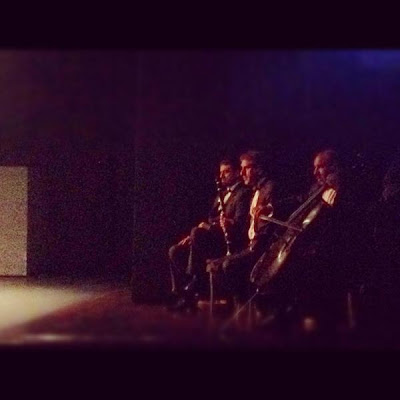
Also, the subcultures within the play could be applied to our everyday life. The mujahedeen and the musicians stood out as subcultures. In the play the mujahedeen took part in destruction, which essentially led to the death of the two main characters. The intensity of the subculture was evident by the fact that the character had no problem getting himself killed in the name of what he and his subculture believes in. The musicians on the side of the stage were not part of the play yet they provided an interesting soundtrack.


The evening spent made me realize the ways in which pop culture is diffused and the power of interpersonal word-of-mouth communication.


Monday, April 4, 2011

The Twitter Sensation


Twitter is what some may call a global media phenomenon. It is in fact a global sensation, that started out not too long ago. But how come millions of people know about it? How did the website spread globally?


It spread through word of mouth communication. People who have accounts, or who heard about the website, told their friends about it and their friends told their friends. The cycle continues. Word of mouth communication is only made stronger by another global sensation - the Internet. Through the Internet and social networking websites such as myspace, facebook and now twitter there is instant communication between people who might not be in the same room, country or even continent. All one has to do is write on their friends’ “walls” and if those friends are at that very moment on the Internet, they will get the message. Also, Instant Messaging is very popular and it increases word of mouth communication exponentially. So ideas spread much faster now then they ever used to in the past.


People were talking about the new social networking website (Twitter) for a long duration of time and with great intensity and enthusiasm. Due to the global recognition of this website, there is now a collective consumption of this kind of popular culture. Virtual local scenes are emerging on Twitter through Twitter’s use of hash-tags and lists that people are allowed to make. People of the same subculture who do not live in the same place are constantly, in a way, in the same place because of Twitter. There are many downloadable applications that allow Twitter to be on one’s mobile phone, iPad or laptop. So people are constantly communicating with one another.


Source


As seen, Twitter can be studied sociologically. The concept of Twitter fits in perfectly with the interaction approach of popular culture. This approach focuses on the smaller and informal processes of communication such as word of mouth. This approach depends on interactions between small groups of people and the influences they have through those small actions and does not depend on big-budget marketing. This is exactly what Twitter does. One way it does this is by the trending topics one sees on the side bar. A concept or idea that started out between a couple of people somehow spreads around a region or the world and gains global recognition.


Source

Wednesday, February 23, 2011

A New Social Wave

Walking in the halls of the Academic Bridge Programs, all I notice is pairs of eyes staring on tiny devices in their hands. What I witness is the new teenage culture that lies in the hand of virtual chatting and new ways of living, literally. Anyone these days can develop a social life with popularity thanks to a small device. The first step is affording it and its service; that itself sets new grounds to a person and their ability to fit themselves in the “cool hood” with a small device. This device is called BlackBerry. It spread like a raging fire throughout Qatar and the Middle East. Why? It’s simply because it gives a person the ability to carry around their instant messaging programs, search engines and other multimedia programs.

The real issue here is the product consumption; this device is becoming obsessive with most teenagers. In Qatar, BlackBerry spread through word-of-mouth. I remember when I first saw an ad for BlackBerry; it wasn’t really appealing to me. My sister bought a BlackBerry device and I told her it would suck. Then I notice some students in my school using it. They seemed to absent from this world. I thought it was just a phase until one of my close friends got one and I barely heard from him anymore. Even when we go out, he never seems to hear me or feel his environment. He just walks with his eyes attached to that tiny screen. It didn’t take long before I decide that I needed to get one too. (Picture on the right: BlackBerry in school environment.)

It’s most useful when I want to Google something quick, or sign on MSN for a long time and chat. I am not addicted to it myself, however many of the people around me are. My school environment is one example of this addiction. The BlackBerry is everywhere and out-thrown the iPhone; it would make me feel like an alien if I didn’t have a one. The video below is a series of mini-interviews with some of the students who do own this device. You can tell that some are heavily attached to this latest manifestation of social life.

Wednesday, February 16, 2011

Early Adopters: Geeky or Savvy?

My earlier blog about consumerism and materialism reflects the effect of the culture industry in designing products that make us consume more and more, transforming us into mindless consumers of popular culture and cultural products produced by culture industries...


However there is another dimension of consumerism that I would like to explore further. I know a special kind of consumer, the person you usually find first in line to purchase the new phone, the new ipod, the new laptop, the new “gadget” and the latest technology or model of whatever it is the culture industry is selling us.
Meg is a Texas student in the petroleum engineering major. He is also what Grazian refers to as an “early adopter”, an early consumer of a given company product or technology. As far as early adopters are concerned, he is definitely a record breaker. I’ve known him for 3 years, and whenever I buy something new, he always has something newer. He always makes what I own look out of date. My phone is always at least three generations behind his, and my other entertainment gadgets like my ipod are definitely not the “best” option according to him.


If you aren’t an early adopter, I’m sure you know one. Yes I’m talking about the person who can’t wait to show you their new special edition ipod, their new laptop with new features, their new camera, and their new high-tech gadget that can do something so cool – way cooler than what you already own. If the new products are not yet available in stores for you to line up in a cue, he would be the first to purchase it online before it is available for sale locally.


Early adopters are not just geeky consumers as many may think. Their influence on brand success, and impact on society and the consumerist culture can be significant. Potential consumers often seek early adopters’ advice, as they are way ahead in terms of expertise and knowledge on the particular product or innovation. Early adopters would have had more time being acquainted with the product than potential adopters and so would have acquired better understanding of its functions, uses and features. It is then likely that I ask my friend Meg whether I should purchase a certain piece of technology or gadget. Knowing that he would already have that particular item or replaced it about three times he would be a good source for advice and information. Even though I might look up a lot of reviews and information online, the “word-of-mouth” aspect of the interaction theory could be more effective in terms of convincing me to buy a given product. As this analysis on early adopters states, early adopters may “serve as a role model for many other members of a social system”. Early adopters then become somewhat respected by their peers and exemplify a way of using and purchasing products introduced by companies.


When I ask Meg for advice on a given gadget or piece of technology, his role is then to lower my uncertainty of purchasing it and to provide me with a vicarious hands-on experience through his own. His experience may not always be the best. Early adopters can face downfalls, but these negative experiences can serve the benefit of others.


Meg is not an online review or brochure, but someone who is not just trying to sell me a product. Hence, it is only natural that his peers and myself look to him for advice on new products. The effect a “Meg” would bring on any given society is more or less equal. We look to these early adopters for hopes of a successful purchase. It is always rewarding when you invest in something that proves to be suitable and worthwhile. So can early adopters transform us into savvy consumers?