I love 80’s movies. Everything about them is beautiful. Their stories are uncomplicated and contain ideas and situations that directors wish were true.
Ferris Bueller’s Day Off, The Breakfast Club, E.T and Say Anything are only some of the movies that portray the brilliance of much simpler times. These movies discussed issues that the average American faced. Movies about high school and the angst of being a teenager- social class, misunderstanding with parents and such- but in ways so different from the modern teen movie.
Pretty in Pink, a typical movie about love, high school and social stratification explores a modern day story. Pretty in pink seems be the most perfect example of social conflict. According
to Karl Marx, revolutionary sociologist, class conflict arises from the material things, such as: economic inequality, control over parliament, occupation, education and ownership. The tension between the bourgeoisie and the proletariat was always based on these elements. Pretty in pink portrays this tension successfully between a girl who has grown up in a family that isn't close to being rich, and a boy who has always had everything.
Andie Walsh, (played by the gorgeous ‘Brat Pack’ actress, Molly Ringwald) is a teenaged working-class girl who is obsessed with being rich. Living with her father in a house that she hates, she dreams about being rich. Living in big, fancy houses and wearing expensive clothes- things that she can never afford.
Defining her own style using second hand clothes because she can't afford to buy the expensive ones from the store.
At Andie’s high school, social structure is based on economic class, where the “richies” don’t socialize with those who aren’t as economically well to do. The popular girls make fun of Andie’s clothes, which are secondhand as opposed to their own clothes that are “in season."
As much as Andie hates the preppy kids at her school, she aspires to be like them. She works at a part-time store to earn money so she can design clothes- something that she loves doing. It is at that store, that she meets the boy of her dreams- Blane McDonough. Blane who is sweet, different and interesting also happens to be rich and even better, interested in her!
Meanwhile, her best friend, Duckie, refuses to talk to her because he feels betrayed that she would date someone from a different social group- the group that always mocks them. Andie decides that the loss is inevitable. Blane also faces judgment from his friends who think that Andie and her friends are of less value because of their lower economic standing.
The story follows how Blane and Andie try and overcome the hindrances of their relationship; break the barrier of economic class and learn how to their identity does not come from how much money they have. Truly beautiful.
Showing posts with label absolute poverty. Show all posts
Wednesday, February 8, 2012
Monday, October 31, 2011
What It Takes To Support A Family
We pass by many housemaids in Doha in almost anywhere. We see them in malls, and everywhere in the public. Did we ever question ourselves, how their life is like outside their home county and family? They go through many difficulties to change their social mobility.
While I was at home, I was wondering what it’s like to be far away from my family and my home county. I pictured the image of living in someone else’s house for years, and how it would be like. I went up and asked a housemaid named Arlene, what it is like to have a job like this. She answered me with sadness in her voice that she had no other choice than this job.
She did not complete her education and she needed to work in order to support her family. She was from Philippines, and she was going through relative poverty. They had the money to eat and drink but not enough money for other needs. I asked her what she did with the salary as soon as she received it; she said that she would send it to her family immediately. She wouldn’t even save one riyal for herself; she is sacrificing her life in order to support her family.
She said that in her home country that they have a lot of social inequality. People are treated differently according to their wealth and where they stand in the society. She implied that they do not have any wealth in Philippines and there are not many job opportunities. This is why she came to Doha, to get a job. The salary she receives in Doha is much more than what she would receive in the Philippines. She says that Philippines is a cheap country, and the money they get from their salary which is around 800QR is a good amount for support.
I asked Arlene if the work sometimes affects her physical health. She said that it definitely does, by the end of the day she gets extremely exhausted and just wants to sleep. Working as a maid also affects her mental health
she says. She has a lot of emotional breakdowns because she misses her children too much.
While I was at home, I was wondering what it’s like to be far away from my family and my home county. I pictured the image of living in someone else’s house for years, and how it would be like. I went up and asked a housemaid named Arlene, what it is like to have a job like this. She answered me with sadness in her voice that she had no other choice than this job.
She did not complete her education and she needed to work in order to support her family. She was from Philippines, and she was going through relative poverty. They had the money to eat and drink but not enough money for other needs. I asked her what she did with the salary as soon as she received it; she said that she would send it to her family immediately. She wouldn’t even save one riyal for herself; she is sacrificing her life in order to support her family.
She said that in her home country that they have a lot of social inequality. People are treated differently according to their wealth and where they stand in the society. She implied that they do not have any wealth in Philippines and there are not many job opportunities. This is why she came to Doha, to get a job. The salary she receives in Doha is much more than what she would receive in the Philippines. She says that Philippines is a cheap country, and the money they get from their salary which is around 800QR is a good amount for support.
I asked Arlene if the work sometimes affects her physical health. She said that it definitely does, by the end of the day she gets extremely exhausted and just wants to sleep. Working as a maid also affects her mental health
she says. She has a lot of emotional breakdowns because she misses her children too much.
Sunday, October 30, 2011
Social Stratification
According to sociology, social inequality would be defined as a situation in which valued resources and desired outcomes are distributed in such ways that people have unequal amounts and/or access to them. And one of the main ways they would be affected, is because of social stratification, the systematic process of ranking people on a scale of social worth, leaving many either in a situation of absolute poverty or relative poverty.
We can see every society in the world stratify itself people, any criterion could be used to distinguish them, the most common being social status - which is determined by your profession - the kind of job you do and the money you earn as a result of it.
This chapter on social stratification reminded me of the all time epic Hollywood love story, The Notebook, where the main focus of the movie is the separation of this poor and young man who falls in love with a rich young woman and gives her a sense of freedom. They get separated because of nothing else but their social differences. Her family rejects the guy because of his un-wealthy family, and instead gets her engaged to a soldier, to maintain the same social status. More or less, that’s the laws of the universe.
We can see every society in the world stratify itself people, any criterion could be used to distinguish them, the most common being social status - which is determined by your profession - the kind of job you do and the money you earn as a result of it.
This chapter on social stratification reminded me of the all time epic Hollywood love story, The Notebook, where the main focus of the movie is the separation of this poor and young man who falls in love with a rich young woman and gives her a sense of freedom. They get separated because of nothing else but their social differences. Her family rejects the guy because of his un-wealthy family, and instead gets her engaged to a soldier, to maintain the same social status. More or less, that’s the laws of the universe.
Thursday, October 27, 2011
WOQOD Petrol Station in Doha: Examining Social Stratification

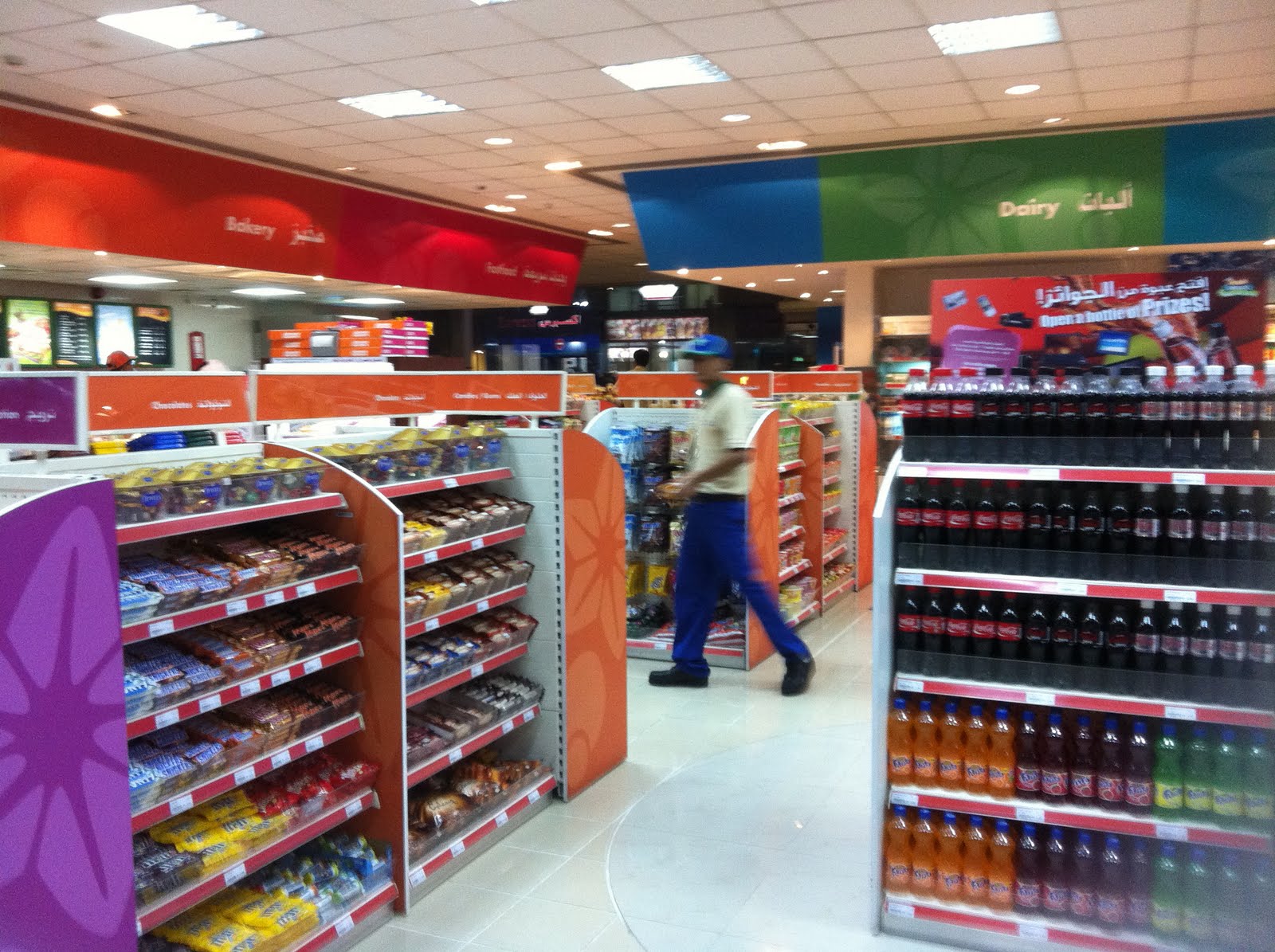
As I drove into a Woqood petrol station, I didn’t really think my sociological imagination was in gear. I wanted to fill up my car tank, grab some treats and candy after a very long day, re-fill on some comfort McDonalds meal just in front of the Sidra convenient store of Woqod – and go home. However, waiting for my gas meter to fill up, I look around and notice the countless sociological concepts that can be applied in every corner and feature of this location. Apart from the McDonaldized process of the car wash service, the gas meters, oil change, and convenient store including a small fast food corner, an Internet area and other services and adjacent fast-food chains located next to the Woqood Petrol station, I move on to observe the social stratification of people within this cluster of car and food services in the context of this petroleum-rich country.

According to this source, in 1973, petroleum production and profits radically increased, moving Qatar from the position of one of the world’s poorest countries and leading it to have one of the highest Gross Domestic Product (GDP) in the world. Today, Qatar is probably viewed as a very “wealthy” nation. And in sociology, wealth can refer to income, property, buildings, businesses, assets, stocks, bonds etc. However, this wealth is not distributed equally. Although absolute poverty, where people live without the basic needs of living such as food, water, and shelter, may not really exist in Qatar, relative poverty can be observed when the wealth of different people in this society is compared to other standards within the same country.
For example, if the situation of the employee who filled my gas tank and wiped my front and back windows, or the person who served me my fries were compared to the living standard and wealth of the owner of Woqod for example, their situation would be ranked way at the bottom, or at a significantly lower level. Even though these workers might be way better off than the people in their home country, compared to the standards of the average situation or elite and high status members of the Qatari society, they would fall at the bottom of the hierarchy.
If you are born into a Qatari family, your life chances are not likely to lead you to any of the jobs I observed in the services offered at Woqod. Instead, you will more likely to earn a relatively high income, and belong to a social class that shares characteristics of high economic and social status, high level of education (with lowest being a college degree), and an occupation that holds a certain prestige. If I come across a “Land cruiser”, or an expensive car on the road, I would assume, that the driver is most probably Qatari, or a driver for a Qatari family or businessman, based on my cumulative experiences and observations.


Furthermore, the arrangement of people into divisions of power and wealth can be determined by ascribed statuses (characteristics you cannot control/inherited) or achieved statuses (characteristics you achieve or attain). Due to Qatarization most top ranks in management roles are given to Qataris instead of expatriates and non-Qataris. This program or system favors or prioritizes Qataris for the positions of higher authority and management. According to the book by Joan Ferrante, a caste system of stratification is a form of assigning people into social classes on the basis of their ascribed status, which they have no control over, and usually cannot change. A car wash worker is not likely to move up the social ladder to become the CEO of Qatar Gas. And neither would the McDonald’s cleaner, or the server, or the laborer moving stock around the store. Therefore, social mobility is unlikely for those in the caste system that is more prominent in this society.
Subscribe to:
Posts (Atom)